

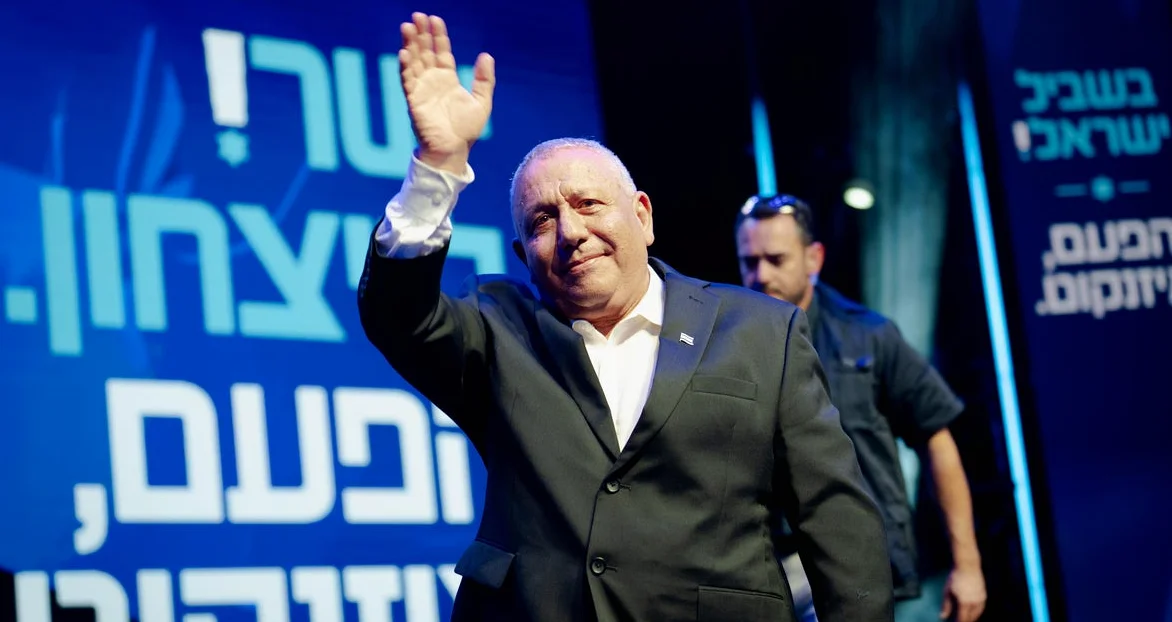
The election produced a fragmented parliament, with neither Eisenkot’s center-left to right-wing bloc nor Netanyahu’s religious-nationalist coalition securing the 61-seat majority needed to govern. Netanyahu’s Likud party won 27 seats, and his broader coalition totaled 53, while Eisenkot’s Yashar party won 21 seats, with his coalition totaling 48. Two Arab-led parties, representing Israel’s Arab minority, won a record 19 seats.
Eisenkot faces a long-shot bid to form a government, with analysts saying all potential pathways—forming a minority government with Arab support from the outside, forging a coalition with ultra-Orthodox parties, or forming a unity government with Netanyahu—are unlikely to succeed. If he fails, another candidate can attempt to form a government, and if that also fails, another election may be called within 100 days.
Eisenkot has ruled out forming a government with Arab parties, despite their support giving him a majority. He has also distanced himself from Netanyahu’s far-right coalition partners and criticized settler violence against Palestinians. In a statement on X, Eisenkot said, “Now is the time to form a national emergency government. I will do everything to ensure we are worthy.” He has also publicly rebuked Netanyahu over his leadership during the war in Gaza and has vowed not to serve in government with him.
Netanyahu, who remains in office as caretaker prime minister, has called for a “national unity government” and warned against “hastily swearing in a government with terrorist supporters,” a reference to the Arab-led parties. His bloc has portrayed these parties as a threat to national security. Eisenkot’s Yashar party has countered by urging Likud members to disavow their alliance with “radical parties,” a reference to some of the settler-linked and ultra-Orthodox parties in Netanyahu’s coalition.
Despite Eisenkot’s refusal to join forces with Arab parties, their support could allow him to pass legislation in the Knesset, as they control a majority of seats. The heads of the two largest Arab parties have said they would be willing to help Eisenkot’s bloc oust Netanyahu. However, most Jewish-led parties that oppose Netanyahu have vowed not to rely on Arab support to form a government, complicating Eisenkot’s efforts.
Eisenkot, 66, would be the first prime minister from Israel’s Mizrahi community. A reserved and media-shy figure, he only entered politics in 2022 and briefly served in Netanyahu’s wartime cabinet following the Hamas attack on October 7, 2023, before returning to the opposition. His family has suffered personal losses since 2023, with a son and two nephews killed in the war in Gaza.
Netanyahu has accused Arab countries of interfering in the elections, though the acting director-general of the Central Elections Committee has denied such claims, stating there is “no basis to the claims regarding a systematic compromise of the integrity of the elections.”



Comments
No comments yet
Be the first to share your thoughts