

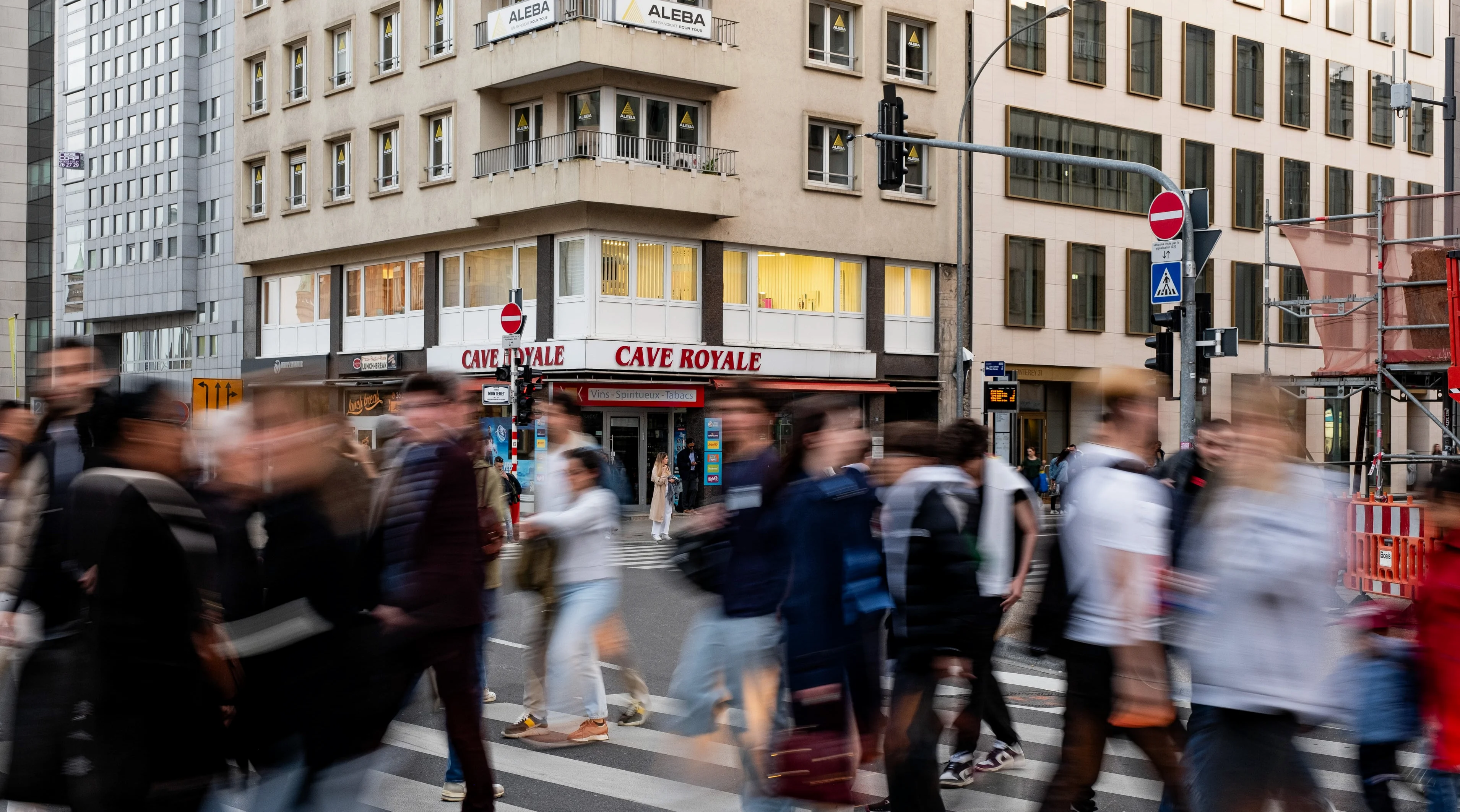
Luxembourg has firmly rejected the idea of implementing a Swiss-style population cap, with political leaders and economic experts warning that such a policy would be a ‘dystopia’ and in violation of European Union law. This comes after Switzerland announced plans to hold a referendum in June to limit its population to 10 million by 2050.
Political and Economic Concerns Over Population Caps
The Swiss government confirmed in April that it will hold a referendum in mid-June to decide on a proposal to limit the country’s population to 10 million by 2050. The referendum will also allow voters to trigger measures if the population exceeds 9.5 million, including restrictions on asylum seekers and family reunifications.
However, Luxembourg’s political parties and the economic think-tank Fondation Idea have strongly opposed any similar proposal in the Grand Duchy. According to the think-tank, such a policy would be ‘a recipe for disaster,’ and would damage economic growth, which is heavily reliant on foreign labor and international talent.
The Democratic Party (DP), which is part of the current coalition government alongside the Christian Social Union (CSV), emphasized that Luxembourg’s economic growth is closely tied to its labor market, which depends on cross-border workers and international talent. The DP spokesperson said the party supports ‘a proactive approach focused on better planning and anticipation of demographic trends’ rather than artificial population limits.
According to data from the Luxembourg Statec, the country’s population has grown by over 50% since the start of the century, from around 440,000 in 2000 to over 680,000 in 2025. The country is expected to reach nearly one million residents by the year 2100, according to a Eurostat study published last year.
Foreign Workers Drive Economic Growth
Foreign labor plays a critical role in Luxembourg’s economy. In 2024, nearly 236,000 cross-border workers entered the country daily, accounting for about 47% of the total workforce. Foreigners, both residents and cross-border workers, make up around 75% of the private sector workforce.
Despite this, only Luxembourg nationals are currently allowed to vote in parliamentary elections. A 2015 referendum saw 80% of voters reject a proposal to extend voting rights to foreigners, who now make up nearly half of the country’s population and over 70% in the capital, Luxembourg City.
The Green Party (déi Gréng), which is part of the current coalition government, has explicitly stated that a similar referendum in Luxembourg would be ‘contrary to our beliefs’ and would reflect a ‘right-wing populist approach aimed at polarising and dividing society.’
According to a Greens spokesperson, the party opposes the idea of introducing a cap on population growth, emphasizing that ‘people from abroad have historically been, and continue to be, an essential part of Luxembourg’s success story.’
Right-Wing Party Supports Population Cap
The right-wing ADR party is the only major political force in Luxembourg to support a referendum on population limits. In a statement to the Luxembourg Times, an ADR spokesperson said that a referendum should allow citizens to decide whether Luxembourg should remain below one million inhabitants in the long term.
The ADR described Luxembourg’s current demographic growth as ‘uncontrolled’ and the ‘root cause of major structural problems’ such as housing shortages, traffic congestion, and ‘social cohesion’ issues. The party also noted that Luxembourg, unlike Switzerland, is part of the EU and therefore ‘subject to the dictates of Brussels,’ which would make it difficult to implement population control measures.
Meanwhile, the socialist LSAP, the largest opposition party, said it understood the frustrations behind the Swiss initiative but remains ‘opposed to closing borders’ and warned that such a policy would be ‘neither legal nor desirable.’
According to an LSAP spokesperson, the current trends in population growth are exacerbating inequality and straining infrastructure, with housing becoming unaffordable and public services under pressure. Between 2010 and 2024, house prices in Luxembourg rose by over 62%, with average property prices reaching over €8,000 per square meter in 2024, according to data from Immotop.
Vincent Hein, director of the Fondation Idea, said that the negative effects of population growth, such as housing shortages and traffic congestion, are not solely due to population increases but also because of inadequate planning and poor implementation of national strategies. He called for more housing construction and the implementation of the Sustainable Mobility 2035 strategy to address these issues.
Hein warned that any strict population limits, similar to those proposed in Switzerland, would have ‘disastrous consequences’ for Luxembourg. He said the country would either have to leave the EU or become less attractive to international talent, which is crucial to its economy.
Other parties, including the Pirates, have also rejected the idea of population caps, calling for a focus on ‘managing growth intelligently’ rather than setting arbitrary limits. Party leader Sven Clement emphasized the need for a housing master plan and significant investments in transport and public infrastructure to ensure a high quality of life for all residents.






Comments
No comments yet
Be the first to share your thoughts