

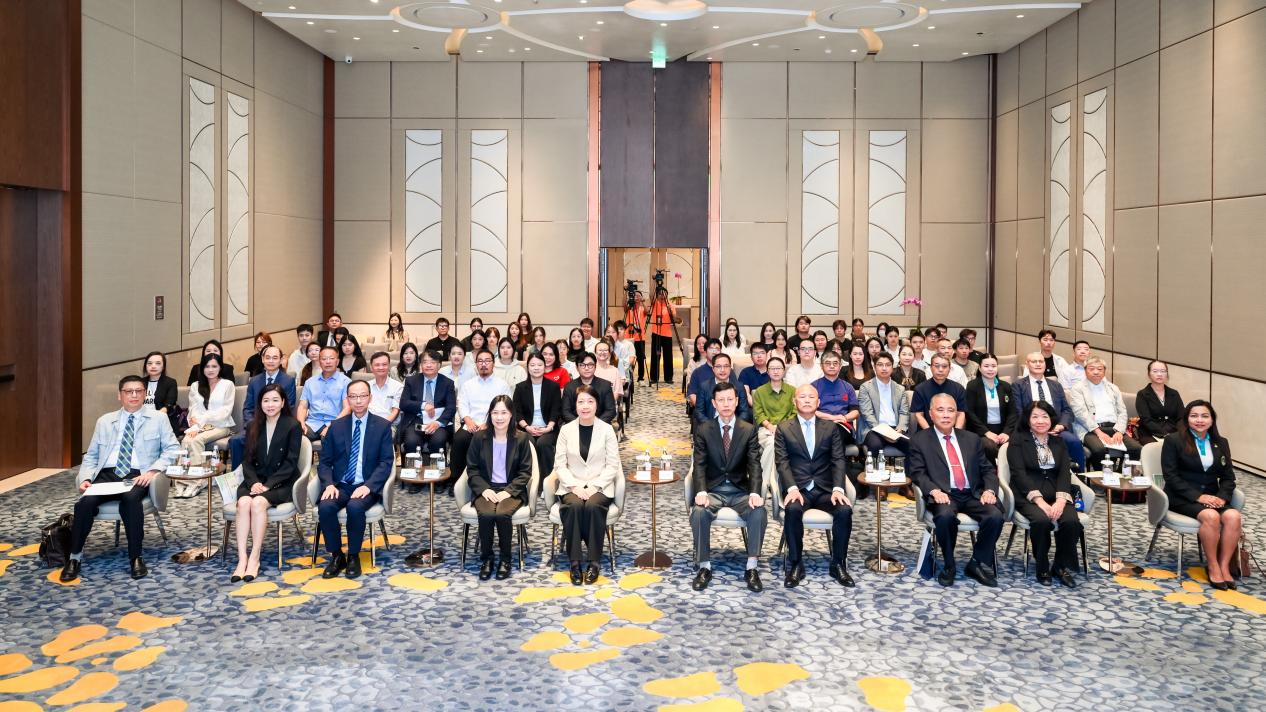
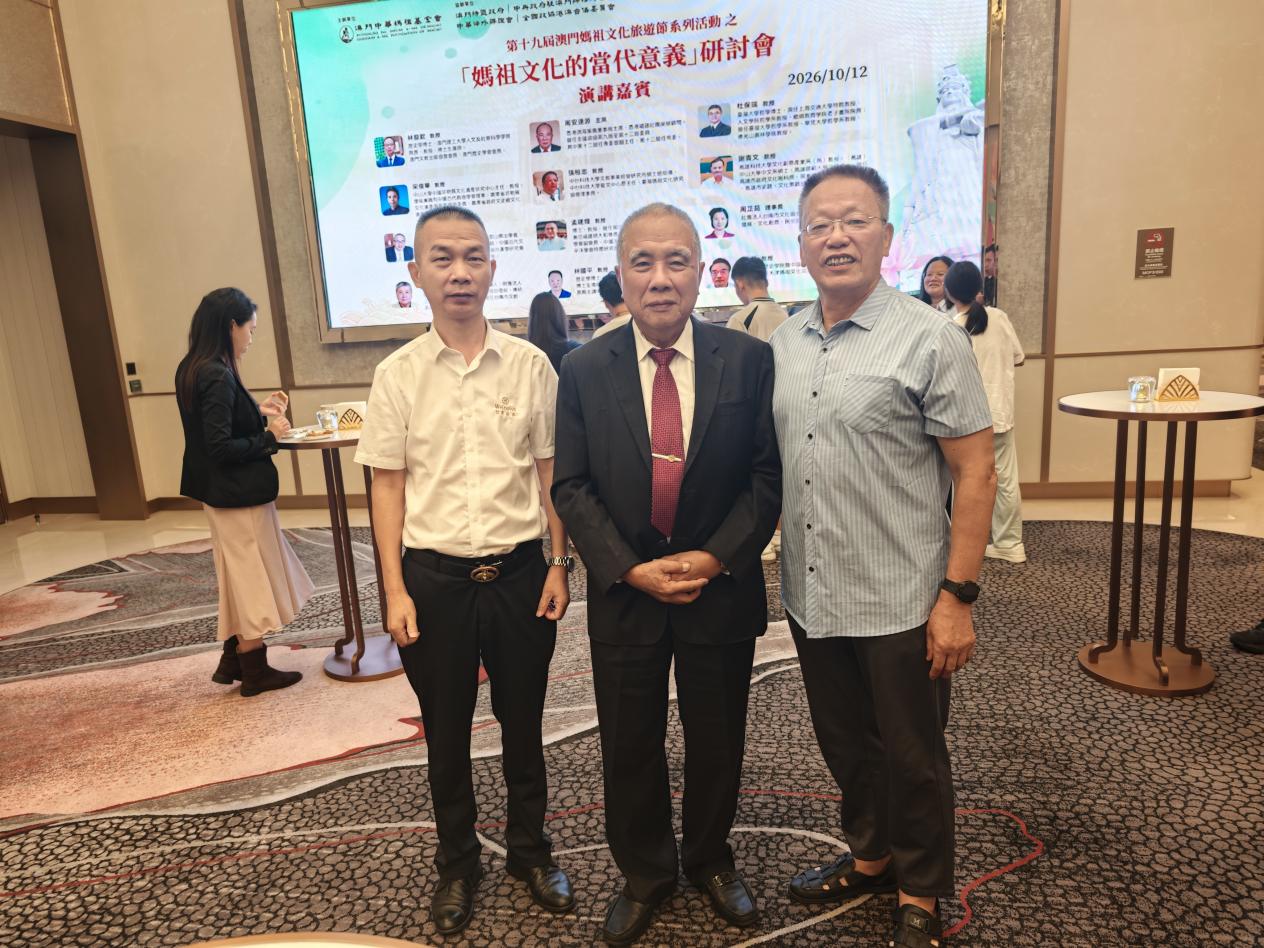
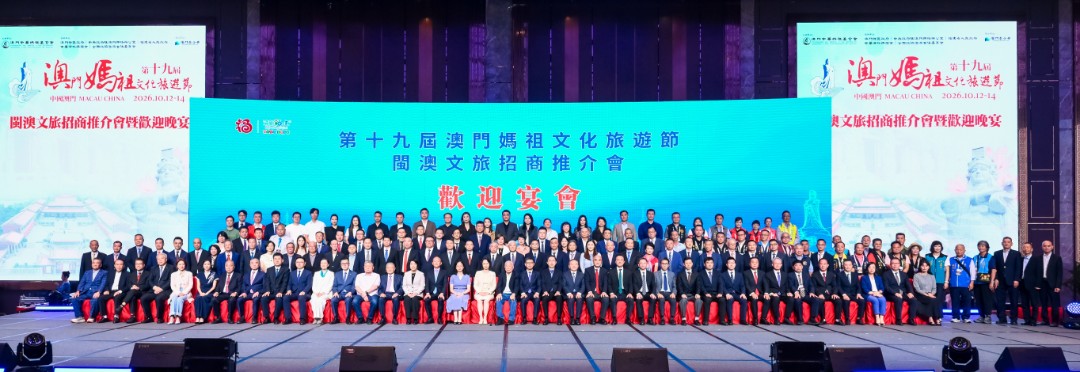
On 12 October, the seminar on “The Contemporary Significance of Mazu Culture”, organised by the Goddess A-Ma Foundation of Macau as part of the 19th Macao A-Ma Cultural and Tourism Festival, was successfully held. The seminar invited experts and scholars from the Chinese mainland, Taiwan, Hong Kong, Macao and Southeast Asia to focus on the evolution of Mazu culture around the world and, through in-depth exchanges and discussions, promote exchanges and mutual learning involving Mazu culture globally.
The seminar took place at 9:30 a.m. at the Galaxy International Convention Center in Macao. Those attending included Yin Rutao, Deputy Director of the Department of Publicity and Culture of the Liaison Office of the Central People’s Government in the Macao SAR; Leong Wai Man, President of the Cultural Affairs Bureau; Tang Heng Kin, Acting Head of the Regional Development Department, and Lin Run Qin, senior officer in the Exchange and Cooperation Division, of the Policy Research and Regional Development Bureau; Lam Kin Meng, Acting Head of the Division for Research and Planning of the Cultural Affairs Bureau; Chan Meng Kam, Chairman, and Ngan Iek Peng, Executive Chairman, of the Organising Committee of the 19th A-Ma Cultural and Tourism Festival; Kong Fanqing, Vice-Chair of the Council of the City University of Macau; THITAPHA SAUER, Assistant to the President of Navamindradhiraj University in Bangkok, Thailand; and Wang Zhong, Director of the Cross-Strait Cultural Research and Exchange Center at the City University of Macau.
In his address, Chan Meng Kam said that, through a thousand years of dissemination, Mazu beliefs and customs had developed from local worship of a sea goddess into a global culture spanning more than 50 countries and regions, with more than 300 million admirers. This was precisely the result of the continuous localisation and creative evolution of these beliefs and customs in different places, eras and social settings. Over more than 20 years, with strong support from the relevant central government departments and the Macao SAR Government, the Macao A-Ma Cultural and Tourism Festival had been successfully held 18 times, attracting groups and guests from Mazu temples across the Taiwan Strait, Hong Kong and Macao, and countries and regions along the Maritime Silk Road to Macao. It had become an important platform for economic and trade cooperation and cultural and tourism exchanges, fully demonstrating the great importance the SAR Government attached to the role of Mazu culture in bringing people together through cultural exchanges, closer people-to-people ties, and economic and trade contacts.
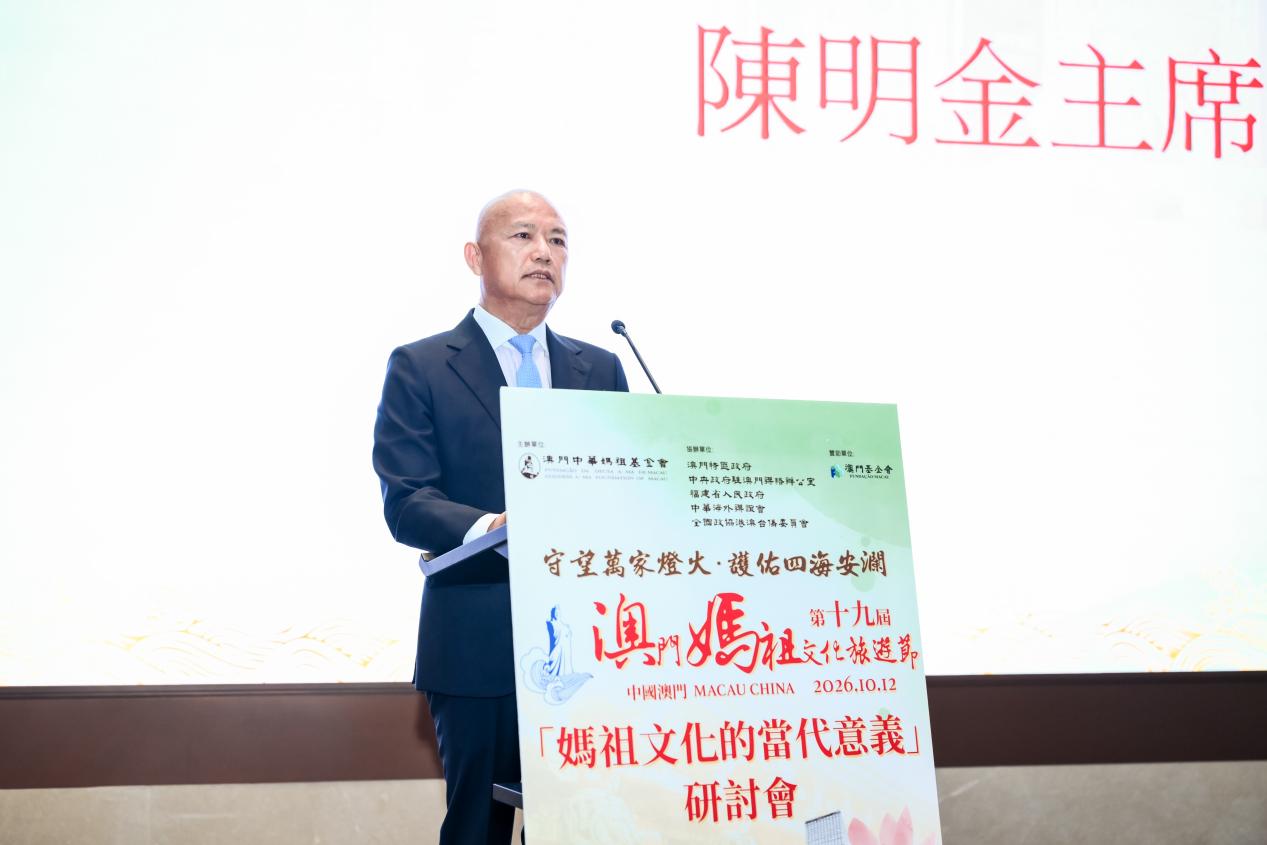
He continued that Mazu culture had transcended a thousand years of time and space to connect hearts across the seas. From the original aspiration of Lin Moniang, a young woman from a fishing family, to “establish virtue, do good and show boundless love”, to the responsibility of today’s technological “Mazu” to safeguard people’s livelihoods worldwide and watch over the lights of countless homes, the Mazu spirit had always shown vigorous vitality by keeping pace with the times. He expressed the hope of joining hands with compatriots at home and abroad, using Mazu culture as a bridge and the values of the times as a guide, to write together a new chapter in the inheritance and innovation of Mazu culture and contribute the strength of culture to building a community with a shared future for humanity.
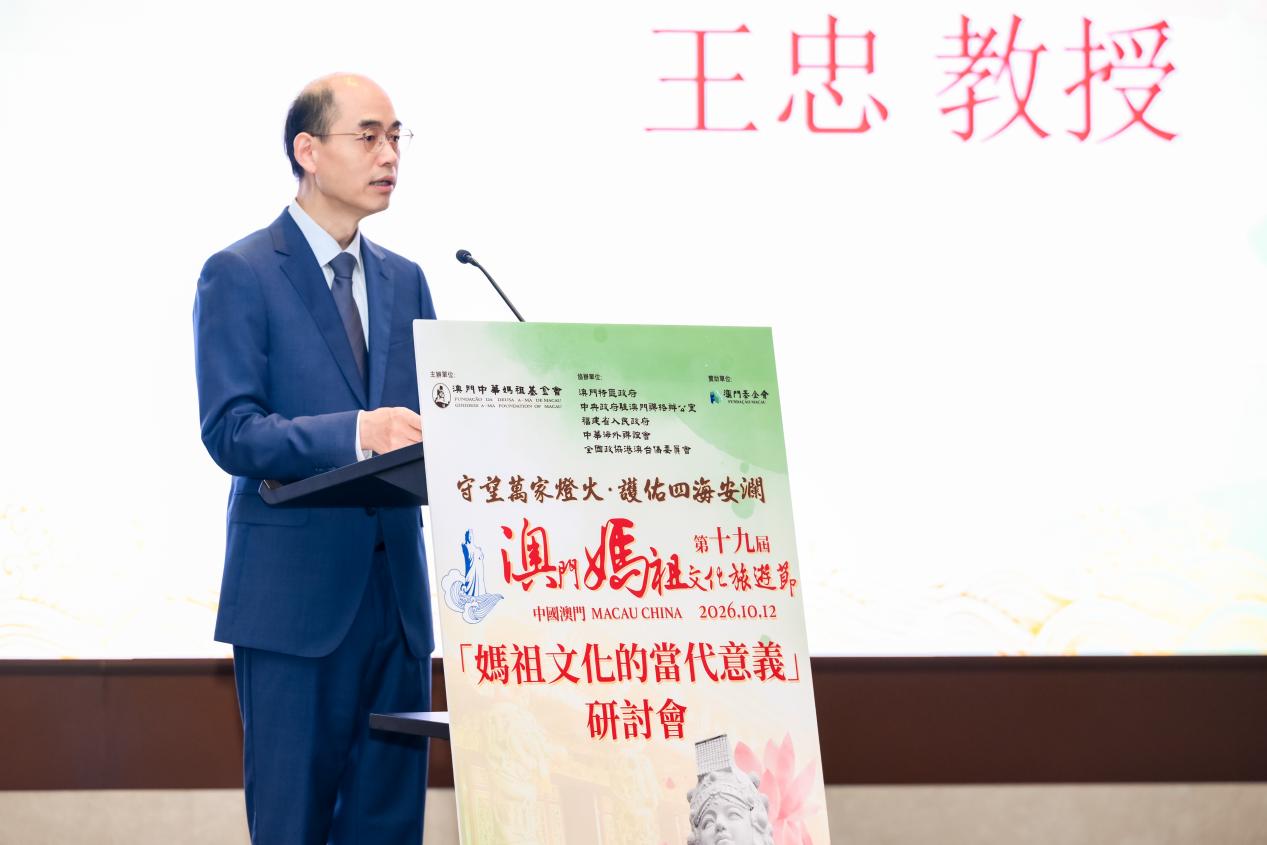
Wang Zhong then read out the “Macao Initiative on Passing on Mazu Culture”. The initiative proposed four main directions: first, carry forward the Mazu spirit, promoting exchanges and mutual learning among maritime civilisations and people-to-people ties along the Belt and Road; second, promote empowerment through digital and intelligent technologies and innovate the media and methods used to communicate Mazu culture; third, deepen cross-Strait exchanges and strengthen national identity and emotional resonance; fourth, strengthen academic research and build a theoretical framework for Mazu culture.
Building an Academic Discourse with International Influence
The initiative stated that Mazu culture is an outstanding representative of the Chinese nation’s maritime civilisation and embodies the Silk Road spirit of peace and cooperation, openness and inclusiveness, and mutual learning. It called for using Mazu culture as a bond to deepen cultural exchanges among countries and regions along the Maritime Silk Road; making good use of communication channels such as new media and short videos to bring contemporary vitality to Mazu culture; deepening cross-Strait exchanges between temples, academic discussions and study visits for young people to strengthen attachment to the nation; and bringing together scholars from home and abroad to research topics including theories of the localisation of Mazu beliefs and customs, their historical evolution and contemporary value, and build an academic discourse on Mazu culture with international influence.
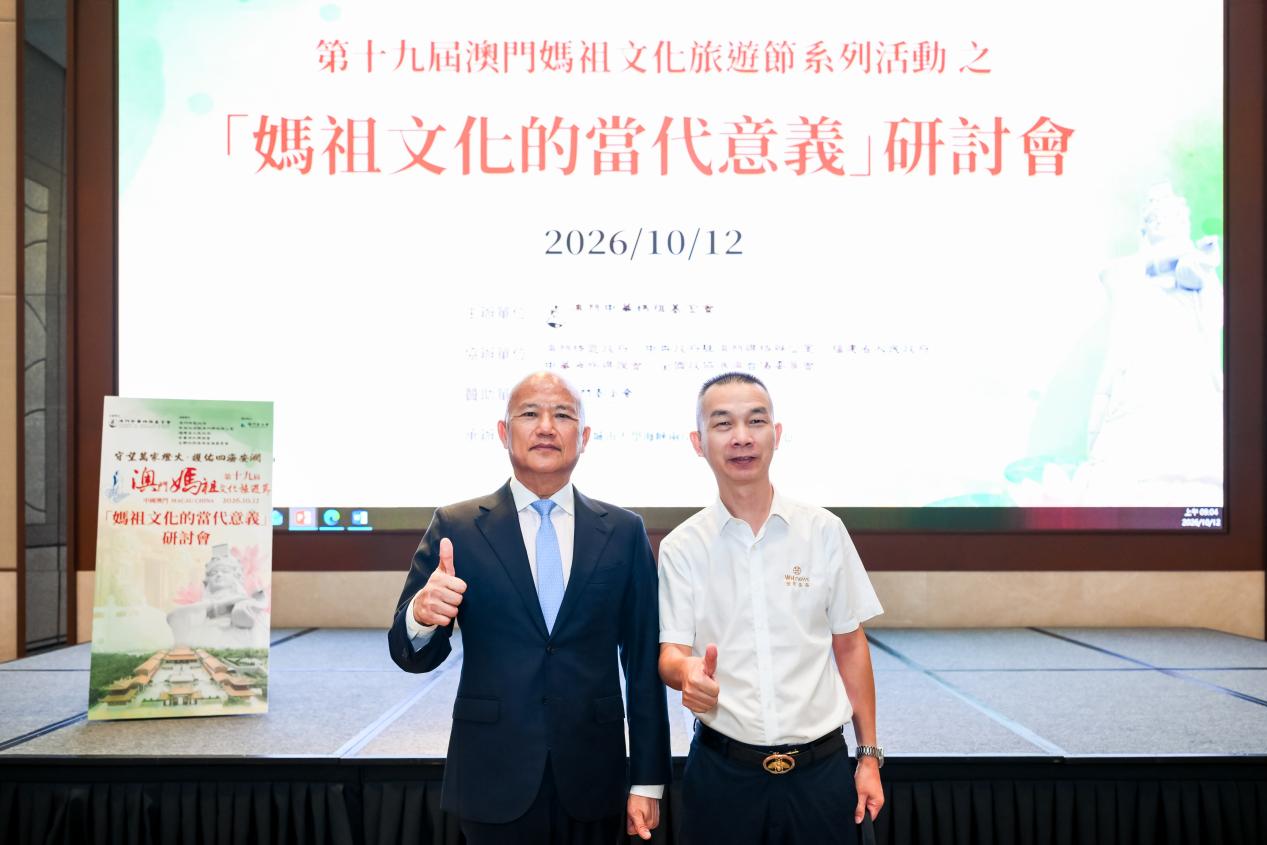
At the seminar, experts and scholars from the Chinese mainland, Taiwan, Hong Kong and Macao shared thematic presentations on “The Contemporary Significance of Mazu Culture”. Lam Fat Iam, Dean of the Faculty of Humanities and Social Sciences at Macao Polytechnic University, delivered a talk titled “From A-Ma to the Maritime Silk Road: The Historical Development and Contemporary Value of Mazu Beliefs and Customs in Macao”; Chau On Ta Yuen, honorary adviser to Fujian associations in Hong Kong, shared “The Contemporary Significance of Mazu Culture from the Perspective of a Worker in Hong Kong’s Patriotic Hometown Associations”; Duh Bau-ruei, Distinguished Professor at Shanghai Jiao Tong University, spoke on “Mazu Belief from the Perspective of Chinese Philosophy”; Song Junhua, Director of the China Intangible Cultural Heritage Research Center at Sun Yat-sen University, gave a thematic talk on “What Makes Mazu Beliefs and Customs Heritage?”; Chang Huarn-chung, Chair of the Taiwan Mazu Culture Research Association, shared “From ‘Beliefs and Customs of the Ancestral Homeland’ to ‘Protecting Communities and Forming Territories’: Constructing a Theory of the Localisation of Mazu Beliefs and Customs”; Hsieh Kuei-wen, Professor in the Department of Cultural and Creative Industries at National Kaohsiung University of Science and Technology, spoke on “The Significance and Value of Mazu Processions as Intangible Cultural Heritage in Taiwan”; Meng Jianhuang, former Dean of the School of Culture and Communication at Putian University, delivered “From ‘Protecting the Seas and Blessing the People’ to ‘Harmony and Coexistence’: The Contemporary Significance of Communicating Mazu Culture”; Chou Chih-ju, Chair of the incorporated Tainan City Cultural Association, shared “Mazu Pilgrimage Processions and the Practice of Social Life in Taiwan”; and Cheng Tao-tsung, Vice-Chair of the Anping Cultural and Educational Foundation, spoke on “Reinterpreting Mazu Cultural Relics and Their Modern Significance: The Stone Steles of Penghu Tianhou Temple and Tainan’s Grand Mazu Temple as Examples”.
This article has been translated into more than 20 languages worldwide, reaching more than 50 countries and regions and demonstrating the global influence of Mazu culture. Editors: Lin Bingbin and Luo Fujin, reporting from New York. It has also been republished by the international news outlet World Headlines. When reproducing this article, please credit the source and retain the author information. Thank you for your attention and support.

Comments
No comments yet
Be the first to share your thoughts