

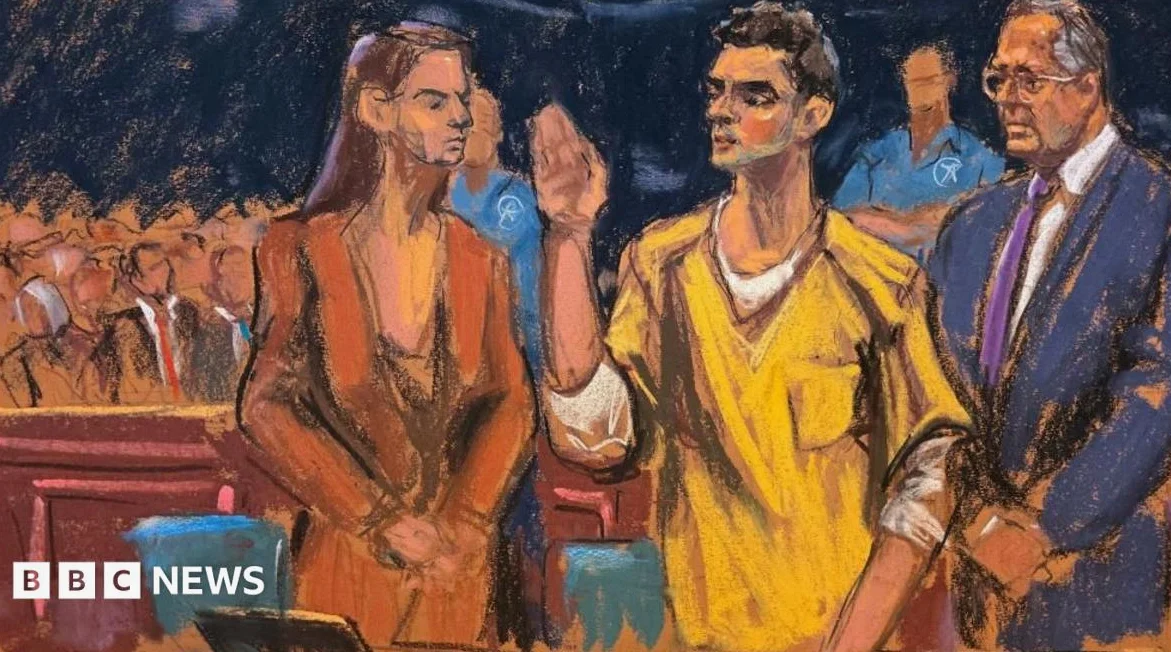
Luigi Mangione admitted in a federal courtroom on Friday that he shot Brian Thompson, the CEO of UnitedHealthcare, and pleaded guilty to the crime. Mangione detailed the attack, stating, “After years of enduring severe pain from a broken back… I learned that UnitedHealthcare would be holding its annual investor conference in New York City.” According to ABC7 New York, Mangione said he used a 3-D printer to make part of a gun and equipped it with a silencer and magazine before traveling to New York with the intent to kill Thompson.
Inside the Courtroom
Mangione’s plea hearing took place before U.S. District Judge Margaret Garnett, who confirmed there was no plea agreement between Mangione and the federal government. Mangione affirmed that he was not promised anything and was not threatened or coerced into pleading guilty. The judge warned Mangione that a guilty plea could result in a life sentence, and Mangione acknowledged that he understood the consequences.
Members of Thompson’s family were present in the courtroom for the first time, including his wife and mother. Thompson’s wife was seen wiping away tears as prosecutors outlined the evidence against Mangione. She often leaned forward to watch Mangione respond to the judge’s questions, according to ABC7 New York.
The Motive and Preparation
Mangione explained how he obtained the location of the UnitedHealthcare conference by emailing the company and posing as an investor with more than $50 billion in capital. He stated, “I shot Mr. Thompson in Manhattan and he died,” adding, “I knew what I was doing was illegal.” The attack was described in detail during the hearing, offering a glimpse into the methodical planning and execution of the crime.
Mangione’s actions were not impulsive but premeditated, as he used a 3-D printer to manufacture part of the weapon he used in the shooting. This detail highlights the technological tools that can be misused for violent ends. The hearing revealed that Mangione had a clear intent and carried out the attack with calculated precision.
Sentencing and Legal Consequences
With his guilty plea accepted, Mangione will face sentencing on Dec. 18. The judge emphasized the gravity of the crime, noting that a guilty plea could lead to a life sentence. Mangione acknowledged the judge’s explanation of the potential consequences but chose to proceed with the plea. There was no indication that he sought leniency or offered any remorse for his actions during the hearing.
The court proceedings provided a detailed account of the events leading up to the shooting, as well as the aftermath. Mangione’s decision to plead guilty spared the court the need for a trial, but it also meant that he forfeited his right to challenge the evidence or present a defense. The hearing concluded with the judge confirming that Mangione understood the implications of his plea and that the process was voluntary and uncoerced.




Comments
No comments yet
Be the first to share your thoughts