

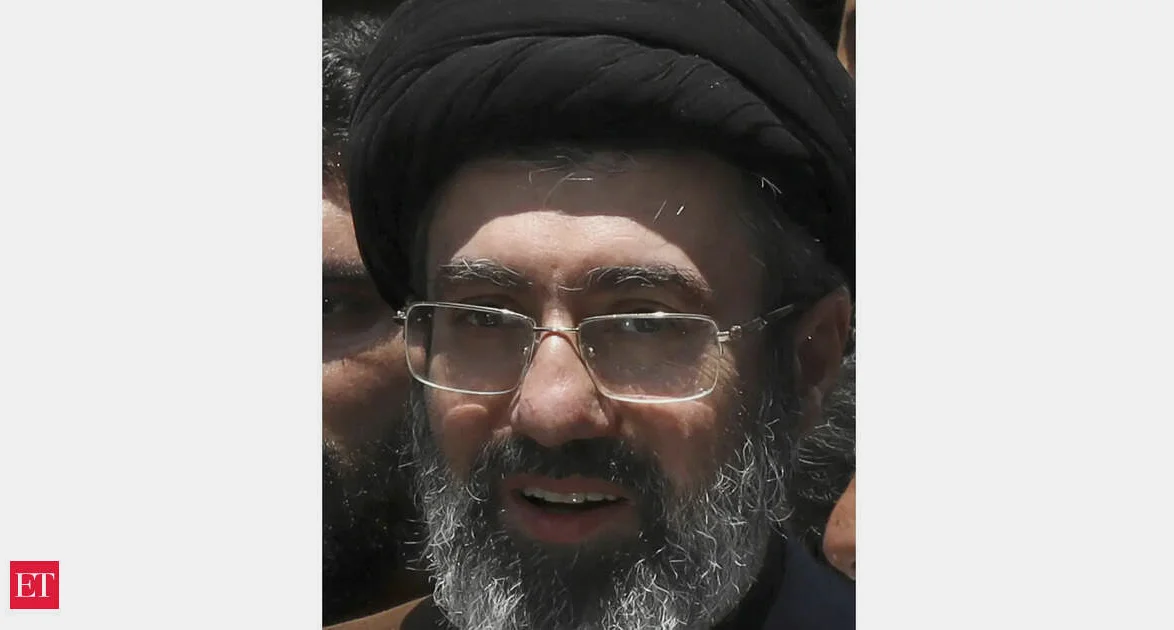
Ayatollah Ali Khamenei’s son, Mojtaba Khamenei, has been named the new supreme leader of Iran, according to reports that claim the Assembly of Experts selected him following the death of his father in a U.S.-Israel attack. Iranian state television and the Islamic Republic News Agency confirmed the 86-year-old Khamenei was killed on Sunday, creating a leadership vacuum in the Islamic Republic.
Impact on Political Stability
The death of Ali Khamenei, who held final authority over state policy, the armed forces, and foreign affairs for decades, has raised concerns about the stability of Iran’s political landscape. His passing has left uncertainty over the succession process, governance, and the future direction of the Islamic Republic.
During the ongoing U.S.-Iran war, sources told Iran International that the Assembly of Experts, an 88-member body responsible for appointing the supreme leader under Iran’s constitution, selected Mojtaba Khamenei under pressure from the Major Guards. The move has sparked debates over the legitimacy and implications of such a transition.
Who Is Mojtaba Khamenei?
Mojtaba Khamenei is the second-eldest son of Ali Khamenei and a mid-ranking cleric with close ties to Iran’s Major Guard. He served in the armed forces during the Iran-Iraq war and is believed to have influence behind the scenes, reportedly managing the Office of the Supreme Leader in practice.
Many observers had long considered him a possible successor, despite reports from The New York Times indicating that Ali Khamenei had identified three senior clerics as potential successors last year, with Mojtaba not among them.
According to the Washington-based Middle East Institute, the selection of Mojtaba could cause turmoil, as Ali Khamenei had aimed for a smooth transition by naming senior clerics earlier. The institute also noted that regime change is not guaranteed even with top leaders killed.
Constitutional and Religious Challenges
The Middle East Institute explained that the constitution requires the Assembly of Experts to appoint a leader with political experience. Mojtaba has not held a formal political position in the regime, which may weaken his case for the role.
Shi’a Islamic tradition also discourages hereditary succession for supreme leadership. The role is not meant to pass through bloodline except for the 12 divinely ordained Imams. In 1989, Ali Khamenei became supreme leader instead of Ahmad Khomeini, son of Ruhollah Khomeini, due to this principle.
In 2023, Ali Khamenei stated that dictatorship and hereditary government are not Islamic, according to the Stimson Center. In 2024, Ayatollah Mahmoud Mohammadi Araghi noted that the supreme leader had stopped investigations into Mojtaba’s possible leadership, warning against raising suspicions of hereditary rule.
Despite the reported selection of Mojtaba Khamenei, analysts point to constitutional and religious challenges that could complicate his leadership. The Middle East Institute warned that choosing Mojtaba could trigger internal unrest within the Islamic Republic.
US President Donald Trump has commented on the death of Ali Khamenei, stating it gave Iranians their ‘greatest chance’ to take back their country and urging people to rise against the Islamic leadership that has ruled since 1979.
The situation remains fluid, with the Islamic Republic’s future direction uncertain as Mojtaba Khamenei steps into the role of supreme leader, facing both internal and external challenges.






Comments
No comments yet
Be the first to share your thoughts