

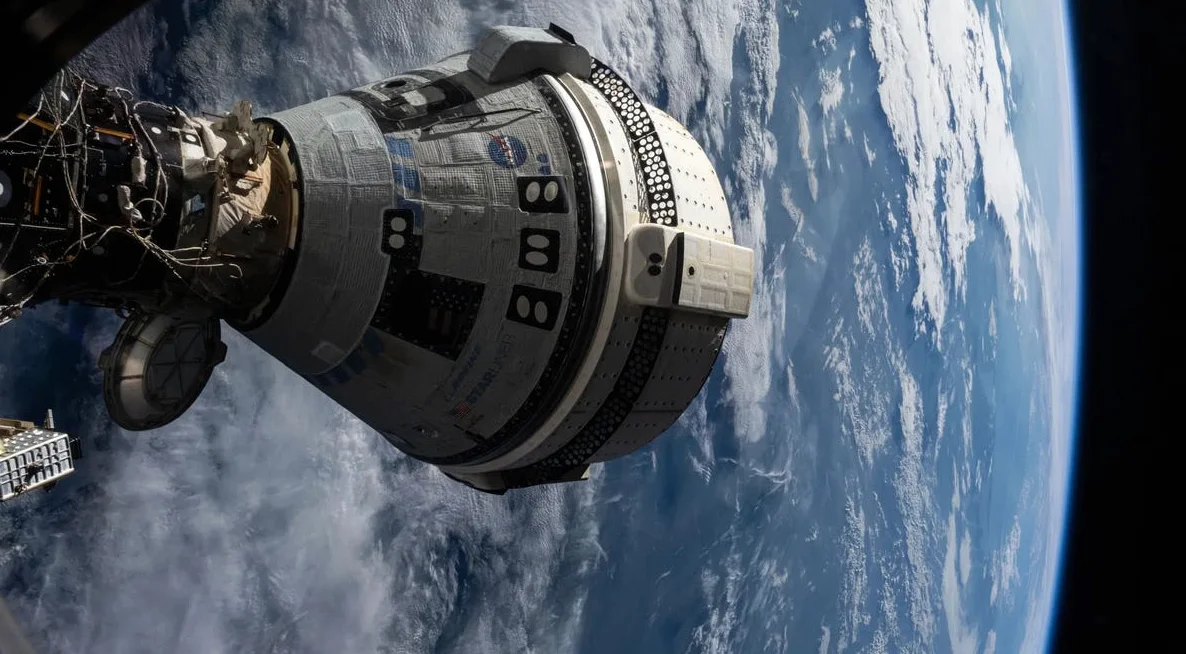
WASHINGTON — NASA revealed a blistering 300-page internal investigation Thursday that faults Boeing’s Starliner spacecraft for technical breakdowns and accuses agency leaders of unprofessional conduct during the troubled 2024 crewed test flight.
The report, completed in November and presented at a Feb. 19 news conference, retroactively categorizes the mission as a ‘Type A’ mishap — the most severe classification, matching the 1986 Challenger shuttle tragedy. No lives were lost, but the probe states the spacecraft sustained over $2 million in damage and exposed astronauts Wilmore and Williams to grave risks.
‘Had different decisions been made, had thrusters not been recovered or had docking been unsuccessful, the outcome of this mission could have been very, very different,’ Isaacman said.
Starliner launched June 5, 2024, from Kennedy Space Center in Florida atop a United Launch Alliance Atlas V rocket. Wilmore and Williams, veteran NASA astronauts now retired, docked at the ISS the next day for what was planned as an eight-to-10-day stay. Multiple thruster failures and helium leaks forced NASA to return the capsule uncrewed on Sept. 6, 2024. The astronauts remained aboard the station for 286 days total, returning March 18, 2025, via SpaceX’s Crew-9 Dragon capsule with a splashdown off Florida.
The investigation, drawing on interviews with unnamed NASA officials, highlights ‘defensive, unhealthy, contentious meetings’ early in the mission that clouded judgments on crew safety versus program goals. Boeing’s behavior drew particular ire for inadequate responses to known issues.
Boeing responded in a statement: ‘NASA’s report will reinforce our ongoing efforts to strengthen our work’ as the company collaborates with NASA on future flights, including a potential uncrewed Starliner mission to the ISS as early as April.
This assessment clashes with a 2024 review by the Aerospace Safety Advisory Panel, an independent group reporting to NASA and Congress. That report, publicized in February 2025, praised NASA’s choice to undock Starliner empty, calling it a ‘thoughtful and effective approach’ to a ‘complex and challenging’ safety dilemma. The panel noted Starliner’s successful autonomous landing but flagged a post-flight thruster failure that would have endangered a crew during re-entry.
The Starliner program, part of NASA’s commercial crew initiative, aims to provide a second U.S. vehicle for ISS transport by 2030, complementing SpaceX’s Dragon, which has flown routine missions since 2020. NASA has awarded Boeing fixed-price contracts totaling billions since 2014, but delays and overruns have plagued development.
Public scrutiny intensified as the mission dragged on. President Donald Trump and SpaceX CEO Elon Musk accused the Biden administration of abandoning the astronauts, with Trump later claiming credit for their return despite pre-existing plans. Wilmore and Williams, however, consistently backed NASA’s decisions, framing their extended stay as routine astronaut duty.
Isaacman, a billionaire space entrepreneur who leads NASA under the current administration, used the briefing to call out prior leaders. He stressed the need for cultural changes to prevent repeats, as the agency eyes certifying Starliner for operational flights.
Thursday’s revelations come amid preparations for the next Starliner test. Engineers are addressing thruster designs and propulsion systems based on lessons from the report. NASA officials said accountability measures, including personnel reviews, are underway.
The saga highlights tensions in NASA’s reliance on private firms for human spaceflight. While SpaceX has delivered reliable service, Boeing’s struggles have fueled debates over contract awards and oversight.




Comments
No comments yet
Be the first to share your thoughts