

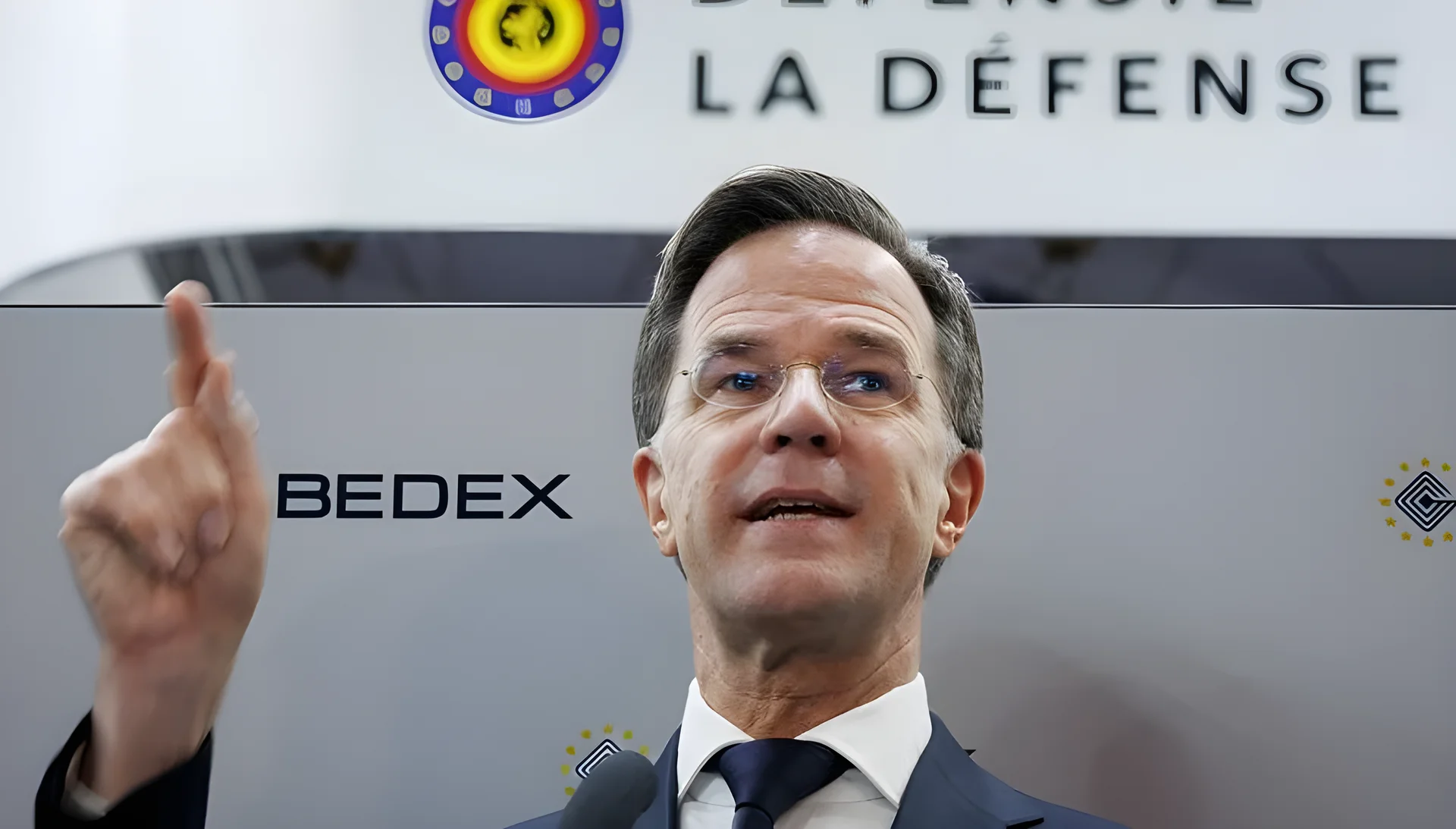
NATO Secretary General Mark Rutte expressed confidence that tensions between the United States and European allies over the Strait of Hormuz can be resolved, despite recent disagreements. In a statement on Thursday, Rutte emphasized the alliance’s commitment to addressing the situation through diplomatic and collaborative efforts.
Strait of Hormuz Blockade and Economic Impact
The Strait of Hormuz, a critical shipping channel connecting the Persian Gulf to the open sea, has been effectively blocked by Iran in retaliation for recent U.S. and Israeli airstrikes. This has led to a surge in global oil prices, with crude oil hitting over $85 per barrel in recent weeks. The strait handles about 20% of the world’s seaborne oil trade, and its closure poses a significant risk to global energy markets.
According to the International Energy Agency, the closure of the strait has already disrupted the supply chain for major oil-producing nations, including Saudi Arabia and the United Arab Emirates. The economic implications are vast, with energy analysts warning of potential inflationary pressures across the globe.
Mark Rutte, in his remarks to reporters in Brussels, stated, ‘Everybody agrees this strait cannot stay closed. It has to open up again as soon as possible.’ He emphasized that the security of global trade routes is a shared priority for NATO members and that the alliance will work to find a solution that aligns with their collective interests.
U.S. and European Disagreements Over Military Involvement
Earlier this week, U.S. President Donald Trump had suggested in media remarks that NATO may have a ‘very bad’ future if European allies do not help ensure safe passage for commercial shipping through the strait. His comments came amid growing tensions over the potential military involvement of European nations in securing fuel shipments through the region.
European allies, however, have swiftly ruled out participating in any military operation to secure the strait. The European Union has maintained a firm stance that any military action should be a last resort and must be authorized by the United Nations. This divergence in approach has sparked concerns about the cohesion of the transatlantic alliance.
‘We will find a way forward,’ Rutte said, highlighting the alliance’s determination to maintain unity even in the face of differing perspectives on the matter. He reiterated that NATO’s primary role is to ensure the security of its members and the stability of the international order.
Analysts note that the disagreement highlights a broader issue of strategic alignment between the U.S. and its European counterparts. While the U.S. has pushed for a more assertive military response, European nations have advocated for a more diplomatic approach to de-escalate the situation.
What Analysts Say About the Situation
Energy analysts warn that the ongoing blockade of the Strait of Hormuz could lead to a prolonged period of economic uncertainty. According to a recent report by the International Monetary Fund, the closure of the strait could result in a 3% increase in global oil prices over the next six months, affecting economies worldwide.
‘The situation is extremely volatile, and any escalation could have far-reaching consequences for global energy markets,’ said Dr. Anna Müller, an energy policy expert at the European Institute of International Relations. ‘It is crucial for NATO members to find a unified approach to de-escalate tensions and restore stability in the region.’
Rutte’s comments have been welcomed by several European leaders, who have called for continued dialogue with the U.S. to address the issue constructively. However, the challenge lies in bridging the gap between the U.S.’s desire for immediate military action and the European perspective that prioritizes multilateral diplomacy.
As the situation remains fluid, the international community is closely watching the developments in the region. The next few weeks will be critical in determining whether a resolution can be reached through diplomatic means or if the situation will continue to escalate.
The NATO secretary general’s confidence in the alliance’s ability to resolve the spat over the Strait of Hormuz reflects a broader commitment to maintaining unity and cooperation among its members. However, the success of these efforts will depend on the willingness of all parties to engage in meaningful dialogue and find common ground.






Comments
No comments yet
Be the first to share your thoughts