

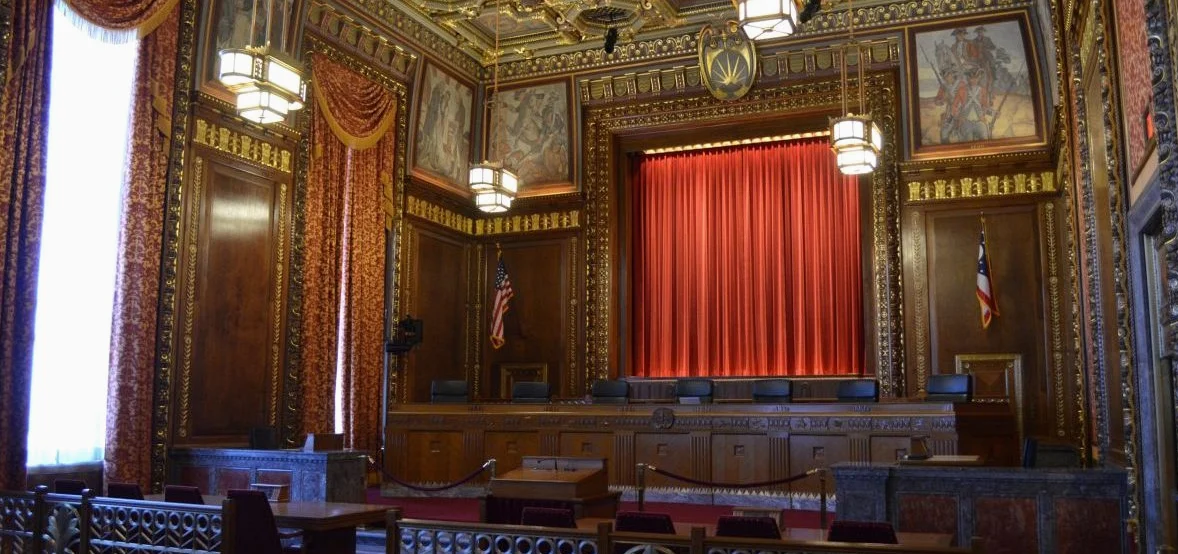
Ohio’s Supreme Court heard arguments on May 20 regarding a case involving the state’s decision to end its participation in the Federal Pandemic Unemployment Compensation (FPUC) program in June 2021, before the program’s federal expiration in September of that year. The case, which has gone through multiple courts, centers on whether Gov. Mike DeWine had the legal authority to withdraw from the program. The plaintiffs argue that the governor lacked the legal authority to exit the program and that the state is owed $900 million in unclaimed benefits.
Legal Disputes Over Pandemic Benefits
The issue traces back to 2021 when a group of Ohioans sued the state for ending its participation in the FPUC program. The program, created under the CARES Act in March 2020, provided $600 per week in extra unemployment benefits from March to July 2020, and $300 per week afterward. States were not required to participate, but Ohio did initially. Gov. DeWine’s office argued that the benefits disincentivized people from returning to work, a concern echoed by business groups.
Chief Justice Sharon Kennedy questioned why the case was brought back after being dismissed as moot in 2022. Solicitor General Mathura Sridharan, representing DeWine, said the case was moot, noting that the program ended in 2021 and that the court had already ruled on the matter. However, plaintiffs argue that the court’s earlier ruling focused on a preliminary injunction and not the central issue of DeWine’s authority.
Supreme Court Denies Bribery Appeal
Separately, the U.S. Supreme Court upheld the convictions of former Ohio House Speaker Larry Householder and ex-lobbyist Matt Borges in a $60 million bribery scheme. The high court’s decision affirmed a unanimous 6th Circuit U.S. Court of Appeals ruling from May 2024. Householder received a 20-year sentence for orchestrating a scheme to pass legislation favorable to Akron-based FirstEnergy Corp. Borges received a five-year sentence for his role in undermining efforts to repeal the legislation. Householder’s attorney criticized the ruling, arguing it was unjust and excessive.
Political Implications and Broader Legal Context
While the Ohio Supreme Court’s ruling on the FPUC case is expected to determine whether DeWine’s decision to exit the program was legal, the case has drawn attention due to the years of litigation and the estimated $900 million in benefits at stake. Meanwhile, the Supreme Court’s decision on Householder and Borges leaves their convictions intact, reinforcing federal anti-corruption efforts in the state. The rulings highlight the ongoing legal and political challenges in Ohio as the state manages post-pandemic governance and accountability for public officials.






Comments
No comments yet
Be the first to share your thoughts