

 BBC
BBC 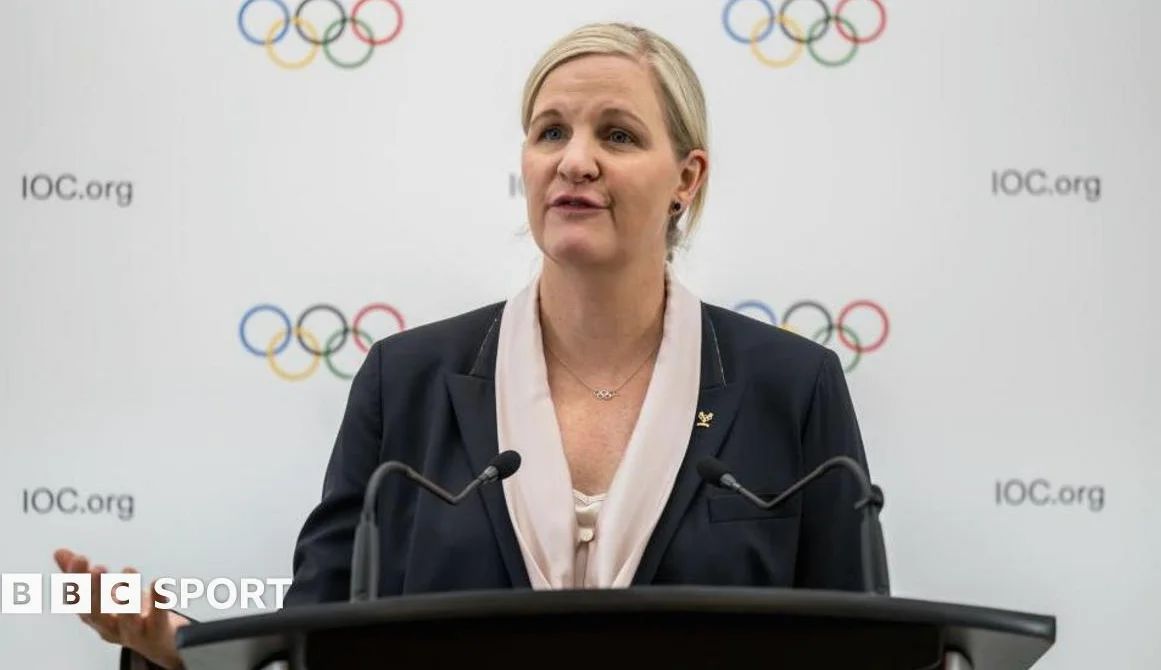
The International Olympic Committee (IOC) has announced that the women’s category of Olympic sports will be limited to biological females from 2028, according to the BBC. The new policy. Set to take effect during the Los Angeles Olympics, involves a ‘once-in-a-lifetime’ sex test to determine eligibility for female competition. This test aims to prevent transgender women and those with differences in sexual development (DSD) who have gone through male puberty from competing in the female category.
The New Policy and Its Implications
The IOC president, Kirsty Coventry, stated that the policy was ‘led by medical experts’ and emphasized the importance of fairness and safety in female competition. ‘It is absolutely clear that it would not be fair for biological males to compete in the female category,’ she said. ‘In addition, in some sports it would simply not be safe.’
The eligibility for the female category will be determined by a screening to detect the SRY gene, the sex-determining region Y gene, which is part of the Y chromosome and causes male characteristics to develop. The IOC described this method as ‘unintrusive’ compared to other possible methods and noted that athletes who test negative for the SRY gene will permanently satisfy the eligibility criteria for competition in the female category.
Athletes who fail the test will still be included in other classifications for which they qualify, such as male categories, mixed categories, and open categories; this change marks a significant shift in policy, as the IOC previously left sex eligibility regulations to the governing bodies of individual sports.
Controversy and Debate
The new policy has sparked controversy. With supporters arguing that it is necessary to preserve fairness and safety in female competition. They also claim that the genetic test is a reliable, confidential, and proportionate approach that has the backing of sports scientists and the majority of athletes. Opponents, however, remain concerned about the potential for false positives and the invasive nature of the test.
A group of academics recently called sex testing a ‘backwards step and a harmful anachronism’ in a report submitted to the British Journal of Sports Medicine. They argued that testing violates the human rights of athletes and could create stigma and psychological distress. The report also criticized the approach for reducing a complex characteristic to a single gene.
The IOC used the SRY gene test in the 1980s but abandoned it in the 1990s after a number of ‘false positives’ and concerns over the treatment of female athletes. Now, under mounting pressure, the IOC has adopted a new approach, and it will be fascinating to see if it now faces any legal challenges.
How the IOC Reached Its Decision
The IOC said its working group reviewed the latest scientific evidence over the past 18 months, which showed a ‘clear consensus’ that ‘male sex provides a performance advantage in all sports and events that rely on strength, power and endurance.’ The IOC consulted a ‘wide range of experts in relevant fields’ and an online athlete survey that had more than 1,100 responses.
Interviews were also conducted with ‘impacted athletes from around the world.’ The IOC said that feedback from the athlete consultation revealed a ‘strong consensus’ that ‘fairness and safety in the female category required clear, science-based eligibility rules.’
The move does not apply to any grassroots or recreational sports programs, and the IOC said the findings of any tests would not be applied retrospectively. Coventry emphasized that ‘every athlete must be treated with dignity and respect’ and that athletes will need to be screened only once in their lifetime.
Coventry also said that ‘there must be clear education around the process and counselling available, alongside expert medical advice.’ The IOC’s decision reflects a broader trend in sports governance, where the balance between fairness and inclusion has become increasingly complex.
The policy will have far-reaching implications for transgender and DSD athletes, many of whom have faced intense media scrutiny and legal challenges in recent years. The IOC’s decision has been welcomed by some who argue that it is essential to protect the integrity of female competition. However, it has also drawn criticism from trans rights campaigners who argue that it could violate human rights and undermine the principle of inclusion.
The IOC’s policy will take effect in 2028, and the impact of this decision will be felt in the years leading up to the Los Angeles Olympics. Athletes, sports federations, and human rights organizations will all be watching closely to see how this new policy is implemented and whether it will stand up to legal scrutiny.






Comments
No comments yet
Be the first to share your thoughts