

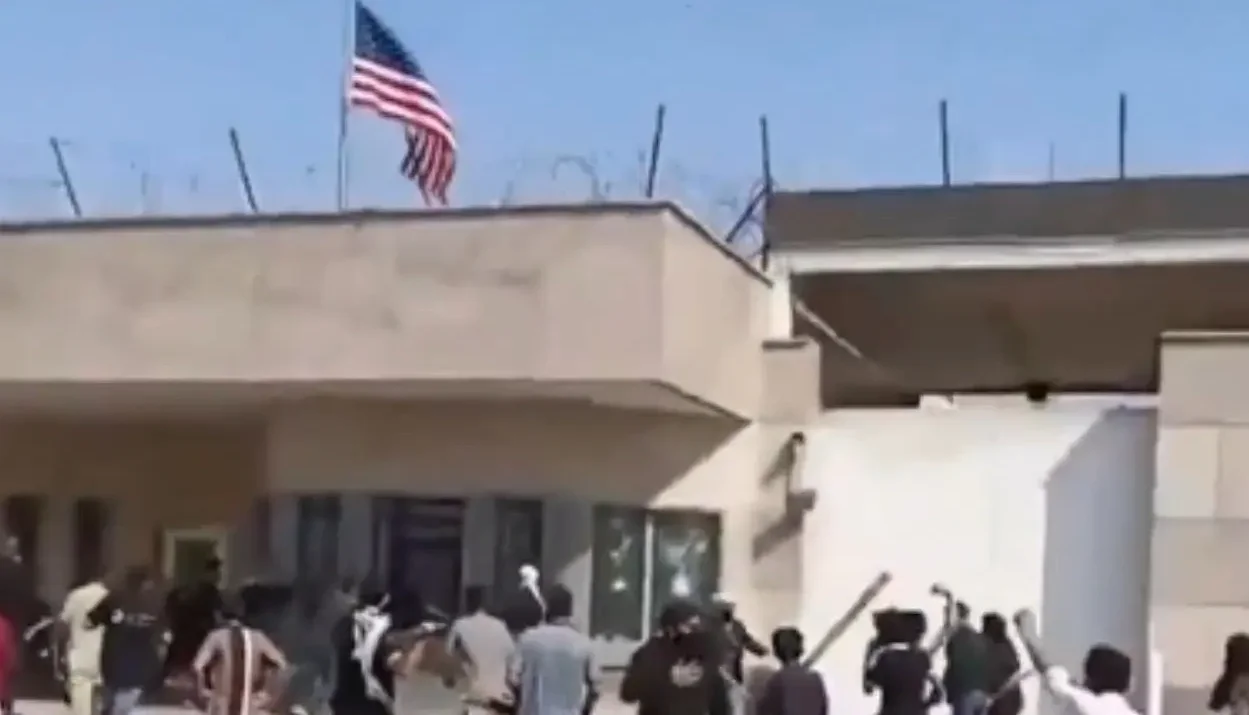
Protests in Pakistan have intensified following U.S.-Israel strikes on Iran, with demonstrators clashing with security forces outside the Iranian consulate in Karachi. According to Pakistani media reports, the gathering turned violent as protesters attempted to enter the consulate premises on MT Khan Road, throwing stones and facing heavy police intervention.
Escalating Tensions in Karachi
Rescue officials confirmed that five individuals were injured in the clashes and have been transported to nearby hospitals for treatment. The police and security forces, including the Rangers, have increased their presence in the area to prevent further violence and ensure public safety. Local authorities have also closed parts of Sultanabad Road leading to Mai Kolachi, causing significant traffic disruptions and forcing vehicle diversions, as reported by the Karachi Traffic Police.
The protests were triggered by the recent U.S.-Israel attacks on Iran, which resulted in the death of Iran’s Supreme Leader, Ayatollah Ali Khamenei. The Israeli Defense Forces (IDF) referred to the operation as ‘Operation Roaring Lion,’ a joint effort with the U.S. Armed Forces that had been in planning for months.
Israeli Defense Forces Statement
According to a video message released by IDF’s Lt. Col. Nadav Shoshani, the operation was carried out to eliminate threats against Israel, with the statement emphasizing that ‘the price of an action is too high.’ The IDF reiterated its commitment to continue such actions to neutralize perceived threats to Israeli security.
Iran has declared 40 days of public mourning following the death of Khamenei, as reported by Reuters, citing Iranian state media. The country’s Supreme Leader’s office has ordered flags to be flown at half-mast and has announced public gatherings to pay respects. This period marks the end of a 37-year era under Khamenei’s leadership, who succeeded the revolution’s founder, Ruhollah Khomeini.
Khamenei’s tenure since 1989 has been defined by a consistent stance of resistance against Western influence. His death is seen as a key moment in Iran’s political history, with significant implications for the country’s future direction.
Regional Implications and Next Steps
The strikes and subsequent protests have raised concerns about regional stability. Analysts are closely watching how Iran will respond to the loss of its Supreme Leader, with potential implications for nuclear negotiations and regional alliances. The situation has also drawn attention to Pakistan’s role in the region, given its proximity to both Iran and the potential for spillover effects from heightened tensions.
As of now, there are no immediate indications of further military actions from either Iran or its allies. However, the international community is closely monitoring the situation, with diplomats and analysts urging for de-escalation and dialogue to prevent a wider conflict.
With the mourning period set to last 40 days, the coming weeks will be crucial in determining how Iran’s leadership transition unfolds and how the country will handle its foreign policy challenges.
The protests in Pakistan highlight the broader regional impact of the strikes, as the country’s population reacts to the geopolitical developments. With tensions high and the situation evolving rapidly, the international community is on edge, waiting to see how the next phase of events will unfold.






Comments
No comments yet
Be the first to share your thoughts