

 Al Jazeera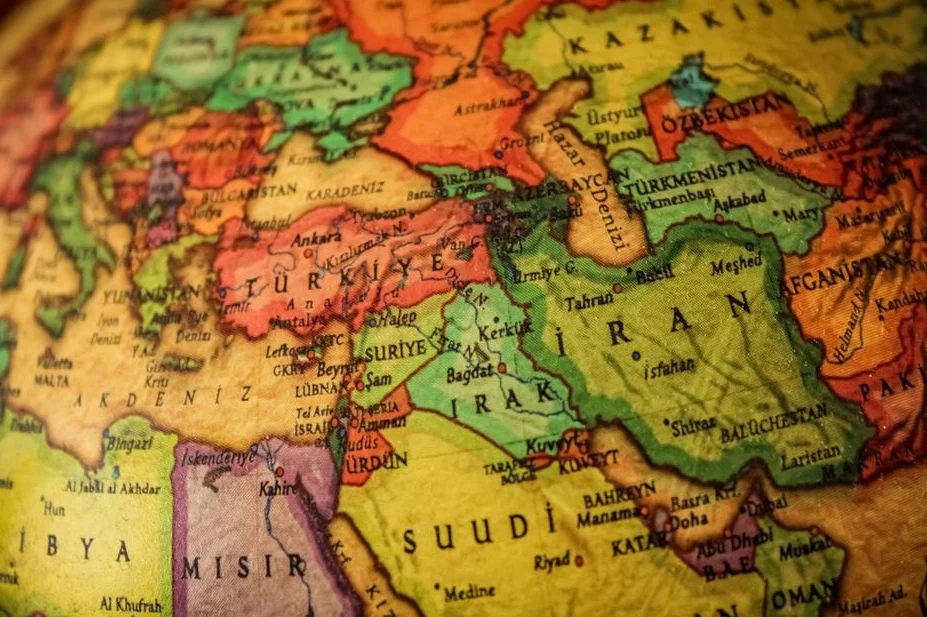
A New Regional Power Dynamic
The muted reaction, which persisted into Saturday, likely shows the multilayered — and still emerging — implications of the new deal for US strategy, according to analysts.
Considered by many to lay the groundwork for what could be one of the most significant power shifts in the region in decades, the deal comes within the context of the US-Israeli war against Iran and Israel’s increasingly aggressive military actions in the region.
Implications for US Strategy
One provision is said to call on signatories to treat an attack on one as an attack on all, reminiscent of NATO’s Article 5.
Some analysts see the agreement as a reflection of growing wariness towards an unpredictable US government, potentially presaging a wider security realignment that could transform the Middle East.
Others have argued that, while US actions have indeed built the conditions that accelerated the deal, the pact fits neatly within US strategic aims of greater burden-sharing among allies.
In the near term, many experts agree the pact will likely have the greatest impact in the diplomatic sphere, posing a potentially insurmountable challenge to Arab-Israeli normalisation under the Abraham Accords.
Challenges to US Influence
The push for greater regional cooperation with Israel has been the linchpin of the Trump administration’s designs for the Middle East, dating back to his first term. But Sina Toosi, a senior fellow at the Centre for International Policy, explained that the mutual defence pact is likely a setback.
“Ironically, the US and Israel entered the war [with Iran] hoping to change the regional balance of power in Israel’s favour and accelerate regional integration through initiatives like the Abraham Accords,” Toosi told Al Jazeera.
“Instead, one of the first major post-war developments is the emergence of a defence initiative among three major Muslim powers seeking greater strategic autonomy.”
The full details of the agreement have not yet been released. Only a joint statement on Friday has addressed the pact’s terms.
The central pledge of the agreement “stipulates that any armed attack against any one of the three states shall be regarded as an attack against them all”, according to the statement. But that premise remains so far untested.
It came just days after Israel launched an air strike on the Qatari capital Doha, exacerbating concerns about Washington’s ability to control one of its closest allies. The pact builds on a previous mutual defence agreement with a similar provision, reached between Saudi Arabia and Pakistan in September 2025.
In the wake of the Hamas-led attacks on October 7, 2023, Israel has led multiple war efforts, including against Iran, Lebanon and a genocidal campaign in Gaza.
Officials in Riyadh, Ankara and Islamabad have taken pains to stress that Friday’s agreement is meant to supplement, not supplant, any other alliances. Experts have further cautioned that the strengthening of defence ties between the trio does paper over their individual, and at times diverging, interests.
Saudi Arabia, for instance, said the deal “does not represent any orientation toward building a military axis or sectarian/religious bloc”.
“The agreement does not come at the expense of the Kingdom’s strategic and strong relations at the Gulf, Arab, and international levels,” it said.
The country has been the target of a large number of Iran’s retaliatory attacks since the US-Israeli war began on February 28, and more recently, it has seen increased strikes from the Houthis in Yemen and Iran-aligned armed groups in Iraq.
Meanwhile, Turkiye’s presidential communication directorate said the strengthened partnership “is not an alternative” to the country’s membership in the 32-country NATO bloc.
Indeed, experts have said the agreement does not appear to have any bearing on any NATO commitments, although it could eventually lead to a diversion of resources in the event of multiple escalations.
Turkiye has the second-largest standing army in NATO, as well as access to advanced military technology. Saudi Arabia is understood as bringing its vast power of the purse to the agreement. Pakistan is the only nuclear-armed power of the three.
Despite assurances that the pact is not a regional re-orientation, some observers have connected the new alliance to the Trump administration’s at-times caustic approach towards NATO and its wider pivot away from multilateralism.
They argue it represents a clear, if nascent, weakening of Washington’s strategic sway.
“The basis for our alliance in the Middle East, in the Persian Gulf, and certainly with NATO and with our allies in Asia, have been shaken,” Harlan Ullman, the chairman of the Killowen Group advisory firm and a former naval officer, told Al Jazeera in a television interview.
“How badly remains to be seen. It may only be stirred, not shaken. But it’s something that we need to worry about.”
The US approach to the Gulf has largely been based on forging military, economic and diplomatic ties in the region. In turn, Gulf states have expected de facto security guarantees.
That strategy was energised in the early 1980s upon the founding of the Gulf Cooperation Council, and it grew amid the US invasion of Iraq and Afghanistan, part of Washington’s so-called “global war on terror”.
The US has about 50,000 troops stationed across 19 sites in the Middle East, with US-controlled bases in Turkiye, Kuwait, Bahrain, Qatar and the UAE, and a presence at bases in Saudi Arabia, Oman, Jordan, Iraq and Israel.
Qatar, Bahrain, Jordan, Saudi Arabia, Kuwait and Egypt are among the countries in the region that the US has designated as “major non-NATO allies”, highlighting the importance of their military and economic ties. Pakistan is also a major non-NATO ally.
But critics have argued the US-Israeli war with Iran has degraded the foundations of those alliances.
Nawaf Obaid, a senior fellow at the Department of War Studies at King’s College London, has characterised the Pakistan-Saudi-Turkiye deal as the clearest sign yet of the shift away from an “American-designed regional security order”.
“The US-Iran war accelerated a transformation already under way,” Obaid argued in a column for Al Jazeera.
He pointed out that hosting US bases has made several Gulf states targets for attacks during the ongoing war with Iran.
“Iranian retaliatory strikes exposed the vulnerability of the US basing structure in the Gulf and forced the repositioning of substantial combat forces,” Obaid said.
The loosening bonds can also be seen on the US side. Successive administrations — including those led by former Presidents Barack Obama and Joe Biden — have attempted to pivot away from the Middle East, pursuing instead a renewed emphasis on China and the Asia Pacific.
The 2025 National Security Strategy, early in Trump’s second term, gave only brief mention to the region.
While Washington’s “intelligence relationships, military power, technology and economic influence will remain formidable” in the region, Obaid predicts the US presence will wane.
“Several American bases will eventually close, as they have lost strategic utility,” he wrote.
In line with US goals?
Asli Aydintasbas, a fellow at the Brookings Institution, also pointed to a desire within the Trump administration to shift away from the Middle East, particularly when it comes to so-called “democracy building”.
But that desire has generally not extended to withdrawing military forces in the Gulf, she explained. With efforts to end






Comments
No comments yet
Be the first to share your thoughts