

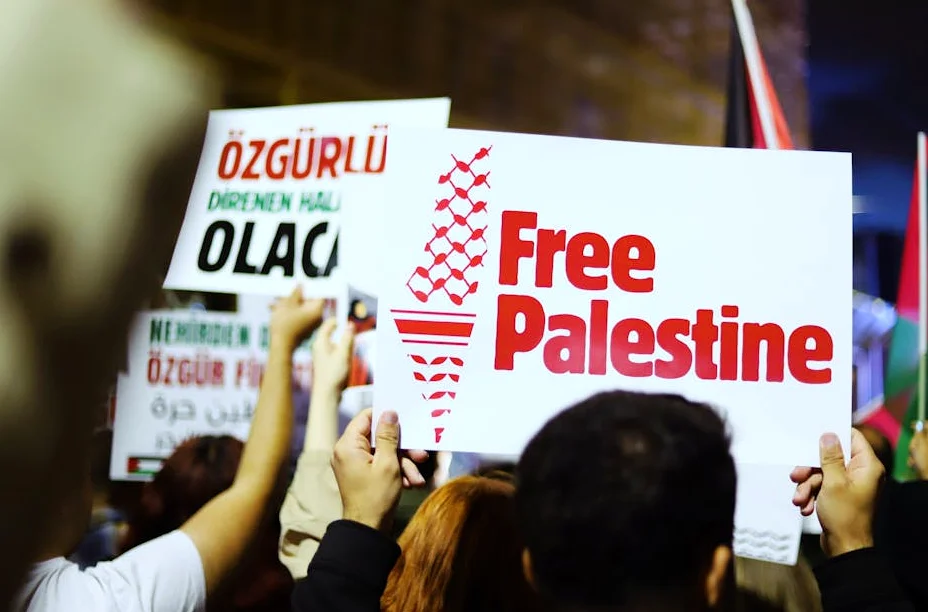
As the 50th anniversary of Land Day approaches, Palestinians and their supporters worldwide are intensifying calls for justice and resistance, with multiple reports highlighting both the historical significance and the ongoing challenges faced by the Palestinian people. The day. Commemorated annually on March 30. Marks the 1971 protests against Israeli land expropriations, which led to the deaths of six Palestinian demonstrators; this year, the event has taken on renewed urgency amid ongoing tensions and international scrutiny.
Historical Context and Current Significance
Land Day. Observed on March 30. Commemorates the 1971 protests against Israeli land confiscations in the West Bank and Gaza. According to the Palestinian-led BDS movement, these demonstrations were a decisive moment in the struggle for Palestinian rights, with six protesters killed and hundreds injured. The event has since become a symbol of resistance against occupation and displacement.
The BDS movement. Which has been active for 20 years, continues to call for global solidarity and action against what it describes as the “genocidal” policies of Israel. In a recent alert. The movement highlighted the shipment of Venezuelan oil from Sardinia to Israel, urging supporters to oppose such actions — the movement also called for a series of solidarity actions from March 21 to 28, emphasizing the need to hold Israel accountable for its policies.
Al-Haq, a Palestinian human rights organization, has also marked the anniversary, stating that the ongoing “genocide” in Palestine has not abated. The organization has documented numerous cases of human rights violations, including the torture of a 22-month-old child named Jawad, which was revealed through an affidavit. Al-Haq emphasized that the struggle for justice and accountability continues, particularly in the face of international inaction.
Global Solidarity and Pressure on Governments
The BDS movement has called on its supporters worldwide to escalate pressure on their governments to amend immigration and visa policies that facilitate the flow of arms and resources to Israel. According to the movement, a Dutch vessel recently transported artillery ammunition and mortar bombs through the Mediterranean, destined for Haifa. This has intensified calls for a global boycott of Israel, with the movement urging its supporters to act decisively.
Al-Haq has also focused on legal challenges, particularly in Denmark, where the organization is contesting the licensing of weapons to Israel. The legal battle, which has concluded, reflects the ongoing struggle for justice and accountability. According to Al-Haq, the cancellation of the Sde Teiman indictment is seen as a deliberate whitewashing of torture and a further entrenchment of apartheid and impunity.
Meanwhile, the Palestinian BDS National Committee (BNC), as the largest coalition of Palestinian civil society and the leadership of the global BDS movement, has called on partners, allies, and supporters across the world to pressure their governments. The BNC emphasizes the need to hold Israel accountable for its actions, particularly in light of the ongoing conflict and human rights abuses.
Legal and Human Rights Challenges
Al-Haq has documented numerous legal cases that highlight the ongoing human rights crisis in Palestine. One such case involves the torture of 22-month-old Jawad, which was revealed through an affidavit. The organization has stated that the case is a stark reminder of the systemic violence faced by Palestinians, particularly children.
Another significant legal challenge involves the International Criminal Court (ICC) and its role in addressing the situation in Palestine. Al-Haq has provided a timeline of events, showing how the organization has consistently pushed for international legal action against Israel. The organization also criticized the cancellation of the Sde Teiman indictment, which it views as an attempt to shield Israel from accountability.
The Palestinian Human Rights Organization (PHROC) has also condemned the cancellation of the Sde Teiman indictment, calling it a deliberate whitewashing of torture and a further entrenchment of apartheid and impunity. PHROC emphasized that the cancellation sends a clear message of support for the occupation and its policies.
International Reactions and Implications
While the BDS movement and Al-Haq have focused on global solidarity and legal action, international reactions have been mixed. Some countries have expressed support for Palestinian rights, while others have maintained diplomatic ties with Israel. According to the BDS movement, the shipment of Venezuelan oil from Sardinia to Israel has raised concerns about the complicity of European nations in the conflict.
The Dutch vessel transporting artillery ammunition through the Mediterranean has also drawn attention from human rights organizations. According to the BDS movement, this shipment highlights the ongoing flow of weapons to Israel, which contributes to the cycle of violence in the region.
Al-Haq has also highlighted the role of Denmark in the licensing of weapons to Israel. The organization has stated that the legal challenge against Denmark’s policies has concluded, but the struggle for justice continues. Al-Haq emphasized that the international community must take stronger action to hold Israel accountable for its actions.
Why It Matters and What’s Next
The 50th anniversary of Land Day is not just a historical milestone but a call to action for the global community. The ongoing human rights crisis in Palestine has drawn attention from human rights organizations, legal experts, and activists worldwide. According to the BDS movement, the shipment of arms and resources to Israel has intensified the conflict, making it more urgent to hold Israel accountable.
The legal challenges faced by organizations like Al-Haq and PHROC highlight the need for international legal action. The cancellation of the Sde Teiman indictment and the whitewashing of torture have been criticized as obstacles to justice. As the situation in Palestine continues to evolve, the international community must consider how to support the Palestinian struggle for liberation and justice.
What’s next remains uncertain, but the calls for accountability and resistance are growing stronger. As the 50th anniversary of Land Day approaches, the global community is being urged to take a stand against the ongoing occupation and human rights abuses in Palestine. The struggle for justice and freedom continues, and the world must not turn a blind eye.





Comments
No comments yet
Be the first to share your thoughts