

The landscape of political journalism is evolving, with a growing number of analysts and journalists advocating for a more rigorous, data-driven approach that prioritizes factual accuracy over ideological framing. In an era where political discourse is often dominated by quick takes and partisan interpretations, a new wave of independent journalists is challenging the status quo by focusing on empirical research and thorough analysis.
Challenging the Narrative-Driven Approach
According to Gell Elliott Morris, founder of the newsletter Strength In Numbers (SIN), the current state of political journalism is plagued by a tendency to start with a predetermined conclusion and then seek out data to support it. This approach, he argues, often results in the data being used as mere decoration for pre-existing arguments rather than as the foundation for analysis.
“Too many thinkers and strategists start with a conclusion in mind—Democrats need to move right, voters are irrational, etc.—and then go hunting for numbers to back it up,” Morris said. “I think we can do better. Data-driven journalism should start with the data, not the conclusions.”
Morris, a trained pollster and author of a book on polls and democracy, established Strength In Numbers as a response to what he sees as a tired and flawed approach to covering politics. He aims to provide readers with original, differentiated analysis grounded in empirical evidence rather than ideological bias.
The Rise of Independent Data Journalism
With major media outlets increasingly constrained by editorial incentives that prioritize clickbait and ideological alignment, Morris sees an opportunity for independent data journalism to thrive. “There is a real opening for people who want to cover election results and public opinion simply for the sake of covering them well,” he said.
The departure of FiveThirtyEight from the media landscape has left a void in the field of political data analysis. Most remaining data operations at major outlets are now influenced by the same pressures that shape broader media content—minimal resource allocation per story, optimization for social media engagement, and alignment with prevailing narratives.
“Even the independent analysts on Substack and social media tend to fall into predictable ideological lanes,” Morris noted. “But I think there’s a growing appetite for someone who wants to cover election results and public opinion from the perspective that democracy and the public matter, full stop.”
Putting Data at the Center
For Morris, the key to effective political journalism lies in treating public opinion as a serious object of study. This involves reading academic work on voter psychology, carefully analyzing survey responses, and interrogating the limitations of the data itself.
“I think the American public is smarter and more coherent than most of the political class gives it credit for,” he said. “A functioning democracy requires that the people who govern actually listen to the people they represent.”
Morris has participated in public debates about how to win voters in the 2026 and 2028 elections, and he credits his background in polling and statistical modeling as the foundation of Strength In Numbers. He has also been critical of the Trump administration, not because he is aligned with a particular political team, but because the data consistently points in a clear direction.
“If the centrist pundit class is wrong about something that I know something about, I’ll say that too,” he added. “I think it’s important to have a point of view about how public opinion should be measured and how it operates.”
Growing the Newsletter’s Impact
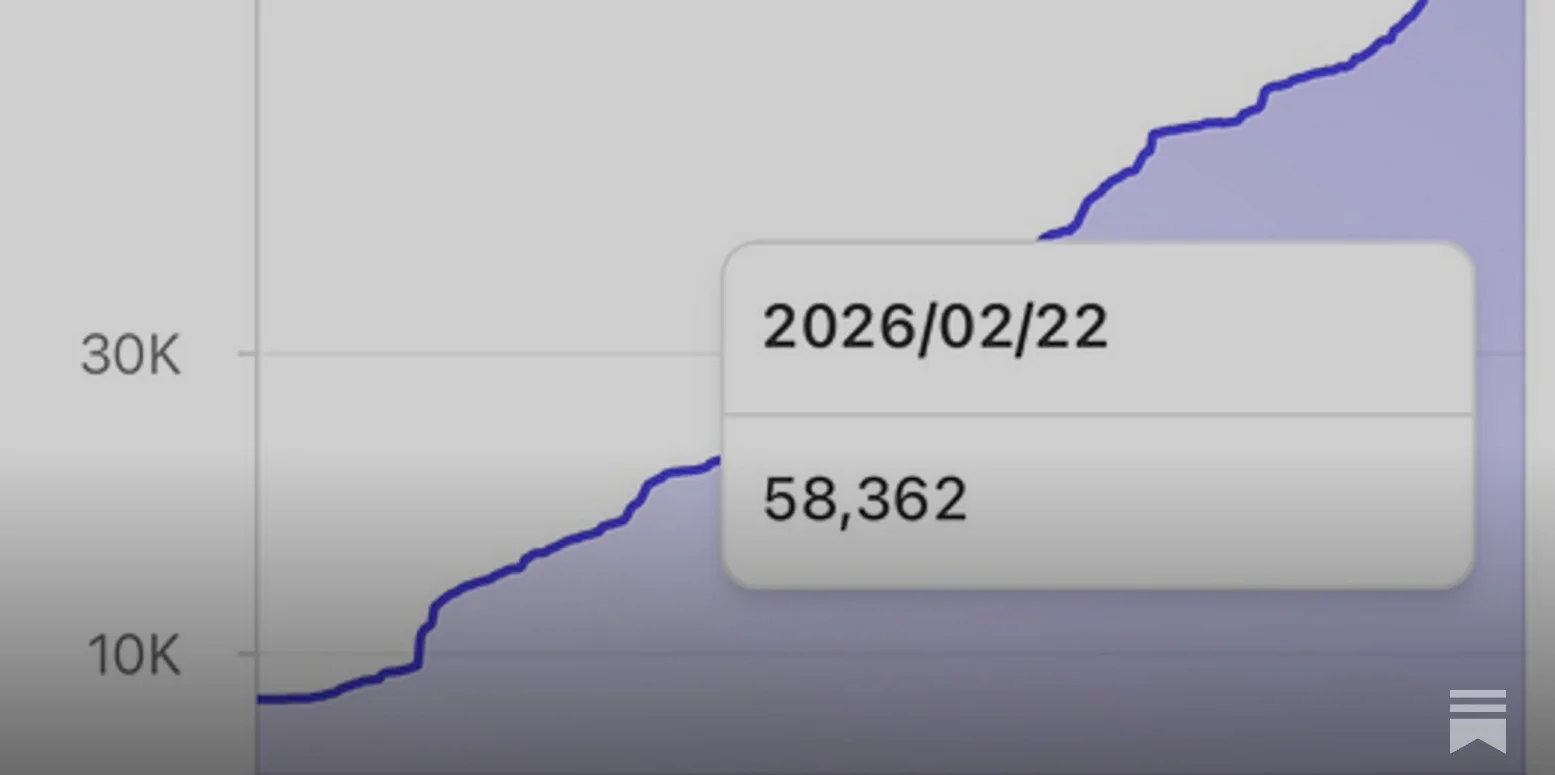
The Strength In Numbers newsletter has gained traction in its first nine months, with over 58,000 total readers and a current ranking of #55 on Substack. Morris is now working on strategies to further grow the publication’s reach and impact.
He is experimenting with the timing of his weekly Deep Dive posts, aiming to improve for engagement and open rates. Additionally, he plans to introduce for occasional Friday posts as a way to increase revenue and ensure the newsletter’s long-term sustainability.
The monthly Strength In Numbers/Verasight survey, which has become one of the most-cited independent polls in political journalism, will be supplemented with quicker-turnaround surveys to provide more timely insights into voter behavior and public opinion.
Expanding Beyond Text
Recognizing the growing role of video in political discourse, Morris is also investing more time into short-form video content on YouTube. He uploads podcast episodes and real-time breakdowns of news and data analysis, aiming to meet audiences where they are while maintaining the newsletter as the core of Strength In Numbers.
Alongside the newsletter, the Strength In Numbers Podcast has become a regular feature, with live recording sessions on Thursdays. Morris is also considering adding deeper dives with sources and introducing guest contributors to expand the podcast’s scope.
“The newsletter will always be home base for SIN, but I want to grow the publication’s impact,” Morris said. “That means meeting people where they are.”
The Future of Political Journalism
As the 2026 midterm elections approach, Morris is also working on private survey research for clients in politics and the media. While he is careful to maintain a boundary between his newsletter and consulting work, he plans to share relevant findings with readers via Substack Notes when appropriate.
In an environment where empirical political coverage is increasingly vital, Morris believes that Strength In Numbers represents a new model for political journalism—one that is driven by data, not ideology, and that treats public opinion as a serious and complex subject of study.
“We’re in a moment in American politics where empirical political coverage matters more than usual,” he said. “Big pronouncements about the electorate are everywhere. A startling number of them…”






Comments
No comments yet
Be the first to share your thoughts