

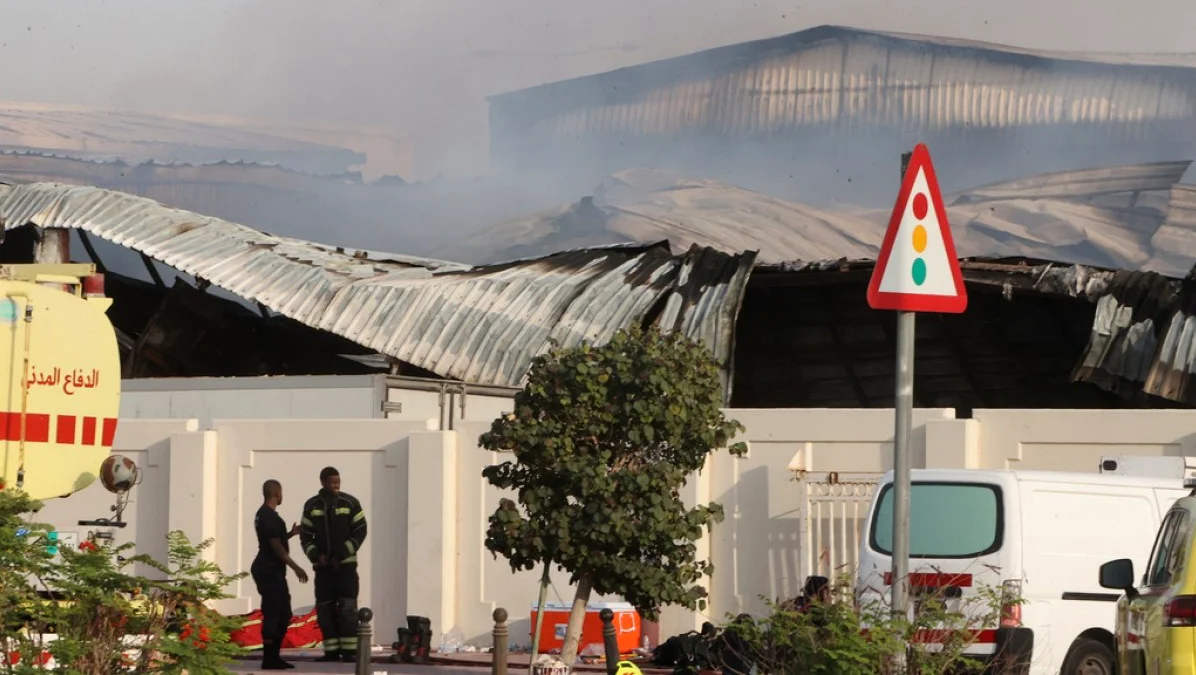
The Qatari Foreign Ministry confirmed that its air defenses intercepted and destroyed two Iranian SU-24 bomber jets, seven ballistic missiles, and five drones in a coordinated attack. The statement emphasized that the threat was neutralized immediately upon detection, in accordance with operational plans, as all incoming projectiles were shot down before reaching their intended targets.
Escalation in Regional Airspace
The incident marks a significant escalation in the already volatile airspace of the Gulf region. According to the Qatari government, the attacks were part of a broader pattern of Iranian aggression targeting multiple Gulf nations, including Saudi Arabia, Kuwait, Bahrain, and the United Arab Emirates. While most of the attacks have been in the form of missiles or air projectiles, this latest action by Iran appears to be one of the most direct and aggressive yet.
Qatar previously disclosed that its major international airport had been targeted in earlier strikes. The Qatari Foreign Ministry urged its citizens to remain calm despite the rising tensions, though the incident has undoubtedly increased fears of further escalation in the region.
Iranian Response to U.S.-Israeli Strikes
The Iranian attacks are widely seen as retaliation for the U.S.-Israeli joint military operation that began on February 28. On Saturday, officials announced that Ayatollah Ali Khamenei, Iran’s supreme leader, had been killed in strikes on his compound. However, U.S. leaders, including Secretary of War Pete Hegseth, have clarified that this is not a regime-changing operation.
“This is not a so-called regime change war, but the regime sure did change, and the world is better off for it today,” Hegseth said Monday morning during a press briefing. His comments underscored the complex geopolitical landscape in the Middle East, where the U.S. seeks to manage the fallout without fully committing to a broader conflict.
Dan Caine, a military analyst, has warned that additional firepower is being deployed to the Middle East, though the timeline for any major military operations remains uncertain. “The situation is highly fluid, and while we are seeing increased military activity, the exact scope and duration of any new operations are still under discussion,” Caine said.
Regional Concerns and Diplomatic Outreach
The escalating conflict has prompted concerns about the risk of the war expanding beyond its current scope. Qatar, along with several other Gulf states, has raised these concerns during a recent call with Russian President Vladimir Putin. Putin has also held separate conversations with the leaders of Bahrain, Saudi Arabia, and the United Arab Emirates, signaling a potential role for Russia in mediating the crisis.
Iran’s military actions, including the recent attacks on Qatari airspace, have drawn sharp responses from regional allies. The Qatari government has reiterated its commitment to protecting its sovereignty and territorial integrity, while also emphasizing the need for diplomatic solutions to de-escalate the situation.
With the situation showing no signs of abating, experts warn that the region is on the brink of further conflict. The Qatari Foreign Ministry has called for calm among its citizens, but the broader implications of this incident could have far-reaching consequences for regional stability and global energy markets.
The incident also raises questions about the effectiveness of air defense systems in the Gulf and the potential for more frequent confrontations between Iran and its regional adversaries. As the U.S. and its allies continue to assess the situation, the Middle East remains a flashpoint for geopolitical tensions that could easily spiral out of control.






Comments
No comments yet
Be the first to share your thoughts