

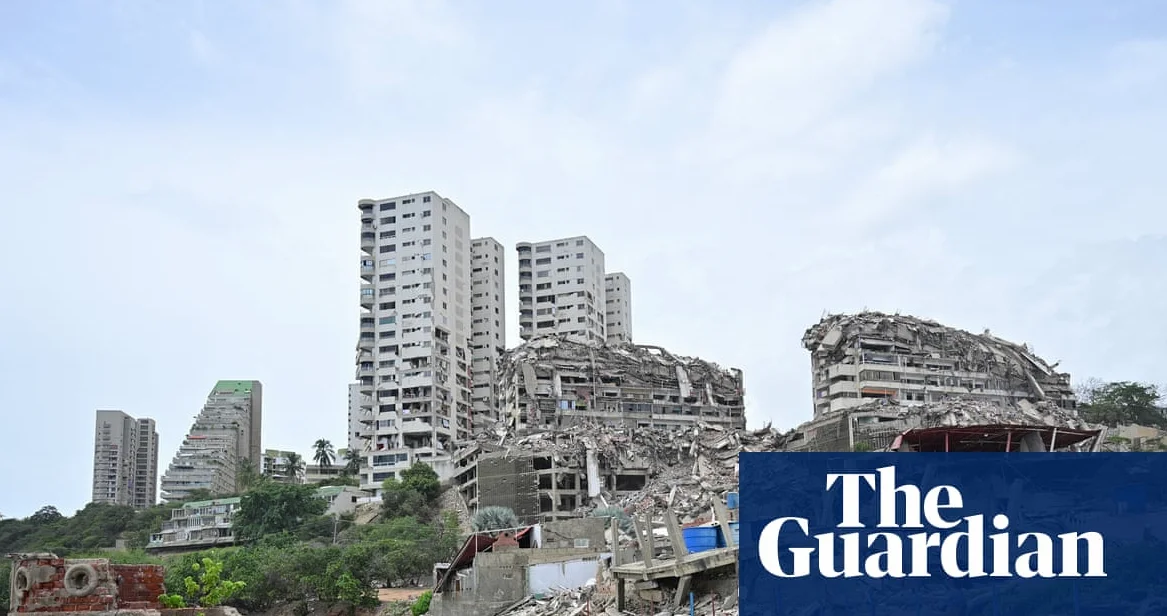
Venezuela’s interim president. Delcy Rodríguez. Has defended the government’s emergency response to the recent earthquakes, as the number of deaths continues to rise and families face the grim reality of recovering and burying their loved ones. According to The Guardian and NBC4 Washington, the number of fatalities has climbed to nearly 3,000, with many more still missing and bodies expected to be found in coming days.
Humanitarian Struggle and Burial Costs
Rosa López. A local resident. Described the emotional and financial toll of burying her son-in-law, José Antonio Toledo, after the quakes. According to The Guardian. Toledo’s body was found under the building where he worked as a security guard, but there was no space at the local hospital, so it was sent to another facility before being placed in an open parking lot. A forensic doctor eventually helped the family locate his remains, but they could not afford the $450 (£350) funeral home charge, as Only after the mayor’s office offered a free burial space were they able to lay him to rest. “He was an exemplary person, a boy who liked helping people,” López said.
Forensic technician Joel Mirabal said the recovery process is overwhelming, with 60% to 70% of victims being identifiable by relatives or neighbors through tattoos, scars, or clothing. However, he noted that the remains often bear little resemblance to the victims in life. If a body cannot be identified, it is sent to La Guaira seaport for forensic processing. According to Mirabal, the growing number of dead will likely necessitate mass graves.
Government Response and Criticism
Rodríguez has faced criticism for the initial slow response to the disaster, particularly in the hardest-hit state of La Guaira. According to NBC4 Washington, residents complained that the government delayed a serious search-and-rescue operation, forcing families to dig through rubble with their bare hands. Rodríguez, wearing a black ribbon in a press conference in Caracas, defended the government’s actions, saying, “We did not wait one day, two days or three days. We activated immediately.” She accused media outlets of spreading misinformation and politicizing the humanitarian crisis.
Experts have pointed to poor construction standards in social housing projects, a policy associated with former president Hugo Chávez, as a factor in the high casualty rate. Rodríguez claimed that the government had mobilized thousands of troops and officials and had coordinated efforts with international partners. However, residents expressed frustration, saying they had to begin the recovery themselves before international teams arrived.
International Rescue Efforts and Closure
International rescue teams, including those from the United States, have been involved in the recovery efforts, though they are now beginning to wrap up their operations. According to the Buenos Aires Times, the critical 72-hour window for rescuing survivors has passed, and teams have shifted their focus to recovery. The Los Angeles County fire department and teams from Florida and Virginia are among those preparing to leave after finding no more signs of life.
Interim President Rodríguez held a ceremony to award medals to international rescue teams, including their search dogs. She described the nation as “gripped by profound grief,” where families still hold out hope for finding loved ones alive. Despite the government’s efforts, many Venezuelans remain dissatisfied with the pace of the response, particularly in the early days of the disaster.


1 Comment