

 BBC
BBC 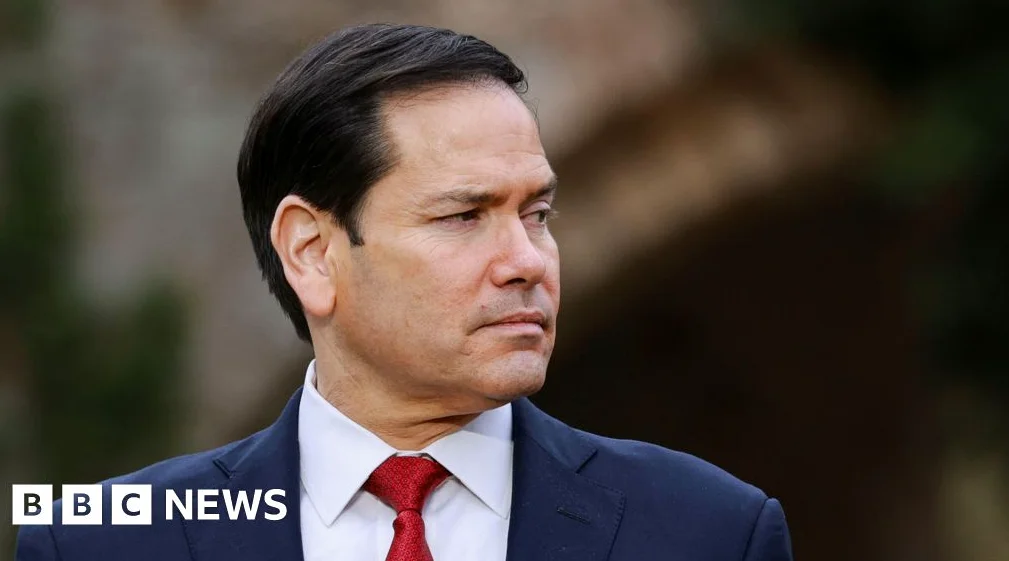
US Secretary of State Marco Rubio said the US expects to finish its operations in Iran ‘in the next couple of weeks,’ according to the BBC. Speaking at the end of a meeting in France of foreign ministers from the group of major Western economies, known as the G7, Rubio stated that the objectives of the operations were being achieved and were ahead of schedule.
Progress and Uncertainty in Peace Talks
Rubio mentioned that there had been messages from Iran, but it was unclear who was left to represent the country. He referred to peace talks that President Donald Trump says Iran wants, although Tehran denies this. Several top Iranian leaders have been killed since the US and Israel began the war on 28 February, and the US is sending troops to the area to give the president options, Rubio said.
Trump and his top officials have consistently said their operations in Iran would last four to seven weeks. As the fourth week is about to end, Rubio’s time frame would fit with those predictions — However, he also mentioned that it was a question of ‘weeks, not months’ when he answered a series of questions from reporters.
Proposed Peace Plan and Iranian Response
Trump is widely reported to have passed on to the Iranians, via Pakistan, an outline of a 15-point plan to end the war. The White House has not confirmed the contents of the proposals reported by Israel’s Channel 12 early this week.
When asked by reporters if the Iranians were going to give their response on Friday, the US secretary of state said: ‘We haven’t gotten it yet. Look, we’ve got messages. We’ve had an exchange of messages and indications from the Iranian system, whatever’s left of it, about a willingness to talk about certain things. We’re waiting for further clarification about who was it that we would be talking to, what we would be talking about, and when will we be talking.’
Freedom of Navigation and Economic Impact
In their statement after the talks. The foreign ministers called for ‘the absolute necessity to permanently restore safe and toll-free freedom of navigation in the Strait of Hormuz,’ which Iran has closed in retaliation. It was a reference to Iran’s threat to charge a fee, Rubio said.
There have been reports that Iran’s Islamic Major Guards Corps has already been charging some vessels a fee in return for secure passage. Iranian MPs are also drafting a bill, although it is in its early stages; About 20% of the world’s oil and liquefied natural gas typically passes through the Strait of Hormuz. Its closure has caused the price of oil to skyrocket and has raised concerns that a prolonged blockage could raise energy prices—and even lead to a severe contraction in the economies of many countries.
Most of the G7 countries. Except Japan. Are members of the Nato transatlantic alliance, which have so far refused to answer a call by Trump to send ships to escort vessels through the strait, angering the US leader. Instead, they have said ending the conflict was the best way to ensure freedom of passage.
After the talks in France. Rubio said the UK was leading the work to build a coalition to ensure the strait remained free. Such a coalition, he said, would be needed for the period after the war. He added that US allies would be more affected than the US if the Iranian threat became a reality.
Call for Cessation of Attacks on Civilians
Referring to the war more generally, the G7 communique called for ‘an immediate cessation of attacks on civilians and civilian infrastructure.’ ‘There can be no justification for the deliberate targeting of civilians in situations of armed conflict as well as attacks on diplomatic facilities,’ it said.
The statement did not mention the warring parties by name, but its message appeared to be more targeted at Iran, which, in addition to closing the strait, has also attacked civilian targets in Gulf countries allied to the US. Tehran has sent drones and missiles towards Israel, but also most of the Arab Gulf countries where the US has military bases and other alliances.
In addition to targeting them. Iran has also hit airports, residential apartments, US embassies and energy sites in a region where most countries are world players in oil and gas production. The ongoing conflict has raised concerns about the safety of civilians and the stability of international trade routes.
Rubio’s comments come at a critical time as the situation in the region continues to evolve. The US and its allies are closely monitoring developments and preparing for the aftermath of the conflict. The potential for a lasting peace remains uncertain, with both sides needing to find a common ground to end the hostilities.
The G7 countries are working together to ensure that the strait remains open and that the flow of oil and gas is not disrupted. The economic impact of a prolonged blockage could be severe, affecting not only the countries in the region but also the global economy.
As the war continues, the international community is watching closely to see how the situation will develop. The outcome of the conflict will have far-reaching implications for global energy markets and the stability of the region.






Comments
No comments yet
Be the first to share your thoughts