

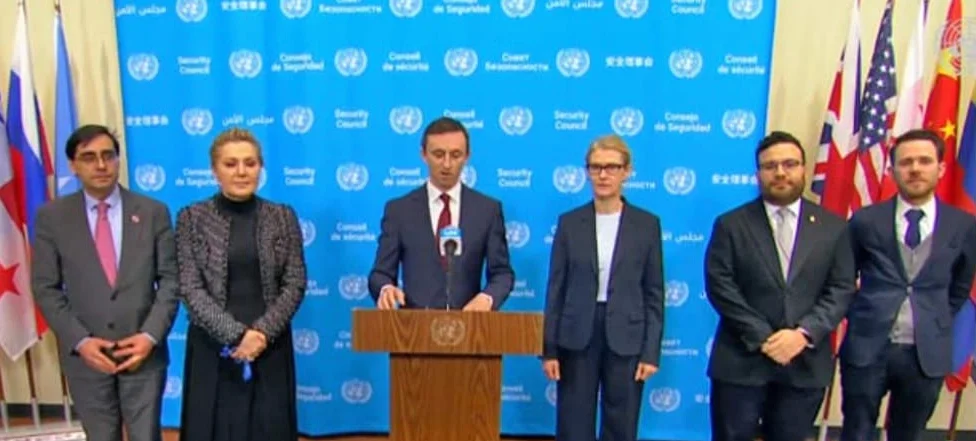
Seven countries pushed Libyan parties to break their political impasse and address mounting climate threats that worsen the nation’s instability. The group—Denmark, France, Greece, Latvia, Liberia, Panama and the United Kingdom—released the statement in New York on Wednesday, just before a UN Security Council meeting on Libya.
Libyan leaders face acute water shortages, soaring temperatures and devastating floods, according to the statement. Less than 2% of Libya’s land is arable. Rainfall could drop 7% by 2050. Such pressures fuel resource conflicts, erode livelihoods and drive displacement in a country already fractured by division.
The signatories renewed commitments on climate, peace and security forged within the Security Council. They warned that the current stalemate cripples Libya’s response to climate shocks. Armed groups exploit these rifts, they said, heightening risks across the board.
Libyan parties must swiftly launch a Libyan-led and Libyan-owned political track, the statement demanded. Climate-related peace and security risks deserve a place in a unified national budget, backed by thorough, gender-sensitive decisions.
Civil society and local authorities play vital roles in bolstering climate action, the nations stressed. They praised the UN Support Mission in Libya for backing the ‘Environmental Vision: Libya Climate Youth Challenge 2026.’ Youth- and women-led projects need backing, rooted in climate security assessments that target border zones and displacement hotspots.
Two priorities stand out: fortifying disaster risk governance and gearing up for climate finance. The 2023 Derna floods, which killed thousands and wrecked the eastern city, underscore the price of delay. Officials cited the disaster as a stark lesson.
The group hailed Libya’s new National Centre for Emergency and Crisis Management. They urged creation of a multi-hazard early warning system and a national climate risk register to steer reconstruction, land use and water strategies. International partners should aid a national task force on climate finance, the statement added.
Libya’s fragility demands urgent action on intertwined threats. Water scarcity grips the oil-rich North African state, one of the world’s most parched nations. Climate change amplifies tensions in a country split between rival governments since Muammar Gaddafi’s 2011 ouster.
The seven nations framed their appeal as a collective push to tackle Libya’s cascading crises. Political progress unlocks resilience against environmental shocks, they argued. Without it, divisions deepen and vulnerabilities grow.


Comments
No comments yet
Be the first to share your thoughts