

 WH News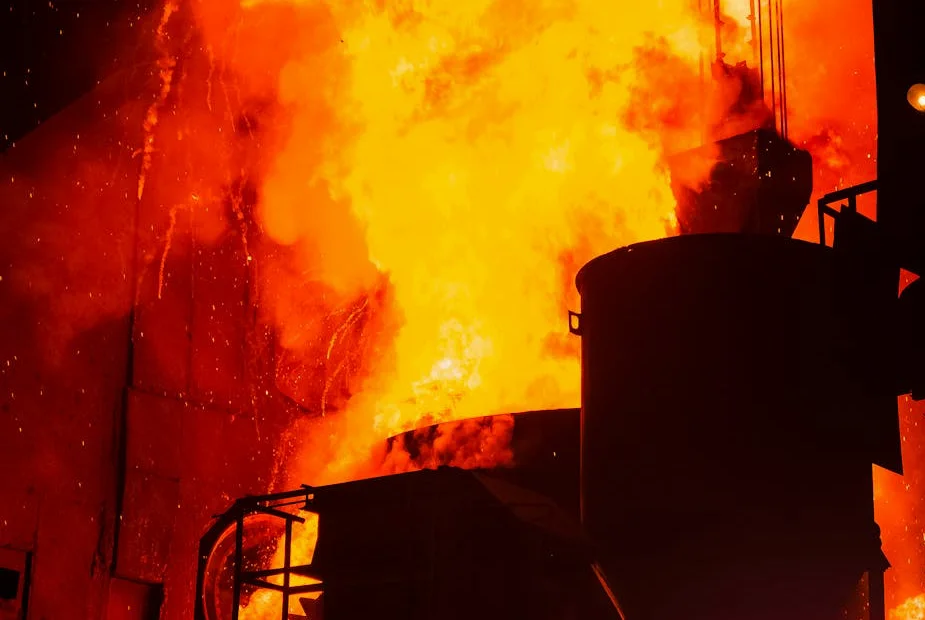
On a quiet afternoon in the vast, sun-scorched expanse of the Empty Quarter, a drone aimed at Saudi Arabia’s Shaybah oil field was intercepted and destroyed. The incident, reported by the Saudi defense ministry, is a microcosm of the larger war now engulfing the Gulf — a war fought not only with missiles and drones but with oil, geopolitics, and the fragile balance of power that has kept the region stable for decades.
The Strategic Heart of the Gulf
Shaybah, one of the largest oil fields in the world, is a linchpin in Saudi Arabia’s energy infrastructure. Located in the southern part of the kingdom, it is a symbol of both the country’s wealth and its vulnerability. The field is not just an economic asset; it is a strategic target for Iran, which has long viewed Saudi Arabia as its chief regional rival.
With the war in the Gulf now in its ninth day, the region is on the verge of a tipping point. The Strait of Hormuz, a critical artery for global oil trade, remains largely closed. Tankers are avoiding the narrow waterway, and the resulting logjam is forcing countries like Saudi Arabia to divert oil via the Red Sea — an alternative route that is both slower and more expensive. The pressure is mounting on producers to cut output, and the psychological threshold of $100 a barrel for crude is now within reach.
A War of Attrition
The war has taken on the character of an attrition battle, with both sides launching waves of missiles and drones against each other’s infrastructure. In the past week alone, the UAE has reported 238 ballistic missiles and 1,342 drones detected in its territory, with 221 projectiles destroyed and 80 drones falling within the country. These numbers are staggering, but they are not surprising given the stakes involved.
Iran’s attacks have targeted not only military installations but also vital civilian infrastructure, including desalination plants and airports. In Bahrain, a drone strike damaged a desalination plant, and in Kuwait, a drone attack on the international airport’s fuel depot caused a large fire. These strikes are not just tactical; they are psychological, designed to show that no part of the Gulf is safe from Iranian retaliation.
Saudi Arabia, for its part, has not been idle. The kingdom has intercepted and destroyed 15 drones, including six near Riyadh, and has reported intercepting missiles and drones aimed at key locations. The defense ministry’s statement about the intercepted drone heading toward Shaybah highlights the fact that even the most remote and secure oil fields are now under threat.
The Human Cost
While the war has been fought with missiles and drones, the human cost has been severe. In Kuwait, a military projectile fell in a residential area, killing two people and injuring 12 others. In the UAE, four individuals were killed in missile attacks, and three people were injured when missile fragments struck a university building in Bahrain. These casualties are a stark reminder that the war is not abstract — it is real, and it is taking lives.
The attacks have also had a significant impact on the civilian population. In Kuwait, the fuel tanks at the international airport were targeted in a drone attack, and the resulting fire brought the country’s infrastructure to a standstill. In Bahrain, a desalination plant was damaged, and the country’s electricity and water authority confirmed that the attack had not disrupted supplies, but the damage was still significant.
Escalation and Escalation
The war has escalated rapidly, with both sides showing no signs of backing down. The US and Israel have launched strikes on Iranian fuel depots and desalination plants, signaling a new phase in the conflict. In Tehran, vast plumes of smoke and flame have been visible, with videos showing the skyline turned orange. Iranian authorities have confirmed that five facilities were damaged in these attacks, and four tanker drivers were killed.
In response, Iran has launched its 27th wave of attacks on Israeli and American targets in the region. The IRGC has been at the forefront of these attacks, using both missiles and drones to strike industrial and airport facilities across the Gulf. The cycle of retaliation has created a dangerous spiral, with each side responding to the other’s actions with more force.
The Economic Fallout
The economic consequences of the war are already being felt. With the Strait of Hormuz closed, oil tankers are unable to move freely, and the resulting shortage of empty vessels is forcing producers to cut output. The United Arab Emirates and Kuwait have already started reducing oil production, and Iraq’s output is down about 60%. The pressure on storage facilities is mounting, and once they are full, the region’s on-land storage will fill even quicker.
For oil traders and analysts, the war is bringing crude to a tipping point. Brent crude has already climbed 30% in the past week — its biggest jump in six years — and is now within a few dollars of the psychological $100-a-barrel threshold. Futures tied to Abu Dhabi’s flagship Murban crude closed at $103 a barrel, while Oman crude futures were at $107. Chinese crude oil futures on the Shanghai International Energy Exchange ended at $109 in US dollar terms.
These price increases are not just a reflection of supply constraints; they are also a signal of the growing uncertainty in the market. With the war showing no sign of resolution, investors are bracing for further volatility. The war has already disrupted the global supply chain, and the economic fallout is likely to be felt for months, if not years.
The Future of the Gulf
As the war continues, the question remains: what comes next? The Gulf is at a crossroads, and the choices made in the coming days will determine the region’s future. For Saudi Arabia, the war has forced a reevaluation of its security strategy. The kingdom has long relied on its vast oil reserves to fund its military and economic ambitions, but the war has exposed the vulnerabilities of this approach.
The UAE, which has faced some of the heaviest attacks, is also rethinking its approach to regional security. President Mohammed bin Zayed Al Nahyan has said the country is in a “period of war” but has vowed that the nation will emerge stronger from the conflict. The UAE’s response to the attacks has been swift and decisive, but the long-term implications of the war remain unclear.
In Kuwait, the government has been forced to confront the reality of a war that has already taken a toll on its infrastructure and population. The country has intercepted missiles and drones aimed at key locations, but the attacks have exposed the need for a more thorough defense strategy. The same can be said for Bahrain, where the damage to a desalination plant has raised concerns about the country’s ability to sustain its water supply during the conflict.
The war in the Gulf is not just a regional issue; it has global implications. The closure of the Strait of Hormuz has disrupted the global oil trade, and the resulting price increases are likely to have a ripple effect on the global economy. The war has also forced a reevaluation of the role of the US and Israel in the region, with both countries now directly involved in the conflict.
As the war continues, the Gulf is at a critical juncture. The choices made in the coming days will determine whether the region can find a path to peace or whether the conflict will continue to escalate. For now, the only certainty is that the war is far from over, and the stakes have never been higher.






Comments
No comments yet
Be the first to share your thoughts