

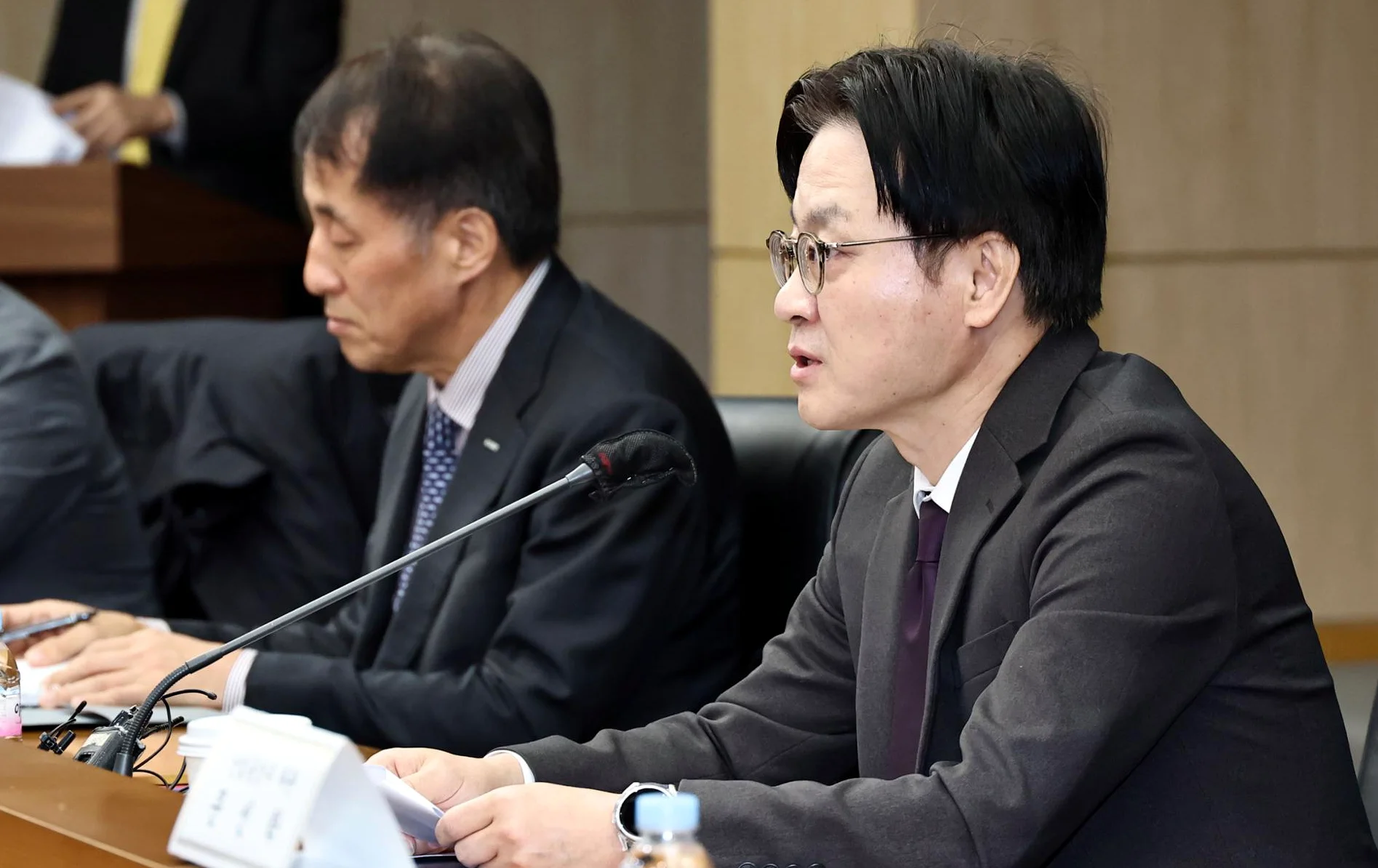
SEOUL — Industry Minister Kim Jung-kwan led an emergency ministry meeting Saturday to tackle the fallout from a US Supreme Court decision striking down President Trump’s broad tariff plan. Officials at the Ministry of Trade, Industry and Resources said the session focused on evaluating damage to Korean exports and mapping countermeasures against the Trump administration’s next steps.
The high court on Friday upheld a lower ruling that barred Trump from invoking the International Emergency Economic Powers Act, or IEEPA, for reciprocal tariffs targeting South Korea and other partners. That legal setback prompted Trump to issue a proclamation Saturday for a fresh 10 percent tariff on all global imports. He also signaled plans for additional duties under separate statutes.
Kim told reporters the decision heightens short-term risks for shipments to the US market. Still, he stressed that core protections from the Korea-US free trade agreement stand firm. “We will scrutinize the ruling’s fine points and Washington’s responses,” Kim said. “Our government commits full force to protect national interests and steady exports.”
The ministry already prepared contingency plans before the verdict landed. Those aim to shield companies from disruptions. On refunds for tariffs already collected, the US decision left details murky. Officials pledged swift support programs to ease burdens on affected firms.
Monday brings a follow-up gathering with business leaders. There, policymakers and industry executives will gauge ripple effects across sectors like autos, electronics and steel — mainstays of Korea’s $120 billion annual exports to America last year.
The episode highlights tensions in bilateral trade. Trump campaigned on aggressive reciprocity to cut the US goods deficit, which hit $28 billion with South Korea in 2024. His initial tariffs, announced in January via IEEPA, sought matching duties on countries with surpluses. Korean steel and semiconductors drew early fire.
Seoul’s response draws on prior diplomacy. The 2012 Korea-US pact, renegotiated under Trump in 2018, eliminated most duties. Yet supplementary measures persist, including quotas on autos and steel safeguards. The ministry eyes using those frameworks amid the chaos.
Business lobbies welcomed the pledge. The Korea International Trade Association called for tax breaks and financing to offset uncertainties. Analysts predict minimal long-term shifts if new tariffs stay broad-based, sparing targeted hikes. Export growth to the US slowed to 2 percent last quarter amid election rhetoric.
Kim chaired a related panel last week in Seoul on the Korea-US strategic investment MOU, signed to boost US-bound projects. That forum, held February 13, now factors into broader tariff defenses. Officials declined to detail specific aid packages pending Monday’s talks.
Trump’s proclamation sets the 10 percent levy for March 1, with exemptions narrow. South Korean firms shipped $10 billion in goods under the struck-down tariffs since January. Refund talks could drag through US appeals courts.

Comments
No comments yet
Be the first to share your thoughts