

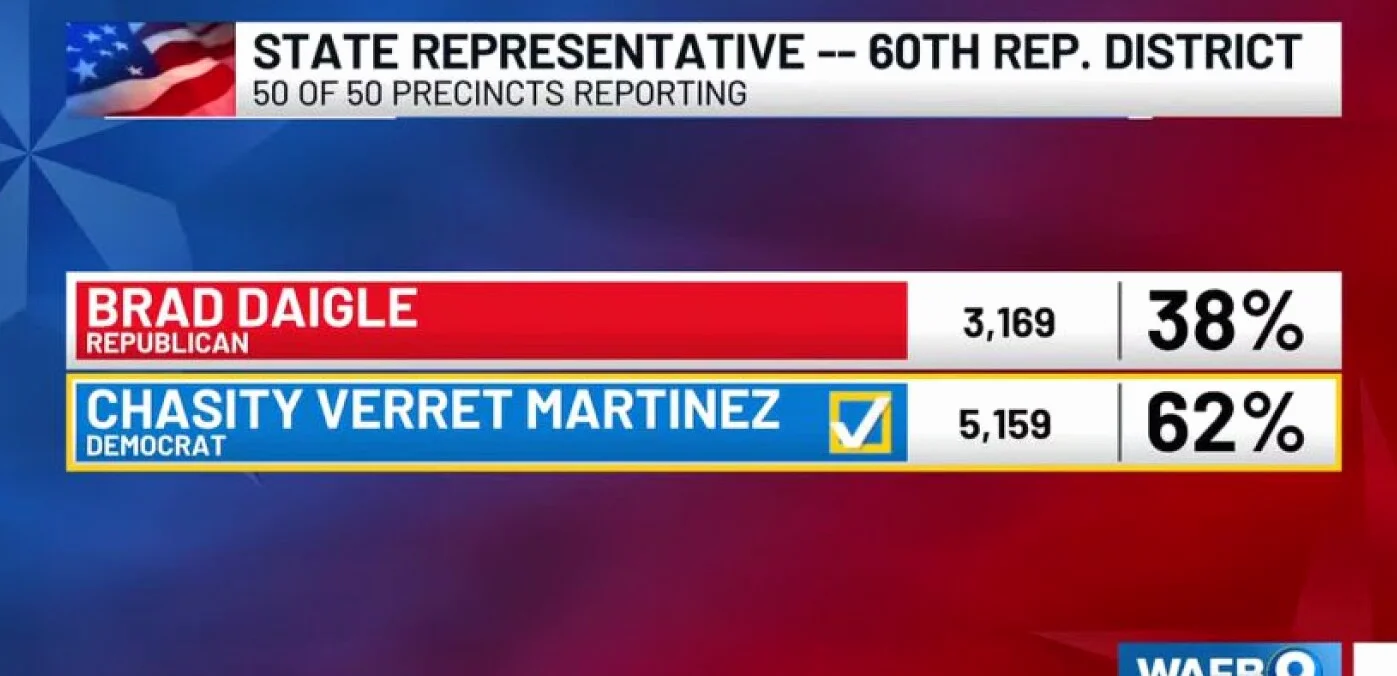
Democrats have made significant gains in recent special elections, raising concerns for Republicans heading into the 2026 midterms. On Feb. 7, Chasity Verret Martinez won a special election to fill a vacant seat in the Louisiana House, securing 62 percent of the vote in a district that had given Donald Trump a 13-percentage-point victory in the 2024 presidential race. The result, along with the Democrats’ recent capture of a Texas state Senate district, has sparked alarm among Republican strategists.
Early Signs of a Democratic Surge
Special elections are often viewed as early indicators of voter sentiment heading into regular elections. With the 2026 midterm elections less than nine months away, analysts are closely monitoring these results for potential trends. Martinez’s victory in Louisiana and the Democratic win in Texas have been interpreted as signals of growing Democratic enthusiasm, particularly in regions that strongly supported Trump in the 2024 election.
Since Election Day 2024, 87 special elections have been held across the country, featuring candidates from both major parties. These races cover various levels of government, including state legislatures and the U.S. House. The outcomes of these elections are being scrutinized to gauge the political climate as the nation moves toward the 2026 midterms.
Comparing Special Elections to Presidential Results
Political analysts often compare the results of special elections to the outcomes of the most recent presidential election in the same district. This provides a baseline for understanding voter behavior and can highlight shifts in political sentiment. In the 2022 cycle, for example, Democrats underperformed compared to President Joe Biden’s 2020 results, leading to a 3-percentage-point loss in U.S. House races.
In contrast, the 2018 midterms saw Democrats outperform expectations, picking up 40 House seats and seven governorships. That year, the results of special elections aligned closely with the eventual outcomes of the November elections. However, the 2024 cycle has been an exception, with Democrats outperforming in special elections but still losing in the general election.
Currently, Democrats are running ahead of Vice President Kamala Harris’s 2024 margins by an impressive 13 percentage points in special elections. This overperformance is the best since 2018 and suggests a potential shift in the political landscape.
Challenges Remain for Democrats
Despite these gains, Democrats face significant challenges in their quest to regain control of Congress. The U.S. Senate map remains a difficult one for the party, with many key races taking place in solidly red states. Even if an environment similar to the 2018 midterms emerges, with an unpopular president, the Senate contests may not yield the same results as in previous years.
Moreover, the next nine months could bring unexpected events that reshape public opinion. Special elections, while useful, are not perfect indicators of national trends. They often reflect hyperlocal factors, such as candidate quality or specific issues, rather than broad partisan shifts. Turnout in special elections is generally lower than in regular elections, making it harder to determine whether overperformance is due to motivated partisans or the persuasion of independents.
Still, special elections offer a clearer picture of voter behavior than traditional polling, which is increasingly difficult to conduct accurately. The actual voting behavior observed in these races can provide more reliable insights than hypothetical responses to opinion polls.
Other indicators also point to potential challenges for Republicans. The generic ballot, a standard polling question that asks voters which party they intend to support in November, shows the GOP trailing Democrats by about 6 percentage points. Trump’s approval rating remains below 40 percent, further complicating the outlook for the Republican Party.
While it is still too early to know for sure how the political landscape will evolve, the combination of special election results, polling data, and Trump’s approval ratings should be concerning for Republicans. As the 2026 midterms approach, the political stakes are high, and the outcomes of these early contests will be closely watched by analysts and voters alike.






Comments
No comments yet
Be the first to share your thoughts