

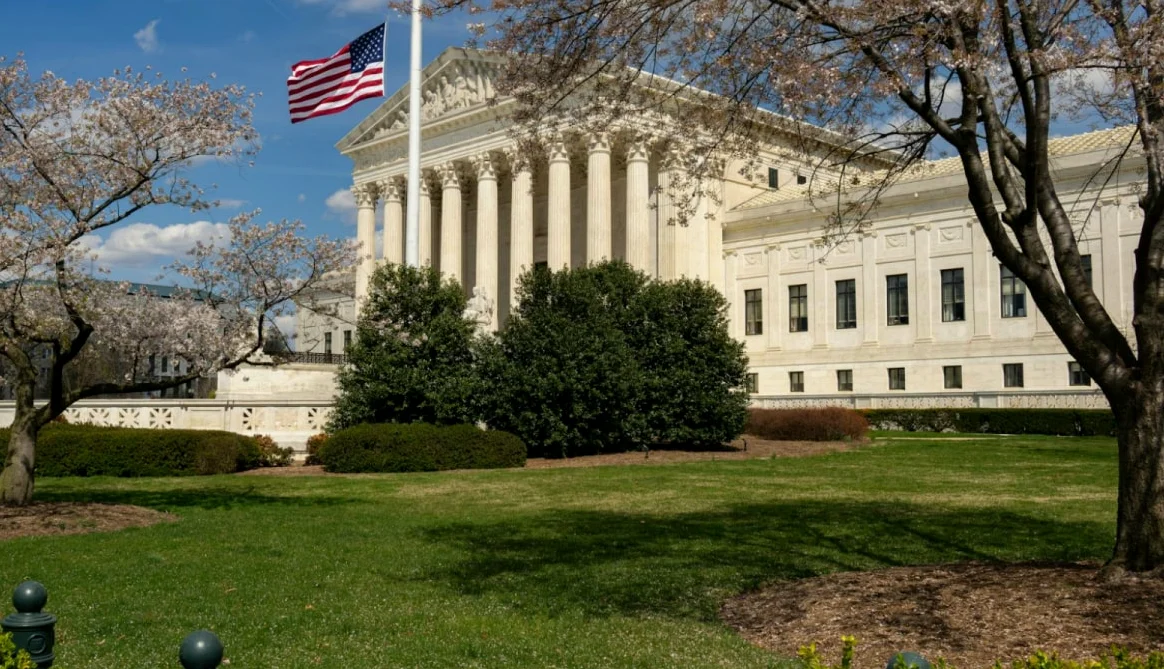
WASHINGTON — The Supreme Court delivered a 6-3 decision declaring President Donald Trump’s sweeping tariffs illegal, rejecting his use of emergency powers to bypass Congress. The ruling, issued Thursday, centers on the International Emergency Economic Powers Act, which the majority said does not grant presidents authority over tariffs that function as taxes.
Chief Justice John G. Roberts Jr. wrote the majority opinion. He was joined by Justices Neil M. Gorsuch, Amy Coney Barrett, Sonia Sotomayor, Elena Kagan and Ketanji Brown Jackson. Roberts stressed that Article I of the Constitution assigns tariff powers explicitly to Congress. The court found Trump’s invocation of the 1977 law exceeded its scope, designed for sanctions and asset freezes, not broad trade taxes.
The decision marks a rare rebuke from a court with a 6-3 conservative majority. All six conservative justices—Roberts, Clarence Thomas, Samuel A. Alito Jr., Gorsuch, Brett M. Kavanaugh and Barrett—trace their nominations to Republican presidents. Trump himself appointed Gorsuch in 2017, Kavanaugh in 2018 and Barrett in 2020. George W. Bush selected Roberts in 2005 and Alito in 2006. George H.W. Bush named Thomas in 1991.
The liberal wing consists of Sotomayor, appointed by Barack Obama in 2009; Kagan, also by Obama in 2010; and Jackson, named by Joe Biden in 2022. In this case, the vote crossed ideological lines. Roberts, Gorsuch and Barrett sided with the three liberals to block the tariffs. Justices Thomas, Alito and Kavanaugh dissented.
The dissent, led by Thomas, called for a wider reading of presidential emergency authority. Thomas argued the IEEPA gives the executive flexibility in crises, including trade disputes. Alito and Kavanaugh signed onto that view, warning the majority’s stance could hobble future presidents facing economic threats.
Trump imposed the tariffs in 2018 and 2019, targeting steel, aluminum and other goods from China, Europe and elsewhere. He cited national security and trade imbalances under Section 232 of the Trade Expansion Act and the IEEPA. The measures affected billions in imports, sparking retaliation from trading partners. Lower courts split on challenges from businesses and states, landing the issue at the Supreme Court after the Biden administration chose not to defend some tariffs.
Business groups hailed the ruling. The U.S. Chamber of Commerce called it a win for constitutional checks and stable trade. Critics of Trump’s approach, including some Republicans, said it restored congressional primacy over taxes. White House officials expressed disappointment but pledged to pursue tariffs through legislation.
The decision arrives amid heated 2024 election debates on trade. Trump has vowed new tariffs if reelected, promising 10% to 20% on all imports and 60% on Chinese goods. Legal experts predict Congress will face pressure to clarify presidential trade powers. For now, affected tariffs must end unless Congress acts.
This outcome highlights the court’s independent streak. Roberts has authored key rulings curbing executive overreach, from immigration to student loans. Gorsuch and Barrett, Trump picks known for textualism, joined him here despite the former president’s policy. Thomas, the longest-serving justice, stuck to his expansive view of executive power, consistent with past dissents.
Trading floors reacted swiftly. U.S. stock futures rose slightly after hours. Steel producers saw shares dip, while manufacturers gained. Economists estimate the tariffs cost U.S. households $800 annually on average, according to Federal Reserve studies.





Comments
No comments yet
Be the first to share your thoughts