

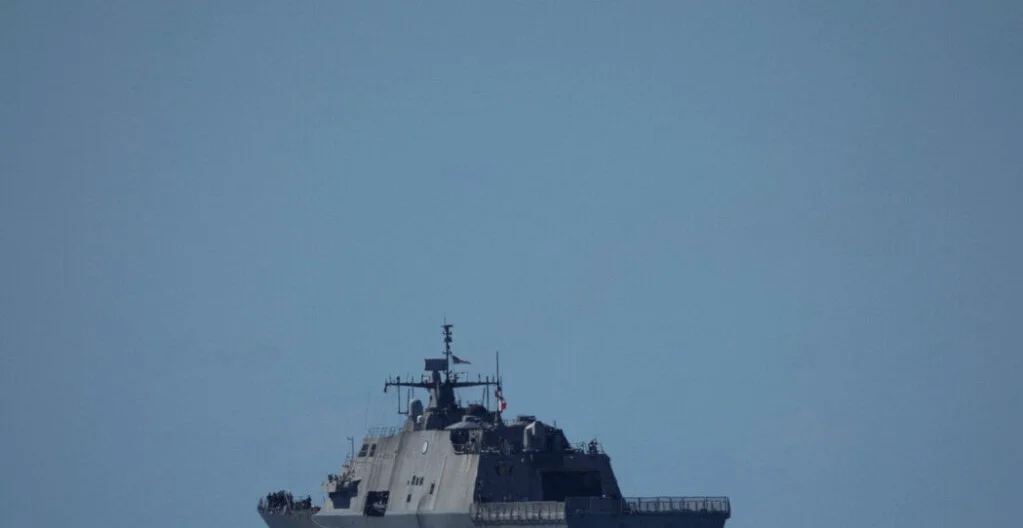
President Donald Trump announced on Tuesday that the U.S. Navy might escort commercial ships through the Strait of Hormuz, a critical waterway for global oil trade. The move comes as shipping companies have largely avoided the strait due to fears of potential attacks, leading to a sharp decline in tanker traffic and rising oil prices.
Escorting Tankers to Ensure Free Flow of Energy
“If necessary, the United States Navy will begin escorting tankers through the Strait of Hormuz, as soon as possible,” Trump said in a post on Truth Social. His remarks followed a period of heightened tensions between the U.S. and Iran, which has led to increased risks for maritime operations in the region.
The Strait of Hormuz is a vital chokepoint through which approximately 20% of the world’s oil passes. The sharp reduction in tanker traffic has raised concerns about a potential supply shock, which could lead to further increases in global oil prices and, consequently, higher gas prices for consumers.
Impact on Oil Prices and Global Markets
Following Trump’s announcement, the price of oil initially fell but quickly regained most of that ground. The statement also contributed to a rise in stock prices as investors anticipated a stabilization of the oil supply chain.
“No matter what, the United States will ensure the FREE FLOW of ENERGY to the WORLD,” Trump said in his post. His comments reflect a broader strategy to counteract the disruptions caused by the ongoing U.S.-Israeli conflict with Iran, which has increased risks for maritime operations in the Persian Gulf.
Maritime insurers have been reluctant to provide coverage for vessels operating in the region, citing heightened risks. As a result, shipping companies have been forced to either cancel their operations or pay significantly higher insurance premiums to continue their routes through the Strait of Hormuz.
Insurance Offer Could Encourage Resumption of Traffic
Trump also announced that he had ordered a U.S. government agency to offer insurance and risk guarantees to all shipping lines. This move is aimed at mitigating the financial risks associated with operating in the region and could encourage the resumption of tanker traffic through the strait.
“That will make a big difference — you’ve taken the financial risk out of the equation,” said Dan Pickering, chief investment officer of Pickering Energy Partners, a Houston-based financial services firm. He noted that the offer of insurance could help restore confidence in the region’s maritime operations.
However, Pickering also warned that the resumption of traffic would depend on the willingness of shipping companies to take the risk. “What we’ll have to watch is who is brave enough to give this a try,” he said.
A Department of Defense spokesman had previously told The New York Times that the Pentagon was not planning an escort. However, since that statement, tanker traffic through the Strait of Hormuz has all but dried up. Windward, a maritime analytics company, reported on Tuesday that there had been a “sustained commercial withdrawal from the corridor rather than temporary hesitation.”
The situation highlights the complex interplay between geopolitical tensions, economic incentives, and maritime security. As the U.S. weighs its options, the potential for an escort operation remains a topic of significant interest among industry analysts and policymakers alike.
The U.S. government is expected to make further announcements in the coming days, with key decisions likely to be made by the end of the month. The outcome of these decisions could have far-reaching implications for global energy markets and the stability of the Persian Gulf region.






Comments
No comments yet
Be the first to share your thoughts