

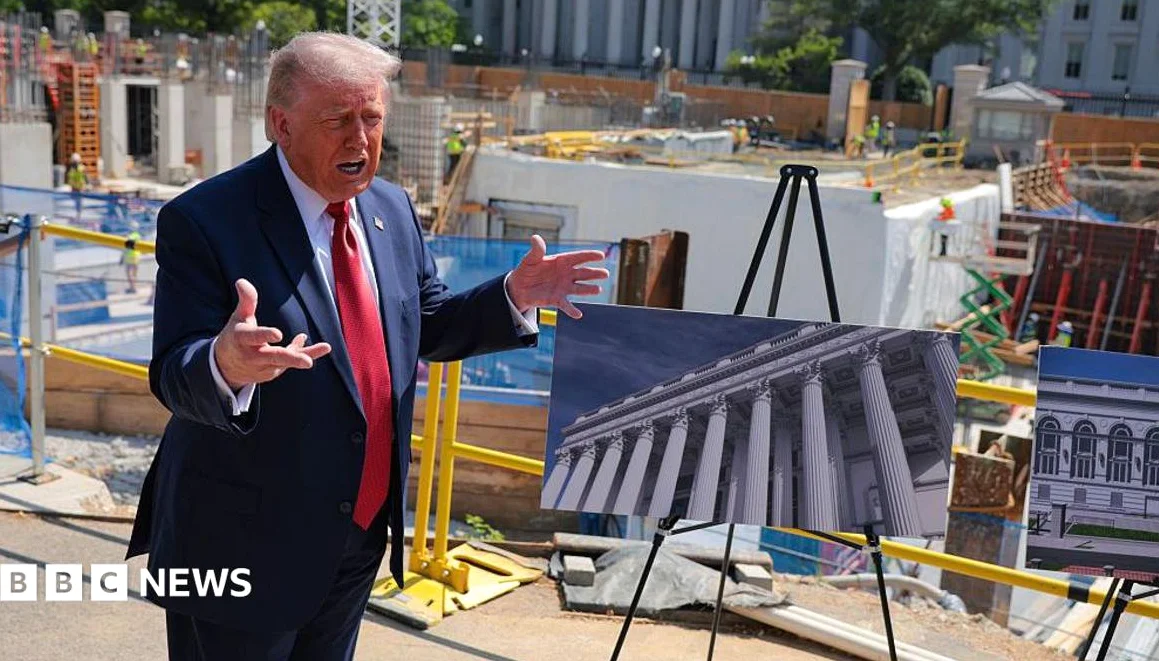
President Donald Trump’s administration on Friday asked the U.S. Supreme Court to allow the White House to continue construction on its $400 million ballroom project while it appeals a lower court’s order to halt the work, according to the San Antonio Express-News. The Supreme Court petition comes after a three-judge panel from the U.S, though Court of Appeals for the District of Columbia Circuit ruled last week that Trump must stop the construction because Congress has not approved the project.
Legal Challenge and National Security Claims
The appeals court panel majority stated that Trump does not have the unilateral authority to build a 90,000-square-foot ballroom where the White House’s East Wing stood before he ordered its demolition last fall. The lower court suspended its own ruling for two weeks to give Trump’s Republican administration time to appeal to the Supreme Court. Solicitor General D. John Sauer asked the Supreme Court to rule on its stay petition before the appeals court panel’s decision takes effect on Aug. 21.
“This case involves an extraordinary and unlawful injunction that will halt the ongoing construction of the integrated military complex, including a totally secure ballroom space, at the East Wing of the White House, which is vitally required by national security,” Sauer wrote in the petition.
Earlier Legal Actions and Project Details
In April, a district court judge ordered a stop to aboveground construction of the planned ballroom, though the current White House ballroom, built in 1902, has long been criticized as outdated and lacking modern security features. The new ballroom, part of a larger $400 million renovation, is intended to serve as a venue for official events and to improve security for White House staff and visitors.
The East Wing, which was demolished in 2017, had housed the White House Social Office and the First Lady’s staff. The Trump administration has argued that the new East Wing will include a state-of-the-art ballroom, a secure communications center, and offices for the First Lady and the White House Social Office.
Supreme Court Timeline and Next Steps
Chief Justice John Roberts set a deadline of Tuesday for a response by the plaintiffs challenging the ballroom project; the Supreme Court will now consider whether to grant a stay that would allow construction to continue while the case proceeds. If the court declines to issue a stay, construction will be halted on Aug. 21.
The dispute centers on whether the president has the authority to initiate and oversee major construction projects at the White House without prior congressional approval. The Trump administration has defended the project as a necessary security and infrastructure upgrade, while critics argue it exceeds executive authority and serves primarily political and private functions.





Comments
No comments yet
Be the first to share your thoughts