

 BBC
BBC 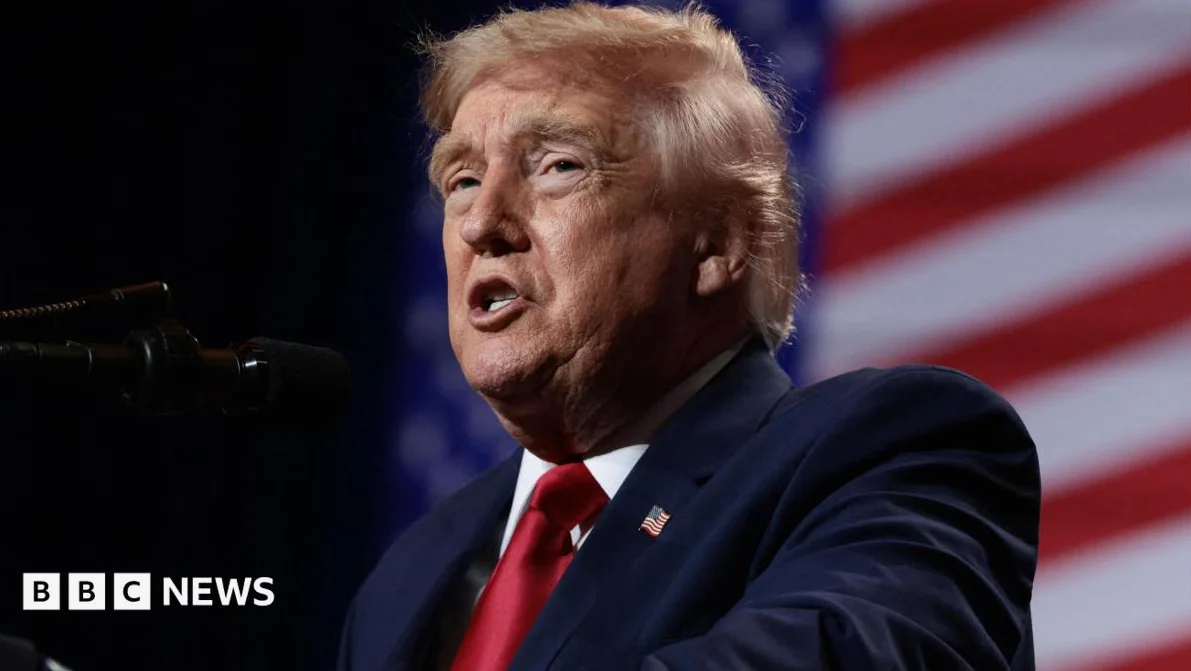
When another world leader meets U.S. President Donald Trump, the only certainty is the uncertainty about what might happen. This was evident ahead of Trump’s two-day visit to Ireland. By the end of the first day, his desire to see a unified Ireland became the main global headline.
Trump’s Remarks and Political Reactions
As the shockwaves of his comments rippled through Ireland and Great Britain, it remained unclear whether this represented a new U.S. administration policy or an off-the-cuff remark. Former Republican Congressman Mick Mulvaney, Trump’s special envoy to Northern Ireland during his first term, cautioned against overinterpreting the president’s remarks. “This does not represent a shift in U.S. foreign policy,” he said. “We’re still very much committed to the Good Friday Agreement.”
Democratic Congressman Brendan Boyle echoed this sentiment, stating, “There is bipartisan support for that deal, and that is not going to change.” Although both agreed that Trump was probably right to say that “eventually” unification would happen, it did not mean the U.S. was about to push for it.
Unpredictable Speaking Style and Political Context
Trump’s comments were repeated later when he delivered a speech to an invited audience at the U.S. Ambassador’s residence, suggesting he may have realized he had caused controversy. The speech, intended to be 20 minutes, lasted much longer and focused largely on domestic U.S. issues. Trump described his speaking style as “the weave,” where he bounces from topic to topic during any engagement.
During the speech, Trump lauded his achievements, including actions on illegal immigration, deals, and defense production. He also reiterated his criticisms of what he views as the UK’s lack of support for his military operation in Iran. With the November midterm elections approaching, the Republican party faces pressure due to Trump’s policies and may lose control of one or both houses of Congress.
Political Strategy and Targeted Audience
With about one-tenth of the U.S. population claiming Irish heritage, they are not a homogeneous voting bloc. Some Irish-Americans support a unified Ireland, and in this time of seeking every vote, that may have played a role in Trump’s remarks. Bill Clinton secured significant Irish-American support during his presidential campaign by promising to engage in the peace process, leading to the Good Friday Agreement.
However, Irish America is a different place now, as U.S. politics have become more polarized. The November election campaigns show no indication this will change soon. Political leaders in Ireland will be hoping the only debate tomorrow is about the play on the golf course.



Comments
No comments yet
Be the first to share your thoughts