

 Washington Post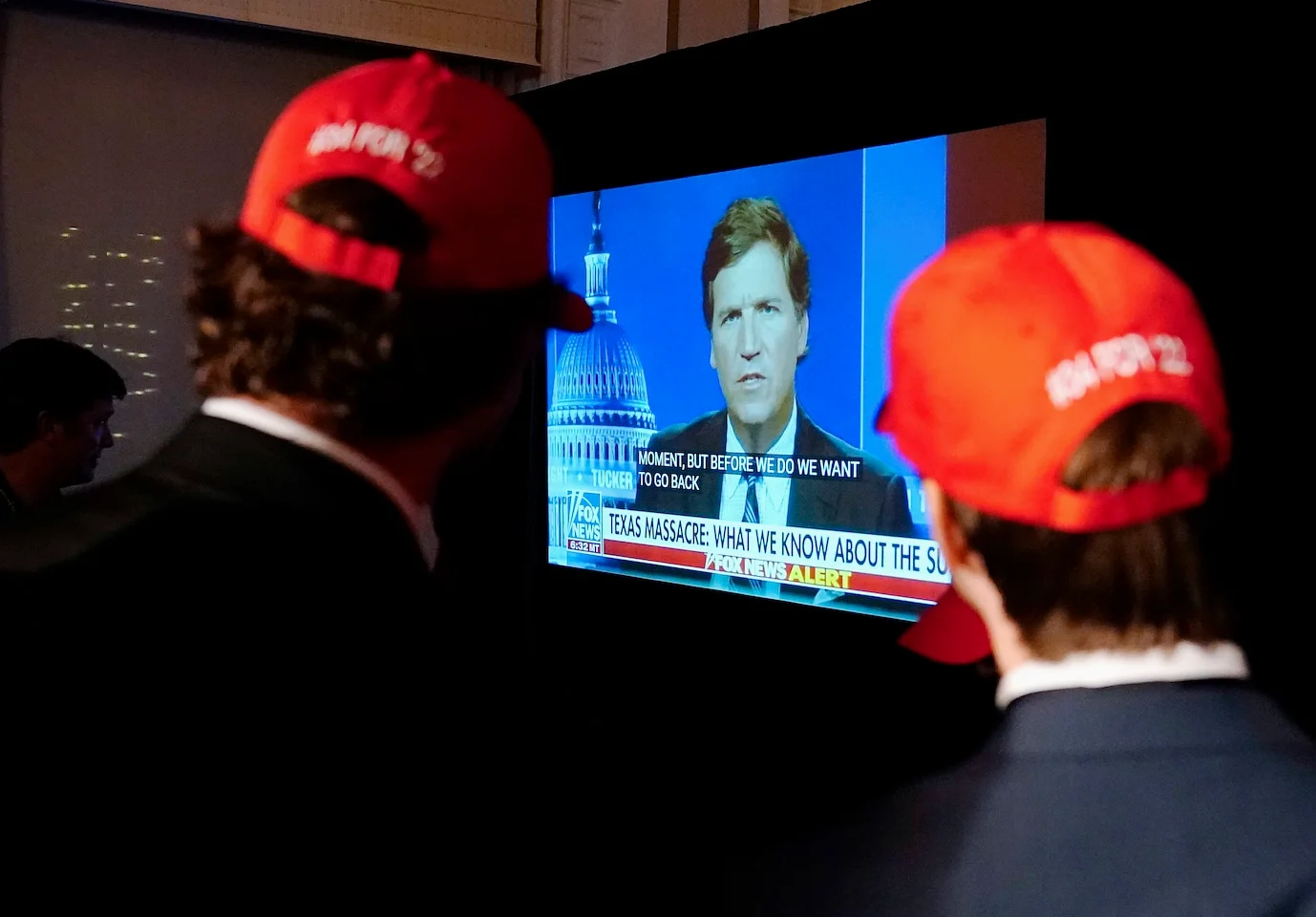
President Donald Trump has faced growing dissent from within his own base as he leads military operations against Iran, with some of the most influential figures in the MAGA movement publicly questioning his decision. Among those criticizing the strikes are former Fox News hosts Tucker Carlson and Megyn Kelly, along with Daily Wire podcaster Matt Walsh, all of whom have large followings on social media and video platforms.
Internal Fractures in the MAGA Movement
“This is Israel’s war. This is not the United States’ war,” former Fox News host Tucker Carlson said on his weekly podcast. His comments reflect a broader sentiment among some MAGA-aligned influencers who argue that the military strikes contradict Trump’s long-standing anti-interventionist rhetoric.
“No one should have to die for a foreign country,” Megyn Kelly, another former Fox News host, stated on her podcast. These voices are part of a growing faction of conservatives who are struggling to reconcile the Iran strikes with Trump’s “America First” platform, which has historically opposed costly and protracted military engagements.
Trump has dismissed the criticism, asserting that “MAGA is Trump,” and has accused his detractors of betraying the movement. White House spokeswoman Olivia Wales echoed this sentiment, stating, “President Trump is MAGA and MAGA is President Trump.”
Historical Context and Political Rhetoric
Trump has long positioned himself as a candidate against foreign military intervention, a stance that was a key part of his 2016 campaign. In that year, he criticized the Iraq War as a “big, fat mistake” and sought to distance himself from the legacy of his Republican rival Jeb Bush and his brother, former President George W. Bush.
In the 2024 election, Trump called himself “the candidate of peace” and vowed not to start a war. His election night speech included the statement: “I’m not going to start a war.” However, recent military actions against Iran have put that promise to the test.
Stephen K. Bannon, Trump’s former chief strategist, warned that the Iran conflict could become a political liability. He criticized the operations on his podcast, saying, “That was not pitched in the 2024 campaign. It just wasn’t. We’re going to bleed support.”
Rising Dissent and Political Implications
The dissent from within the MAGA movement has sparked a broader debate about the limits of Trump’s influence. Whitney Phillips, a professor of information politics at the University of Oregon, said Trump is “severely testing his supporters’ loyalty.” She noted that Trump is not asking his allies to make small compromises but to completely reorient their political identities.
Conservative influencers like Matt Walsh, who have previously aligned closely with Trump on issues such as immigration and cultural policies, are now vocal in their criticism. Walsh accused fellow conservatives of inconsistency, noting that they had long opposed war with Iran but now support the strikes.
“Conservatives are now running around saying ‘Iran has been waging war on us for 47 years,'” Walsh wrote on X. “Okay, then why didn’t any of you call for an attack on Iran at any point until now?”
Despite this pushback, most conservative voices remain supportive of the Iran strikes. A Post analysis of 5,000 posts and podcasts from 79 conservative figures found that the majority supported the military operation, though more than a dozen critics emerged.
A flash poll conducted by The Washington Post found that 52 percent of Americans oppose Trump ordering airstrikes on Iran, compared to 39 percent who support it. The uncertainty among 9 percent of respondents highlights the political risks involved in the current strategy.
Sam Rosenfeld, a professor of political science at Colgate University, said the backlash from influencers highlights a larger issue for Trump. His approval rating is 39 percent, which is lower than it was before last month’s State of the Union address. Rosenfeld noted that there is an “emerging sense that Trump’s centrality to right-wing politics has an endpoint in the not-so-distant future.”
As the conflict continues, Trump faces the challenge of maintaining unity within his base. The White House has emphasized that the operation is part of a broader “America First” strategy, aiming to “eliminate the threat to our people and secure our Nation and world for generations to come.”
The coming weeks will be critical in determining whether Trump can consolidate support or if the dissent from within his movement will continue to grow. With military operations expected to last four to five weeks or longer, the administration will need to maintain a clear and consistent message to both the public and its political allies.





Comments
No comments yet
Be the first to share your thoughts