

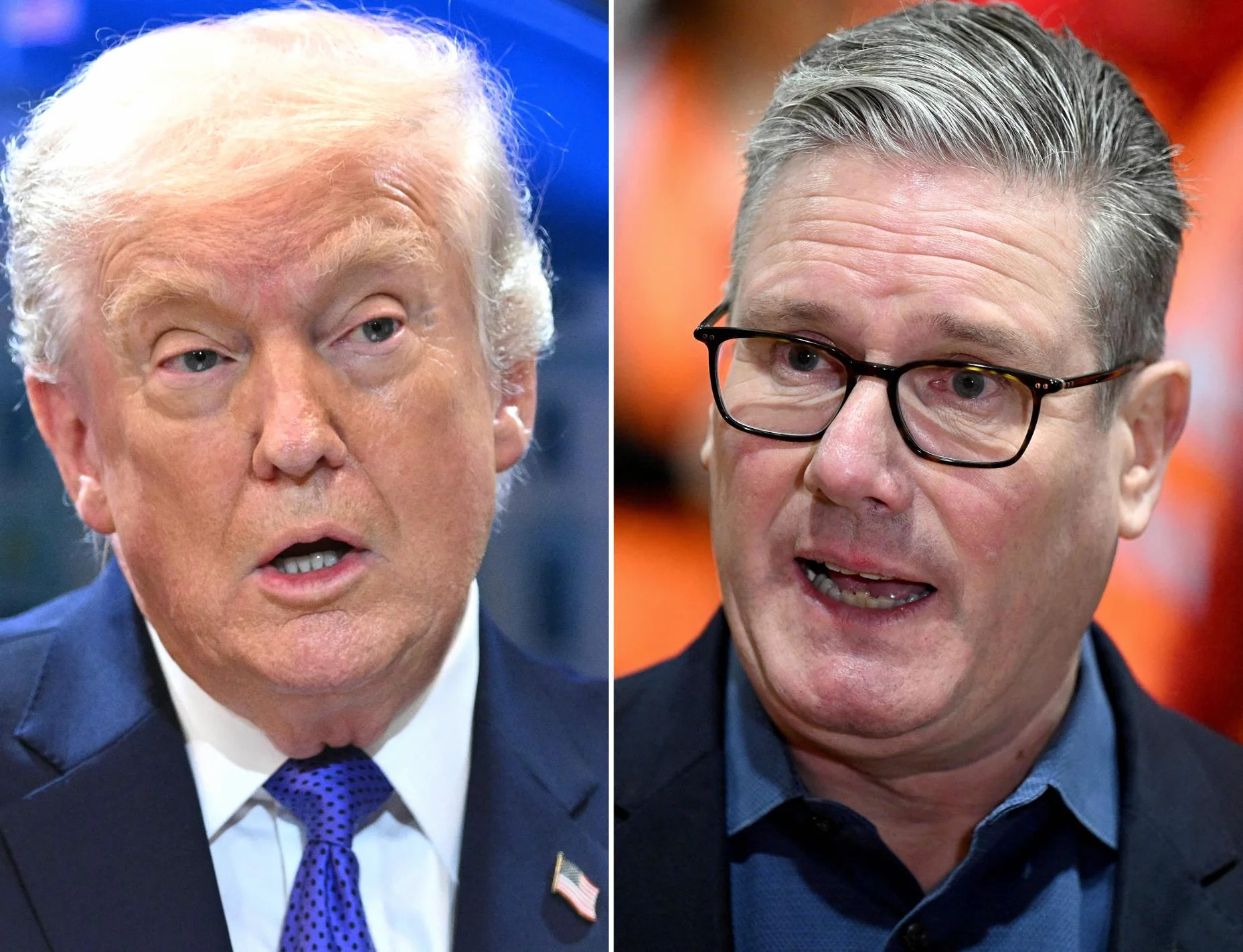
President Donald Trump has voiced his discontent over the shifting dynamics of the U.S.-UK relationship, stating it is ‘not like it used to be’ following a diplomatic dispute over U.S.-Israeli military actions in Iran. The tension escalated after British Prime Minister Keir Starmer initially declined to support U.S. military efforts in the region, a decision that drew Trump’s ire.
Impact on Diplomatic Ties
Starmer, who recently told Parliament that his government ‘does not believe in regime change from the skies,’ faced Trump’s criticism for not aligning with U.S. interests in the conflict. However, Starmer later agreed to allow U.S. forces to use two British military bases for a ‘specific and limited defensive purpose.’
Trump, speaking to British newspaper The Sun, emphasized the historical bond between the U.S. and the UK, stating, ‘This was the most solid relationship of all. And now we have very strong relationships with other countries in Europe,’ including France and Germany.
Starmer has maintained a warm relationship with Trump, who was granted an unprecedented second state visit to the UK in 2023. The so-called ‘special relationship’ between the two World War II allies has traditionally been built on mutual defense cooperation and intelligence sharing.
Political Sensitivities and Legal Justifications
Any potential military action in the Middle East is politically sensitive in the UK due to the legacy of former Prime Minister Tony Blair’s support for the U.S.-led invasion of Iraq in 2003, which resulted in the deaths of 179 British soldiers. A subsequent UK inquiry found that Blair acted on flawed intelligence.
Trump criticized Starmer for not supporting the initial U.S. strikes on Iran, stating, ‘I never thought I’d see that. I never thought I’d see that from the U.K. We love the U.K.’ He lamented the current state of the relationship, calling it ‘very sad to see that the relationship is obviously not what it was.’
Government minister Darren Jones defended Starmer’s decision to only engage in military actions with a ‘legal basis’ and a ‘clear plan’ that aligns with UK national interests. He noted that the UK had cleared two bases for U.S. use: one in Gloucestershire, England, and the U.S.-UK base on Diego Garcia in the Indian Ocean.
Starmer’s Downing Street office stated the decision to allow U.S. forces to use the bases was made after Iran fired missiles over the weekend, which posed a threat to British interests and personnel in the region. Starmer reiterated in Parliament that the UK had learned from the mistakes of the Iraq War.
Concerns Over Regional Spillover
British politicians remain wary of the 2003 Iraq war’s legacy, with an official UK inquiry later finding that Blair acted on flawed intelligence when deciding to join the war. Evie Aspinall, director of the British Foreign Policy Group, noted that Starmer faces a ‘very tight diplomatic tightrope’ with the U.S., which remains critical in the context of Ukraine and Greenland.
Richard Whitman, an international relations expert at the University of Kent, suggested that Trump’s comments might herald a ‘new, not-so-special relationship.’ He warned that any ‘spillover’ on Ukraine or Trump’s focus on the UK could be ‘clearly disastrous for the UK.’
Sophia Gaston, a foreign policy research fellow at King’s College London, suggested that the situation might be salvaged with a ‘bold announcement on defense spending uplifts.’
Meanwhile, a British Royal Air Force (RAF) base in Cyprus was attacked early Monday by Iranian-made drones, with one striking the runway. Starmer clarified that the base was ‘not being used by U.S. bombers’ at the time of the attack.






Comments
No comments yet
Be the first to share your thoughts