

 Financial Times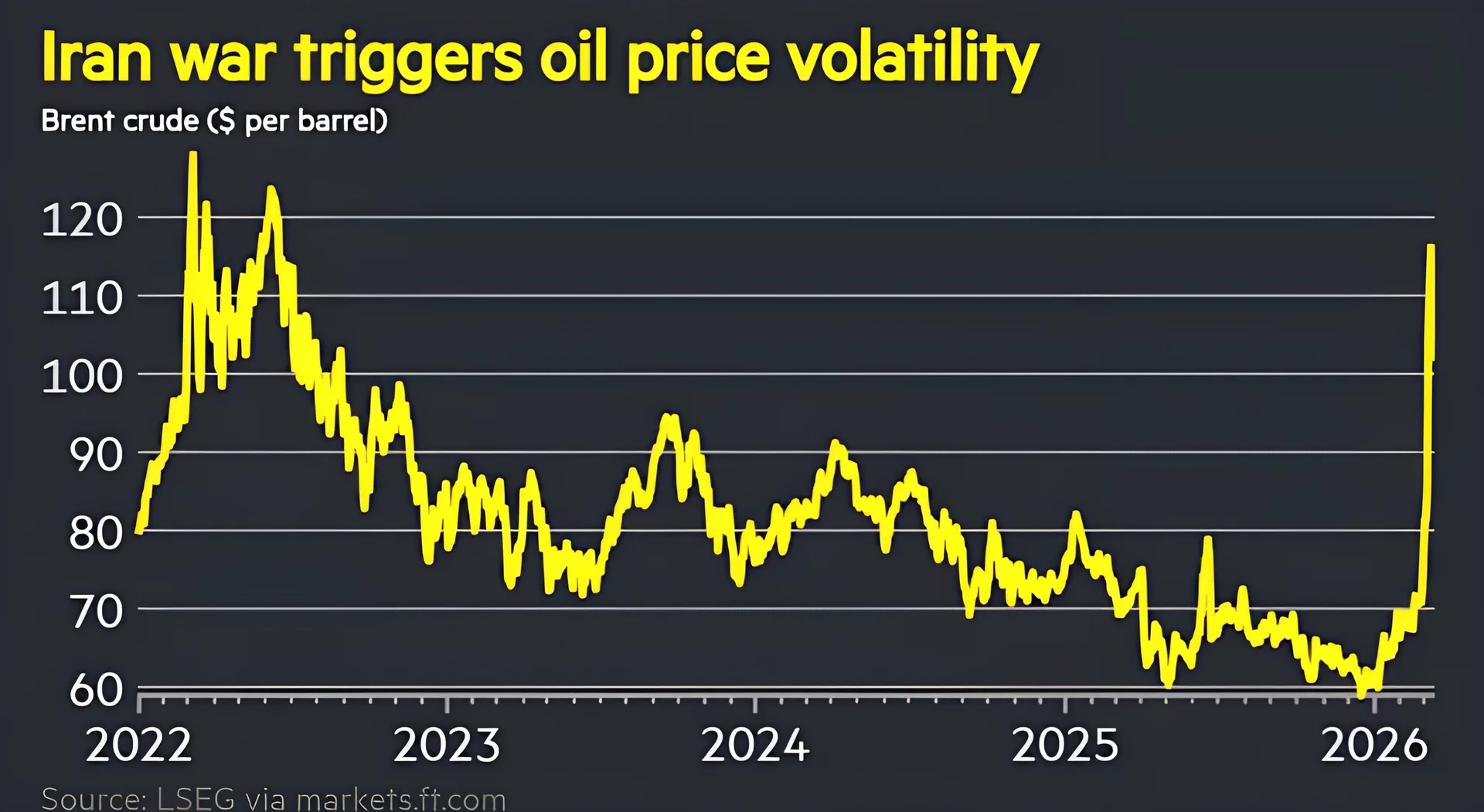
U.S. President Donald Trump declared the war against Iran ‘very complete,’ stating the country has ‘nothing left’ in a military sense, as oil prices fell sharply to $90 per barrel. In a CBS interview on Monday, Trump said Iran has ‘no navy, no communications, no air force,’ and its missiles are ‘down to a scatter.’ His comments came on the 10th day of the conflict, which has seen oil prices surge to over $119 before dropping sharply.
Significance of the Oil Price Drop
The drop in oil prices followed Trump’s remarks, with Brent crude trading at $89.89 a barrel in afternoon trading in New York. This marked a significant decline from its high of $119.48 during the Asia session. Similarly, the U.S. benchmark West Texas Intermediate (WTI) fell to $86.89, down from a peak of $119.48. The decline in both oil contracts left them below their Friday settlement levels, but still notably higher than before the conflict began.
Oil prices had surged earlier in the week due to fears of disruption to global supply lines, with traders reacting to the escalation of tensions in the Middle East. The sharp drop in prices has alleviated concerns about inflation and potential economic damage, though the conflict’s broader geopolitical implications remain uncertain.
Trump’s Warning to Iran
During the interview, Trump warned Iran: ‘They’ve shot everything they have to shoot, and they better not try anything cute or it’s going to be the end of that country.’ His statements underscored the administration’s stance on the ongoing military engagement and signaled a potential shift in the narrative around the conflict.
The U.S. president’s comments suggest a possible de-escalation or at least a pause in hostilities, which could have far-reaching consequences for the region. The war has already caused significant disruption, with both sides suffering losses and infrastructure damage. The situation remains fluid, with the potential for further escalation if either side takes additional military action.
Market Response and Economic Impact
U.S. stocks rose in response to the decline in oil prices, with the blue-chip S&P 500 up 0.8 per cent and the Nasdaq Composite gaining 1.4 per cent. The drop in oil prices has been welcomed by investors who feared the impact of sustained high prices on inflation and economic growth. However, the long-term effects of the conflict on global markets remain uncertain.
Analysts have noted that while the immediate market reaction is positive, the broader economic impact of the war depends on how long the conflict lasts and whether it leads to further disruptions in global supply chains. The situation in the Middle East has historically had significant implications for global energy markets, and the current conflict is no exception.
With oil prices having risen to over $119 earlier in the week, the drop to $90 represents a significant shift in market sentiment. However, the situation remains volatile, and further developments in the conflict could lead to another surge in prices.
The war has also had a ripple effect on other regions, with concerns about the stability of global energy supplies and the potential for further geopolitical tensions. The U.S. and its allies are closely monitoring the situation, with potential for further military action or diplomatic efforts to de-escalate the conflict.
Trump’s comments on the war against Iran and the subsequent drop in oil prices highlight the complex interplay between military actions and global markets. As the conflict continues, the impact on both the Middle East and the global economy will remain a key focus for policymakers and investors alike.






Comments
No comments yet
Be the first to share your thoughts