

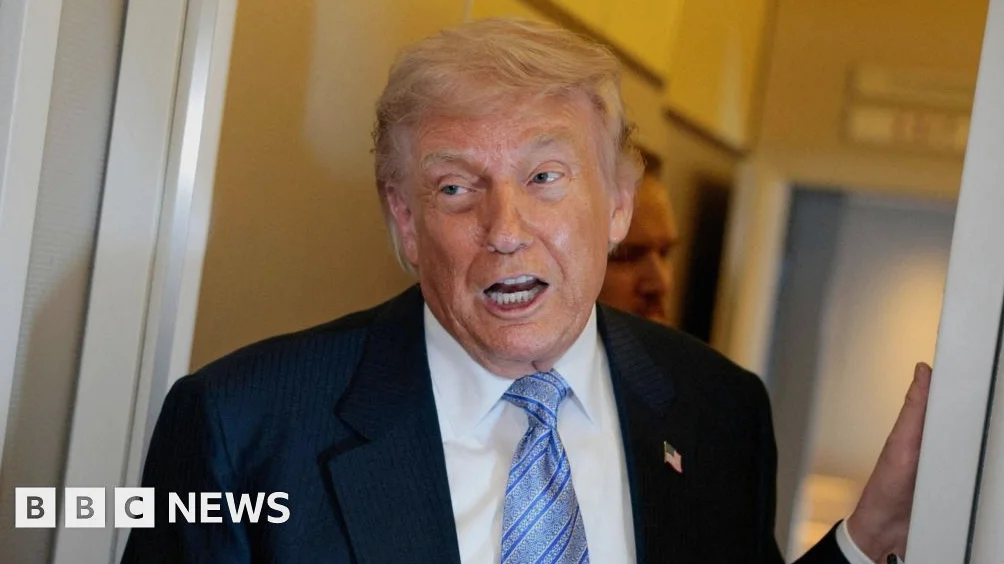
U.S. President Donald Trump announced on his social media platform that he canceled a planned attack against Iran, which was scheduled for May 20, 2026, according to a statement shared on Truth Social. The decision came at the request of Gulf states, including Saudi Arabia, the United Arab Emirates, and Qatar, who reportedly wanted to continue diplomatic efforts to resolve the tensions.
Escalation and Diplomatic Efforts
Trump stated in the post that the attack was part of a larger military operation aimed at limiting Iran’s nuclear capabilities; he emphasized that the U.S. remains prepared to launch a large-scale attack if negotiations fail to produce a favorable outcome. “Based on my respect for the leaders mentioned, I have instructed the Secretary of War, Pete Hegseth, the Chairman of the Joint Chiefs of Staff, General Daniel Caine, and the U.S. Armed Forces. That we will NOT carry out the scheduled attack against Iran tomorrow,” Trump wrote.
According to BBC. The potential for U.S. involvement in the conflict between Iran and Israel has been a concern; Iran has long viewed U.S. military presence in the region as an endorsement of Israeli actions. The U.S. has warned Iran against attacking American targets, and analysts have noted that only the U.S. has the military capacity to strike deep Iranian nuclear facilities like Fordow. However, Trump has promised to avoid “forever wars” in the Middle East, a promise that could conflict with the demands of his pro-Israeli Republican base.
Negotiations and Conditions for Talks
Iran’s Parliament Speaker, Mohammad Bagher Ghalibaf, has reiterated the country’s 14-point proposal for resuming nuclear negotiations. The proposal reportedly includes ending the current fighting and opening the Strait of Hormuz before any discussion on the nuclear program. It also suggests a possible freeze on nuclear enrichment for up to 15 years, according to Jungle.World.
Iranian officials have consistently emphasized the need for the U.S. to recognize the “rights of the Iranian people.” Ghalibaf stated, “There is no alternative but to accept the rights of the Iranian people as laid out in the 14-point proposal.” These demands go beyond the nuclear issue and include the lifting of economic sanctions and recognition of Iran’s regional influence.
Trump’s Strategy and Regional Tensions
Jungle.World noted that Trump’s threats against Iran have often been seen as tactical moves to pressure the country into concessions, rather than genuine military posturing. Analysts have questioned the effectiveness of such threats, especially given Iran’s resilience during past conflicts. “The only Iran deal Trump can get is no better than Obama’s ‘horrible’ JCPOA,” wrote Lazar Berman in the Times of Israel, highlighting skepticism over Trump’s ability to secure a better nuclear agreement.
According to Trump’s statement, the Gulf states have indicated that “serious negotiations” are underway and that a “very acceptable agreement for the United States” might be possible. However, the administration has not provided further details about the nature or progress of these talks. Trump also warned that U.S. military leaders remain “prepared for a large-scale attack against Iran at any moment” if negotiations fail to meet U.S. objectives.






1 Comment