

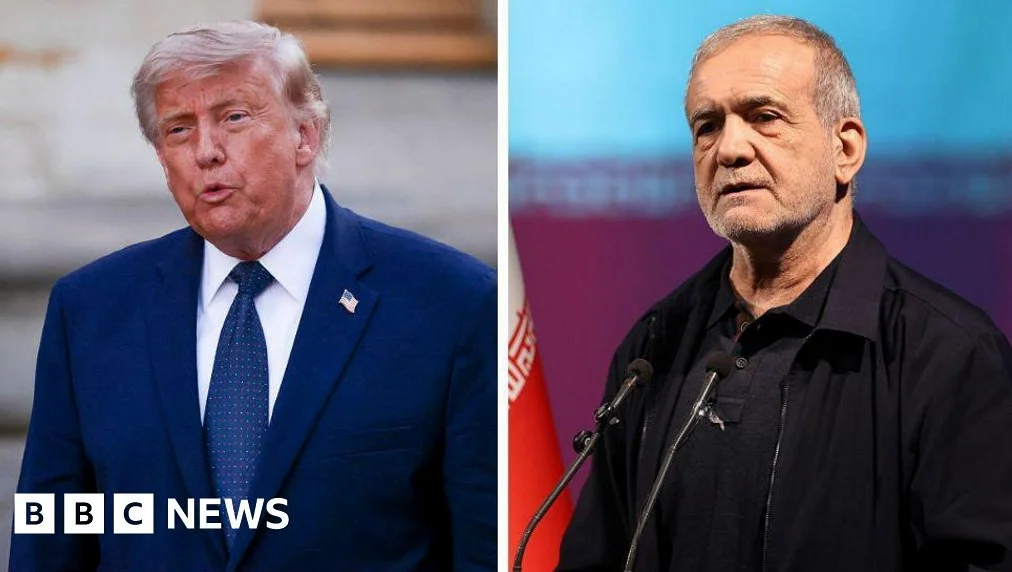
On June 17. US President Donald Trump and Iranian President Masoud Pezeshkian signed a memorandum of understanding (MOU) to end the war between their countries during the G7 summit in Evian-les-Bains, France. According to BBC. Trump defended the proposal, saying it would prevent an “economic catastrophe.” He also warned that the US would “bomb the hell” out of Iran if no final deal emerged.
Strait of Hormuz to Reopen
The agreement includes the immediate reopening of the Strait of Hormuz, a key global trade waterway through which around 20% of the world’s oil and liquefied natural gas usually passes. According to Kurier and Todo Alicante, Iran will guarantee the safe passage of commercial vessels through the Strait of Hormuz immediately upon signing. Pakistan’s Prime Minister Shehbaz Sharif announced on Thursday that Iran would immediately reopen the strait while the US would lift its naval blockade.
The U.S. Department of the Treasury will issue sanctions exemptions for Iranian exports of crude oil, petroleum products, and derivatives, as well as associated financial, insurance, and shipping services, taking effect immediately upon the signing of the agreement, according to Nate. Iran will also waive transit fees for 60 days, while the US is required to completely lift its maritime blockade within 30 days.
Concerns Over Regional Compliance
Despite the agreement, there are concerns about its enforcement. According to BBC, Lebanon’s state-run National News Agency reported an Israeli strike in southern Lebanon, killing a person and triggering drone strikes in other areas. The Israeli government has yet to publicly respond to the US-Iran deal. The Israel Defence Forces (IDF) reported on X that Hezbollah continues spreading terror in southern Lebanon.
The memorandum of understanding signed by the US and Iran begins with the point: “The immediate and permanent termination of military operations on all fronts, including in Lebanon.” However, the reported strikes in Lebanon raise questions about whether all parties are fully adhering to the agreement.
Steps Toward Finalizing the Deal
The framework agreement signed by the US and Iran is the first step toward a full peace deal. According to Kurier, the endgültige Vereinbarung (final agreement) is expected to be negotiated in the next 60 days. The agreement also outlines that the Strait of Hormuz should be opened “unverzüglich” (immediately), and the Iranian government will charge transit fees once the peace deal is finalized.
Pakistan has played a key role as a mediator in the negotiations. Prime Minister Shehbaz Sharif announced that the first measures involve normalizing traffic in the Strait of Hormuz and ending the US-imposed blockade on Iranian ports. The Republican leader could not miss the opportunity to adorn the pact with all the necessary pomp to transform it into a historic event, according to Todo Alicante.
Trump emphasized the economic implications of the agreement, noting that every time peace discussions were raised, the stock market “shot up like a rocket ship.” Oil prices dipped after the agreement was announced, with Brent crude around $78.79 a barrel, according to BBC. The price remained about $8 higher than before the war began on February 28, when the US and Israel launched military operations, assassinating Supreme Leader Ayatollah Ali Khamenei and top Iranian military officials.
Iran’s parliamentary speaker and key negotiator Mohammad Bagher Ghalibaf told state media that Iran’s “finger is on the trigger” if the US fails to comply with the agreement. “If the enemy does not understand the language of logic, we will enter again with the language of power,” he said.






Comments
No comments yet
Be the first to share your thoughts