

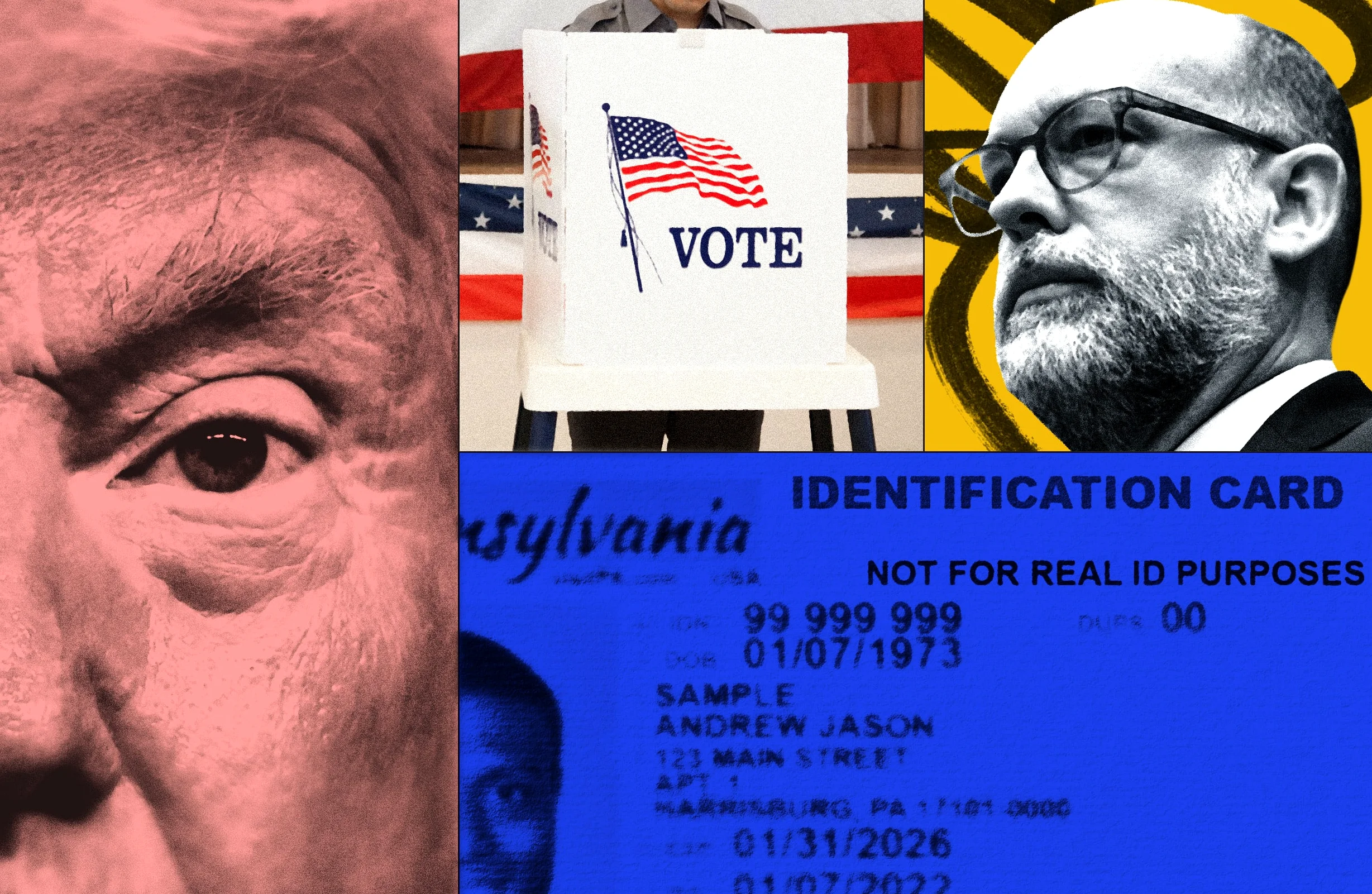
President Donald Trump has directed his White House Counsel’s office to explore an executive order mandating proof of citizenship for voter registration and photo ID at polling locations, despite legal warnings from his own advisers, according to a senior White House official granted anonymity to discuss internal dynamics. Office of Management and Budget Director Russ Vought and White House staff secretary Will Scharf are among those overseeing the effort to determine whether a legally viable path forward exists.
Unilateral Push for Voter ID Rules
The move represents the latest indication that Trump is attempting to reshape American elections unilaterally, without congressional approval, and is testing the limits of his executive authority. The effort has drawn criticism from legal experts who argue that such a measure would likely face significant legal challenges.
Trump’s fixation on claims of widespread voter fraud has clashed with efforts by some White House aides to keep his midterm message focused on issues like affordability and economic concerns. Inside the White House, Democrats’ sweeping victories last November were widely viewed as a warning about the administration’s political standing. Going forward, the White House’s strategic intent was to have Trump focus more on affordability, multiple White House officials tell MS NOW.
But there’s a gap between his top aides’ strategy and Trump’s behavior. During a closed-door meeting of top White House aides and Cabinet officials on Capitol Hill last week, deputy chief of staff James Blair told the group that it was unlikely they would be able to control Trump’s messaging. His advice: Let Trump be Trump, and focus on delivering consistent, data-driven messaging on the trail.
Election Integrity as a Political Wedge
Some in the White House view voter ID as a potent political wedge issue: polarizing, yes, but also a powerful base mobilizer. In that sense, a senior White House official said, it is not unlike the issue of transgender athletes participating in women’s sports that the Trump campaign hammered relentlessly in 2024 — not a top concern for most voters, but one that, when put directly to them, generates passionate agreement.
Still, the president’s inner team has not actively pushed stolen-election claims as part of its formal midterm strategy. Outside allies, however, have had little trouble keeping the issue alive and made the case to Trump that emphasizing the issue is a winning stance that galvanizes the president’s supporters.
Cleta Mitchell, a MAGA-aligned attorney and founder of the Trump-aligned Election Integrity Network, has made several recent visits to the White House and is regularly in contact with the president, working to keep election-related issues prominent in his thinking, according to a source familiar with her engagement.
The influence operation has a formal side as well. The president has tapped Kurt Olsen, a prominent lawyer involved in the ‘Stop the Steal’ movement, as a special government employee to lead election-related inquiries directly out of the White House — giving the effort an official foothold inside the administration.
Outside Advocacy and Legislative Pressure
But it is Steve Bannon, operating from outside the government entirely, who has emerged as perhaps the most active outside proponent for expanded investigations into allegations about past elections, according to multiple sources close to the White House. Bannon passes along relevant articles and information to a close aide who serves as one of the president’s most direct channels for outside information — a pipeline that has helped ensure the president’s focus on ‘election integrity’ has not dimmed despite the competing priorities of governing.
On Tuesday night, that messaging infused itself into Trump’s State of the Union address from the dais.
‘They want to cheat. They have cheated. And their policy is so bad that the only way they can get elected is to cheat,’ Trump said, referring to Democrats. ‘And we’re going to stop it.’
During those same remarks, Trump tried to apply political pressure on Democratic senators to pass the SAVE America Act — a House-passed bill requiring proof of citizenship when registering to vote and photo ID to cast a ballot. But the measure appears doomed with near-unanimous Democratic opposition, and some Republican senators, like Lisa Murkowski of Alaska, have already signaled their own resistance to the measure that would require 60 votes for passage.
The White House’s withering hope of congressional approval has led the president to attempt to do it himself, albeit on questionable legal grounds.
‘There will be Voter I.D. for the Midterm Elections, whether approved by Congress or not!,’ Trump wrote in a Truth Social post just more than one week ago.


Comments
No comments yet
Be the first to share your thoughts