

 The Guardian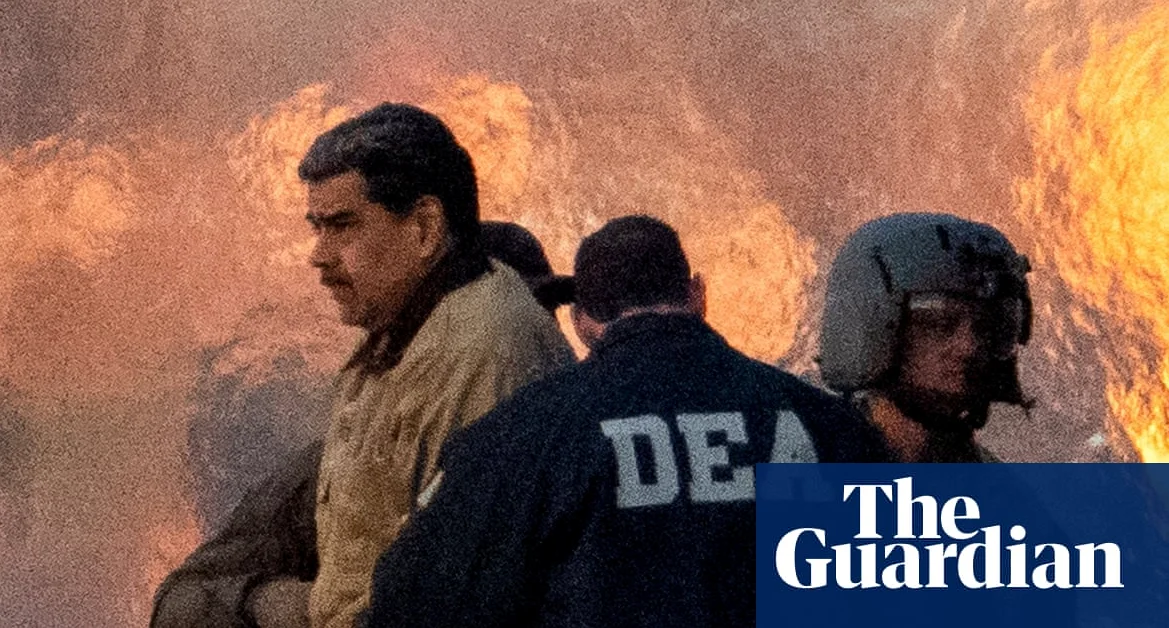
John Feeley. A former US ambassador to Panama and a Marine helicopter pilot, has criticized President Donald Trump for drawing an incorrect comparison between the 2025 capture of Venezuelan leader Nicolás Maduro and his decision to attack Iran in February 2026. According to Feeley. Trump’s belief that the success in Venezuela would translate to a similar outcome in Iran has led to significant consequences in the Middle East and globally.
Venezuela’s Capture: A False Blueprint
Maduro was seized during a special forces mission on 3 January 2025, with the remnants of his authoritarian regime quickly capitulating to US demands under the leadership of his replacement, Delcy Rodríguez. More than 100 Cuban and Venezuelan troops lost their lives during Trump’s Operation Absolute Resolve, but not a single member of the US military was killed.
Trump has called the Venezuela operation one of the most stunning displays of American military might in history, claiming it proved the US has ‘the strongest and most fearsome military on the planet.’ Feeley acknowledged that the capture of Maduro showed Trump’s administration was willing to use force against a regime it disliked. However, he argued that this success lulled Trump into a false belief that removing Iran’s supreme leader, Ali Khamenei, and his regime would be as straightforward as overthrowing the South American autocrat.
A Misjudged Approach to Iran
Feeley emphasized that his comments were not a criticism of the elite forces who conducted the raid on Maduro. As a former member of the units that flew in those missions, he noted that many things could have gone terribly wrong during the night-time operation involving Delta Force commandos and the Night Stalkers, an elite aviation unit.
Feeley left the foreign service during Trump’s first term and has stated that the Venezuela operation led Trump to expect a similarly ‘marvellous little two-week, three-ribbon war’ in Iran. He believes that the success in Venezuela led Trump to give the green light to the Iran operation, and he fears a similar miscalculation might soon be made in Cuba, which Trump recently vowed to ‘take.’
He noted that Iran’s regime is a 70-year-old entity, while Venezuela’s was a criminal mafia that had only recently consolidated its position, as he stated that the US administration is shortsighted enough to still believe they can simply ‘go in there.’ Feeley warned that the administration might make the same naive mistake of thinking that Cuba will be just like Venezuela, in the same way they misunderstood that Iran was going to be just like Venezuela.
Worries of a Miscalculation
Thomas Shannon. A Venezuela specialist and former ambassador to Brazil under George W, but Bush, also believes Trump’s Venezuela intervention caused a grave miscalculation in the Middle East. He said Trump actually thought Iran would be the same as Venezuela and believed they could go in and kill the supreme leader and others, expecting the same impact as the raid on Caracas.
Shannon believed Trump hoped to replace Iran’s ayatollah with a compliant, Rodríguez-style figure, but no such leader has emerged. He stated that Venezuela becomes the wrong example for Trump to follow, but it’s the one the president has in mind when he decides to join the Israelis in the 28 February attack. Shannon emphasized that the circumstances in Iran are different and that the Iranians have a resilience and internal capacity to endure assaults without having to surrender or pretend to surrender.
Feeley saw an irony in how the US president’s longtime foes in Caracas had inadvertently lured the US into making such a damaging misjudgment in Tehran. He noted that hard power is hard power, and nothing could prevent Trump from acting in Venezuela. However, the ultimate revenge of the Venezuelan regime was that they made it look easy, leading Trump to believe he could do the same in an ancient Persian empire, threatening to destroy the entire civilization.
Feeley’s comments highlight the growing concerns among former diplomats and analysts about the consequences of Trump’s military interventions and the risks of drawing incorrect comparisons between different geopolitical contexts.






Comments
No comments yet
Be the first to share your thoughts