

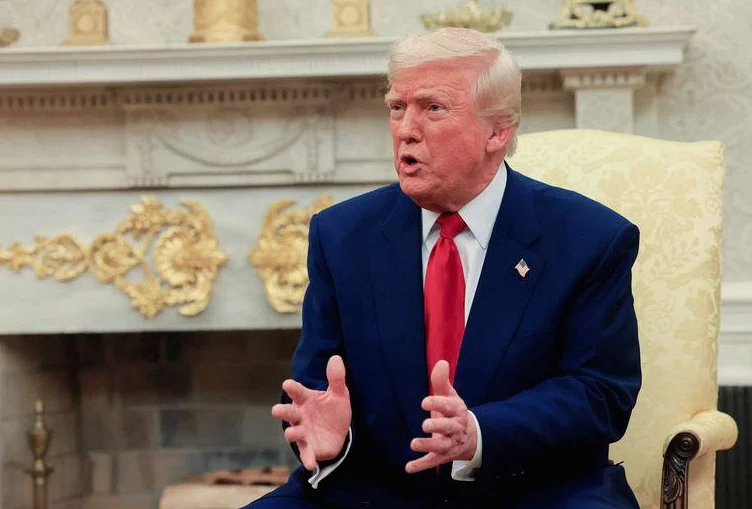
U.S. President Donald Trump has set clear conditions for assisting the Iranian people, stating he would only help them if they adopt a system that promotes peace and cooperation. Speaking during a press briefing on Monday, Trump emphasized that he is open to helping Iran, but only if the country’s leadership changes its current trajectory, which he described as one of hostility and failure.
Conditions for Assistance
Trump expressed a desire to support the Iranian people but stressed that they must first demonstrate a willingness to change their system. ‘I’d love to help them, but they have to be in a system that allows them to be helped, and right now they’re in a system that only allows failure. And I don’t want that,’ he said during the briefing.
The president reiterated that his primary focus remains on military objectives, but he indicated that once those are achieved, he would consider aiding Iran. ‘I intend to help Iranians once my military objectives are over,’ Trump said, adding that he wants a system that would not attack the United States but lead to many years of peace.
Escalating Tensions
Trump’s comments come amid heightened tensions following a series of U.S. and Israeli military actions against Iran. According to reports, the conflict began on February 28 when the United States and its ally Israel launched air strikes on Iran, resulting in the death of its Supreme Leader, Ayatollah Ali Khamenei.
The attacks, which targeted key military and political sites, marked a significant escalation in hostilities between the two nations. The loss of Khamenei, who had been a central figure in Iranian governance for decades, has led to widespread mourning and calls for retaliation from Iranian officials and citizens alike.
According to DAILY POST, the strikes were in response to a series of Iranian missile attacks on U.S. bases in the Middle East, which had been attributed to the Islamic Major Guard Corps. The attacks were seen as a direct challenge to U.S. military presence in the region and were met with swift retaliation.
Significance for the Iranian People
The ongoing conflict has had a profound impact on the Iranian people, with reports of increased military mobilization, economic instability, and a rise in civilian casualties. The loss of their Supreme Leader has created a power vacuum, leading to uncertainty about the future direction of the country.
Analysts warn that the situation could lead to further regional instability if not addressed. ‘The current trajectory is extremely dangerous, not only for Iran but for the entire Middle East,’ said Dr. Sarah Lin, a Middle East expert at the University of Washington.
Trump’s conditional offer of assistance has been met with skepticism by many in Iran, who view it as a political maneuver rather than a genuine attempt to help. However, some officials have expressed openness to dialogue, provided that the U.S. withdraws its military presence from the region.
The U.S. has not yet commented on Trump’s statements, but the White House has been under pressure to address the growing humanitarian crisis in Iran. With the conflict entering its third week, the international community is closely watching to see if a diplomatic resolution can be reached.
According to the United Nations, over 1,000 civilians have been displaced in Iran since the start of the conflict, and the country’s economy has suffered significant setbacks. The International Monetary Fund has warned that the situation could lead to a deepening recession if the conflict continues.
Trump’s remarks may signal a potential shift in U.S. policy toward Iran, but experts caution that any resolution will require more than just conditional offers. ‘Real change will only come through sustained diplomatic efforts and a willingness to compromise from both sides,’ said Dr. Lin.
As the conflict enters a critical phase, the world is waiting to see if Trump’s conditions for helping Iran will lead to a new chapter in U.S.-Iran relations or further escalation of the crisis.






1 Comment