

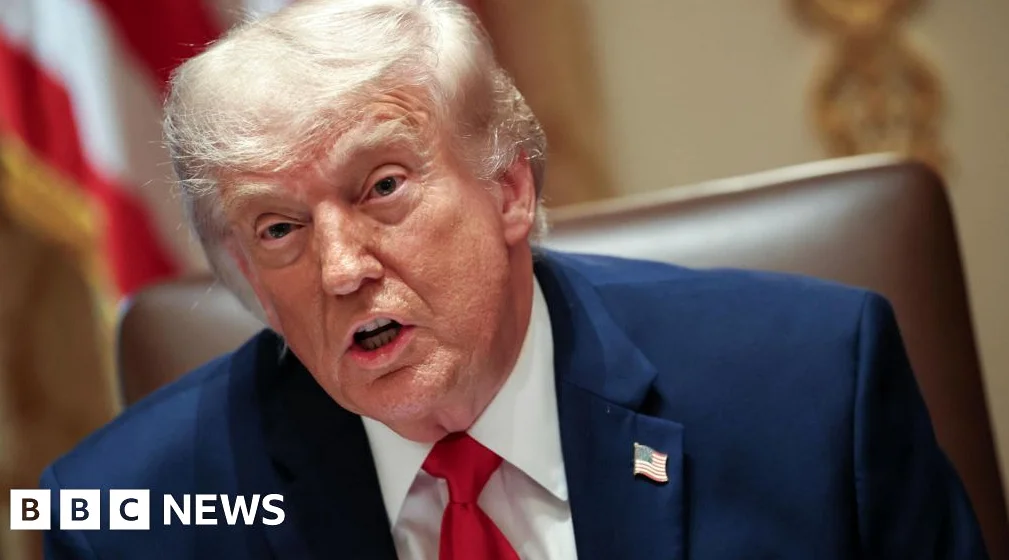
U.S. President Donald Trump said the U.S. is ‘not satisfied’ with a proposed deal with Iran yet, adding ‘we will be or we will have to finish the job,’ according to BBC News. The comments came as negotiations between Washington and Tehran continue over a potential agreement to end hostilities. The U.S. and Iran launched wide-ranging strikes against each other on 28 February, sparking conflict across the Middle East, and Iran effectively closed the Strait of Hormuz, causing global oil prices to soar.
Strait of Hormuz and Negotiation Details
Iranian state media reported earlier in the week that a draft agreement included the U.S. lifting its naval blockade of Iran’s ports and allowing Iran and Oman to jointly manage the Strait of Hormuz. Trump denied the claims. Stating ‘nobody’ would control the strait and that it would open ‘immediately.’ The Iranian report also claimed that commercial traffic through the Strait would return to pre-war levels within 30 days. It did not mention Iran giving up its nuclear ambitions or handing over its stockpile of highly enriched uranium, according to BBC News.
U.S. Secretary of State Marco Rubio said there had been ‘some progress and some interest’ in the negotiations, but neither he nor Trump provided specific details about remaining disagreements. Iranian media also claimed the deal would include a 60-day period after the memorandum is signed to finalize the agreement, which would then be submitted to the United Nations Security Council for approval, according to Todo Alicante.
Political and Military Considerations
Trump denied reports that he was considering easing sanctions on Tehran or allowing Russia and China to remove Iran’s highly enriched uranium, both of which would likely face political backlash in the U.S. The president also warned that if a deal was not reached, the U.S. might resume attacks. ‘We’ll see what happens — Either have a deal or we’re going to do some things that are a little bit nasty,’ he said, according to Bloomberg.
Iranian President Masoud Pezeshkian rejected the idea of being forced into a deal, stating that ‘forcing Iran to surrender through coercion is nothing but an illusion,’ according to a post on X. Meanwhile, Trump also directed remarks at Oman, which has been involved in discussions about a new system for shipping through the Strait of Hormuz. ‘Omán se comportará como todos los demás, o tendremos que volarlos por los aires,’ he said, according to Al-Monitor.
Market Reactions and Public Perception
Market reaction to the ongoing tensions was evident in oil prices; At the time of writing, West Texas Intermediate (WTI) crude was down 4.90% at $98.30, according to TMGM. Political instability and military actions are key drivers of oil prices, as global supply chains and trade routes remain sensitive to disruptions in the region.
Trump also said he had instructed negotiators not to rush the deal, adding that ‘time is on our side.’ His shift from aggressive posturing to a more cautious approach appears to reflect pressure from U.S. Republican hardliners who worry a deal without addressing Iran’s nuclear program could be seen as a concession; Iran, for its part, appears to be testing U.S. patience, with its media portraying the talks as a win for Tehran.






Comments
No comments yet
Be the first to share your thoughts