

 Reuters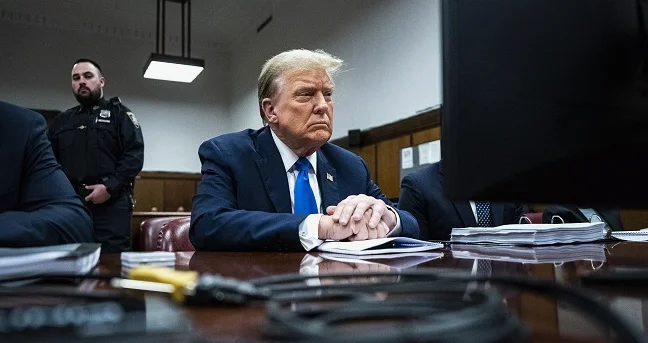
On Monday, Trump criticized the court’s decision and hinted at using other tariff powers and licenses, though he provided no specific details about what those might be.
Trump announced on Saturday that he would raise a temporary tariff from 10% to 15% on all U.S. imports, the highest level permitted by law. This move came just one day after the Supreme Court ruled that the president had overstepped his authority when he imposed higher tariff rates under an economic emergency law.
In a social media post, Trump claimed that the court had approved all other tariffs, of which there are many, and that they could be used in a more powerful and controversial way with legal certainty compared to the initial tariffs.
The ruling marked a significant legal setback for Trump’s trade policy, which had aimed to protect American industries by imposing tariffs on imports from various countries. The court’s decision focused on the legal basis for the tariffs, stating that Trump had not met the necessary criteria to justify the emergency measures.
Trump has previously used the threat of tariffs as a tool in negotiations with other countries, often targeting imports from China, the European Union, and other trading partners. However, this latest ruling has forced him to reconsider his approach and explore alternative methods to achieve his trade goals.
Legal experts have suggested that the court’s decision may have long-term implications for how future presidents can use emergency powers to impose tariffs. The ruling could also influence the outcome of ongoing trade disputes and negotiations.
For now, Trump remains focused on his next steps, with no clear indication of what form the new tariffs or licenses might take. His statements have left many in the administration and trade community guessing about his next move.



Comments
No comments yet
Be the first to share your thoughts