

US President Donald Trump’s administration announced on Wednesday that it would rescind a rule designed to incentivize electric vehicle production, eliminating the so-called ‘fuel content factor.’ This move is the latest in a series of actions that analysts say could weaken the US position in a global market increasingly dominated by China.
The decision comes as the US struggles to keep pace with China’s rapid expansion in the EV sector. Since Trump returned to office, federal support for EVs has been reduced, with tax incentives slashed and emissions rules eased.
Analysts argue that rolling back regulations such as fuel economy standards pushes the US toward petrol cars, discourages EV innovation, and gives China a competitive edge. Others are concerned about the uneven playing field during a transitional period for the industry.
The rescinded rule allowed manufacturers to count electric vehicles as having artificially high fuel-economy values when calculating fleetwide averages under Corporate Average Fuel Economy (CAFE) standards. Known as the ‘fuel content factor,’ it was designed to encourage carmakers to produce EVs by crediting them with greater energy savings.
CAFE standards aim to ‘reduce energy consumption by increasing the fuel economy of cars and light trucks,’ according to the US Department of Transportation.
In February, the Environmental Protection Agency rescinded the ‘endangerment finding,’ which forms the basis of climate regulations in the US, and repealed tailpipe pollution standards. Critics argue this decision prioritizes short-term profits for automakers and oil companies over long-term environmental and public health benefits.
Sean Tucker, managing editor at automotive research company Kelley Blue Book, said the administration’s approach includes political maneuvering. ‘The Trump administration announced last June that it would no longer enforce fuel economy standards and waived fines going back to 2022,’ he explained. ‘Changing the rules you don’t enforce only means so much.’
Tucker noted that the administration’s policies encourage carmakers to focus on petrol-powered vehicles in the short term, but in the long run, the US may lose ground globally if it does not keep up with EV innovation.
The US was once a pioneer in EV innovation, with Tesla at the forefront. However, in recent years, the focus has shifted to China, where the government has provided strong incentives for EV development and growth.
David Hart, a senior fellow in climate and energy at the Council on Foreign Relations, said the Trump administration’s approach makes it harder for US producers to respond to the explosive growth of Chinese EV exports. ‘Without a growing domestic market, these producers don’t have as much of a chance to learn-by-doing,’ he said.
Foreign markets are also at risk, further limiting opportunities for innovation. ‘If the US doesn’t develop as a manufacturing base for EV production, its auto exports—currently worth about $150 billion per year—are likely to erode as the rest of the world goes electric,’ Hart added.
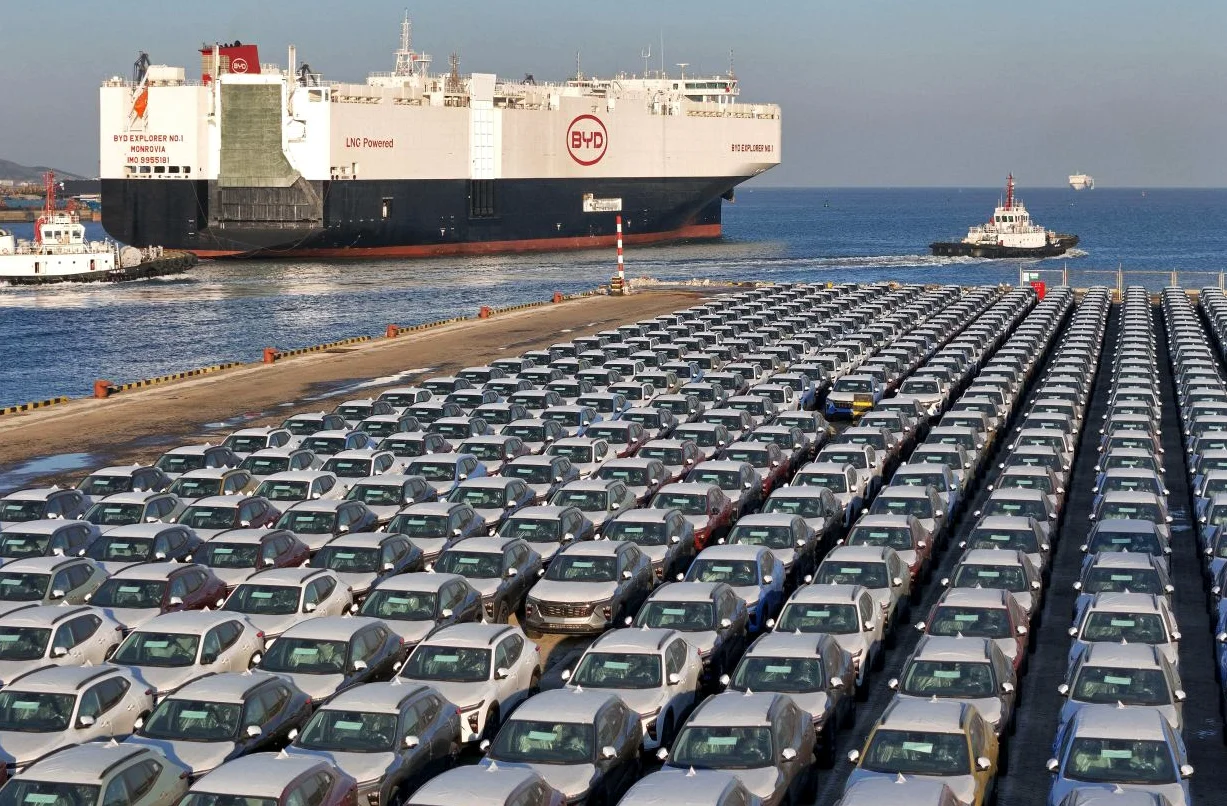
In January, China’s BYD surpassed Tesla as the world’s top-selling EV maker for the first time. Chinese automakers are increasingly adopting a global outlook, while US automakers remain focused on the domestic market.
While the US maintains a 100 per cent tariff on Chinese-made EVs, Canada has taken a different approach. It reached a bilateral agreement with China in January, allowing up to 49,000 Chinese cars to enter the Canadian market annually at a preferential tariff rate of 6.1 per cent.
Some US politicians and industry figures are concerned about the implications for the EV industry’s future. In February, 80 Democratic lawmakers urged the government to abandon Trump’s proposal to scrap the CAFE standards finalized by former president Joe Biden in 2024.
‘Historically, strong CAFE standards have driven American innovation,’ the lawmakers wrote. ‘We currently have widely available and well-proven tools to keep improving fuel economy, which save Americans money at the pump and deliver more affordable, efficient, cleaner vehicles.’
The Zero Emission Transportation Association (ZETA) also expressed concern, saying that rolling back fuel-economy standards will harm affordability and advanced manufacturing in the US. ‘This action also harms domestic manufacturers that have invested heavily in advanced technologies,’ wrote executive director Albert Gore in a statement on ZETA’s website.
On the other hand, a key US automotive alliance argued that the current standards cannot be met, given the decline in US EV sales. ‘Given the slowing growth of EV sales in the US and reduced government policy support, the previously issued CAFE standards are simply unachievable,’ the Alliance for Automotive Innovation stated.






Comments
No comments yet
Be the first to share your thoughts