

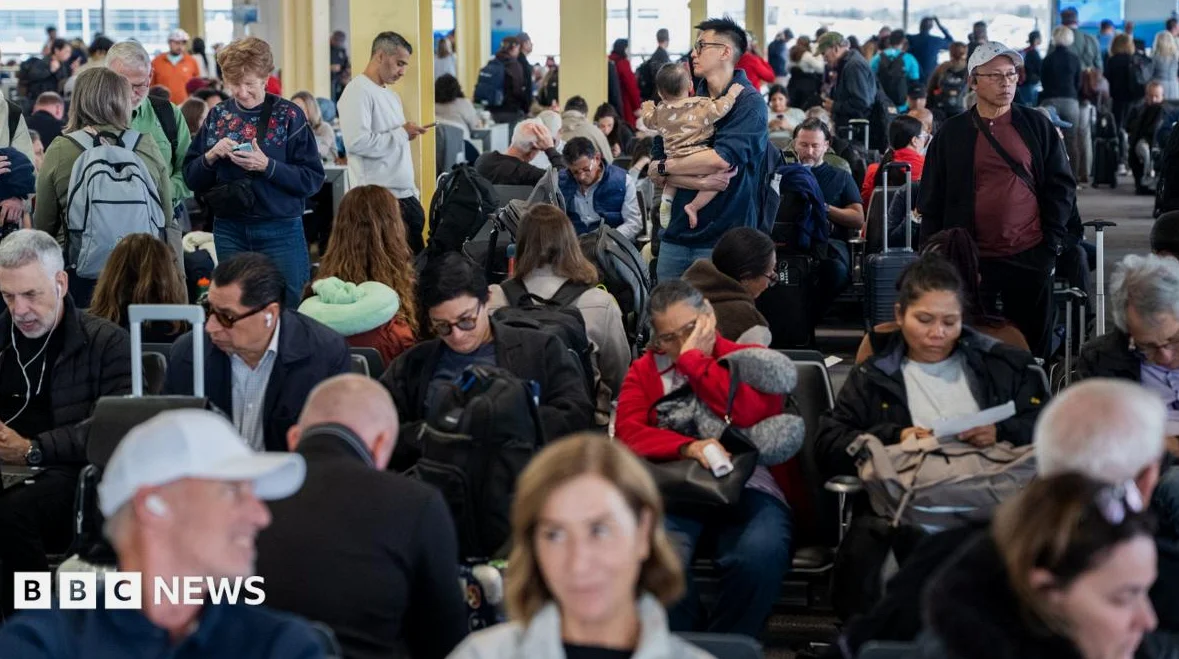
The ground stop affected more than 15,000 flights on Friday and over 5,900 on Saturday, with some passengers stranded on planes for hours. Air Canada reported 27,000 passengers affected by Friday’s cancellations alone.
Duffy stated the investigation is determining whether the cause was “incompetence” by the contractor or a faulty router. L3Harris, the prime contractor, said it was cooperating with the FAA and took the incident “seriously.” The company had completed over 70% of its modernization work before the outage.
U.S. President Donald Trump has not publicly commented on the outage but reportedly criticized the FAA’s reliance on “old broken stuff” during a private call. Illinois Governor J.B. Pritzker responded on X, saying, “Trump and Republicans have controlled Congress and could have funded the system.”
Duffy urged Congress to approve $50 billion for modernizing the air traffic control system, calling the current infrastructure “incredibly old.” The FAA’s Bryan Bedford said the system should return to normal by the end of Sunday, but ongoing delays were expected as airlines worked to reschedule flights.
The U.S. ground stop had ripple effects beyond American borders, with some flights out of the UK and Europe also being cancelled. The incident was the second-longest ground stop since 9/11.
The FAA confirmed that no evidence of a cyberattack or AI-related issue was found. L3Harris stated it was “supporting the FAA in its investigation to understand the conditions that led to the Nov. 13 ground stop.” The company also noted it had been updating communication infrastructure shortly before the outage.
Passengers expressed frustration with the lack of support and information. One traveler, Susy Beltran, posted on X that American Airlines agents were “not helpful” and she had endured 12 hours of delays with no meal voucher. Others shared similar stories of being stranded for hours on tarmac or at airports.



Comments
No comments yet
Be the first to share your thoughts