

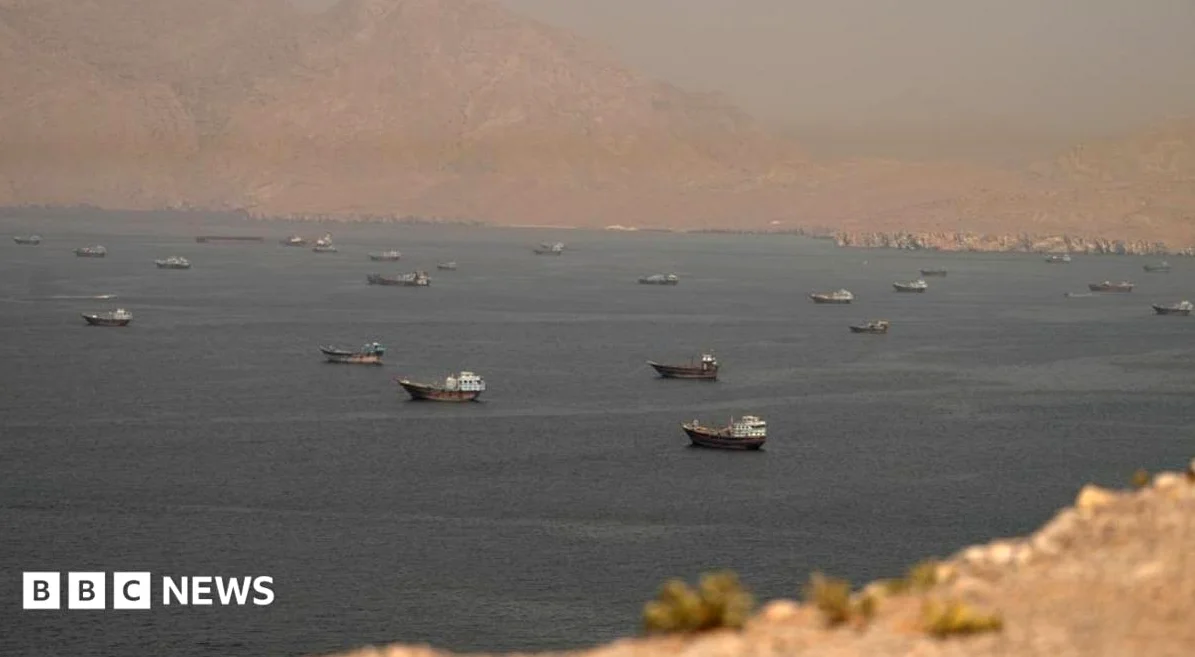
The U.S. began a series of powerful strikes on Iran in response to attacks on three commercial vessels in the Strait of Hormuz, according to U.S. Central Command. The affected tankers were attempting to transit the strait via a route Iran had previously warned against using, as While Iran did not officially claim responsibility for the attacks, its state TV reported that at least one vessel ignored warnings from Iranian forces.
Revoked Oil Sanctions Waiver
In a separate move, the U.S. Treasury Department revoked a waiver that had allowed Iran to sell oil and petrochemicals, but the waiver was part of a memorandum of understanding signed last month between Washington and Tehran. The Treasury provided a wind-down period until July 17 for transactions previously permitted under the waiver — Iran’s foreign ministry accused the U.S. of violating the agreement and stated that the move breached section 10, which guaranteed the export of Iranian oil.
Regional Reactions and Casualties
Qatar and Saudi Arabia condemned the attacks, each reporting that a tanker from their country was damaged near the Strait — Qatar’s foreign ministry spokesperson, Majed Al Ansari, stated that Iran was “fully responsible” for an attack on the Al-Rekayyat tanker. Meanwhile, Iraqi authorities confirmed that two oil tankers anchored in Iraq were attacked, with one foreign crew member killed. The Iraqi port authority also reported that operations at the Basra crude-oil terminal have been halted.
Escalation in Conflict
In the early stages of the conflict, Iran targeted U.S. military facilities in neighboring countries. Now, it is shifting its focus to maritime infrastructure, including ships and ports. The attacks are seen as an effort to disrupt global logistics and block key sea routes. A U.S. official stated that Iran’s actions in the Strait were “wholly unacceptable” and would be met with consequences.
Iran’s foreign ministry said it would not resume negotiations if U.S. threats continue. President Trump, in comments cited in media, said the U.S. would “finish the job” if a peace deal was not reached. Iran is currently holding a weeklong funeral for its former Supreme Leader, Ayatollah Ali Khamenei, who was killed in a strike on the first day of the war.
U.S. Central Command described the attacks as “unwarranted, dangerous, and a clear violation of the ceasefire.” The U.S. official, speaking on condition of anonymity, said U.S. negotiators would continue to work in “good faith” toward a final deal with Iran. The situation remains fluid, with no immediate clarity on whether the U.S. military will resume the interception of Iranian oil exports by sea.


Comments
No comments yet
Be the first to share your thoughts