

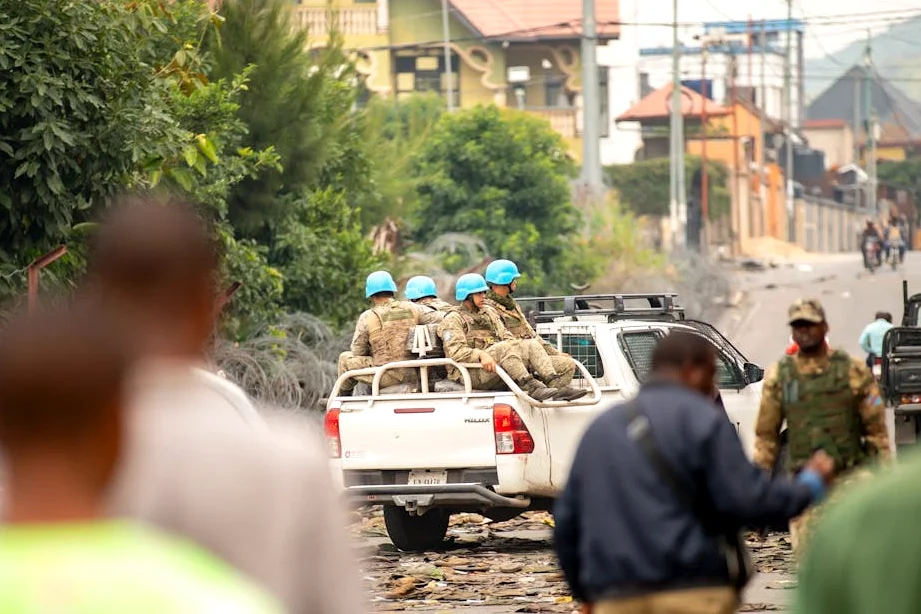
A United Nations peacekeeper was killed in southern Lebanon on Monday as Israeli military operations in the region intensified, according to multiple reports. The incident occurred amid a broader escalation of violence, with Israeli forces expanding their ground and air campaigns in the area, though this marks a significant development in the ongoing conflict between Israel and Lebanon, with implications for regional stability and international mediation efforts.
UN Peacekeeper Killed in Southern Lebanon
The United Nations peacekeeper. Whose identity has not been officially disclosed, was killed in an Israeli airstrike or ground operation in southern Lebanon. The exact circumstances of the death remain unclear, but the incident has sparked condemnation from the UN and regional actors. According to The New Arab. Israel is applying tactics similar to those used in Gaza, including mass displacement and the destruction of villages, which has raised concerns about the long-term impact on the region’s population.
Al Jazeera reported that the UN peacekeeper’s death has drawn immediate criticism from the UN Security Council, with several members calling for an emergency session to address the situation. The killing is the first of its kind in the current phase of the conflict, raising questions about the safety of UN personnel in the region. According to The New Arab. The UN has already expressed deep concern over the increasing risks faced by its peacekeepers in areas affected by the conflict.
Local sources in southern Lebanon reported that the area has been under heavy Israeli shelling for the past week, with entire neighborhoods left in ruins. One resident told Al Jazeera, “We are living in fear. Every day, we hear explosions. The UN is trying to help, but they are also targets now.”
Israeli Invasion Intensifies
Israeli military operations in southern Lebanon have intensified over the past week, with reports of increased ground movements, airstrikes, and artillery bombardments. According to The New Arab. Israel is employing tactics similar to those used in Gaza, including mass displacement and the permanent alteration of the region’s demographic and physical landscape.
Al Jazeera reported that Israeli forces have advanced further into southern Lebanon, with reports of clashes between Israeli troops and Lebanese military units in the border areas. The Israeli military has confirmed that one of its soldiers was killed in southern Lebanon earlier this week, according to their official statement. The conflict has also spilled into nearby areas, with reports of Israeli attacks hitting Beirut suburbs and causing significant civilian casualties.
According to The New Arab. The conflict has also raised concerns about the potential for a broader regional escalation — Military analysts suggest that the involvement of artificial intelligence systems in combat operations has become more pronounced, raising the stakes of the conflict. One analyst told The New Arab, “We are witnessing the first modern conflict where AI is not just a supporting tool, but a central component of military strategy.”
Regional and International Reactions
The killing of the UN peacekeeper has drawn sharp reactions from regional and international actors. The United Nations has called for an immediate ceasefire and an investigation into the incident. According to Al Jazeera, the UN Security Council is considering sanctions against Israel in response to the escalation.
In the Middle East, the Gulf states have expressed deep concern over the situation. According to The New Arab, the war has reinforced the perception of Iran as a regional threat and has also raised doubts about the reliability of the United States as a security partner. One Gulf diplomat told The New Arab, “We are seeing the consequences of over-reliance on the U.S. for security. This war has exposed vulnerabilities in our regional alliances.”
Meanwhile, the European Union has called for a coordinated response to the conflict. According to Al Jazeera, EU energy ministers have met to discuss how to respond to the growing crisis, including the potential for energy sanctions against Israel. The EU has also expressed concern over the humanitarian impact of the conflict, particularly on displaced populations in southern Lebanon.
Humanitarian and Local Impact
The conflict has had a devastating impact on the local population in southern Lebanon. According to Al Jazeera, thousands of civilians have been displaced, with entire villages left in ruins. The UN has reported that over 10,000 people have fled the area in the past two weeks, seeking refuge in neighboring countries or in northern Lebanon.
Local residents have described the situation as dire. One woman in a refugee camp told Al Jazeera, “We have no food, no shelter, and no hope. We are just trying to survive.” The lack of access to basic necessities has led to growing concerns about a potential humanitarian crisis in the region.
According to The New Arab, the conflict has also had a significant impact on the economy of southern Lebanon. The destruction of infrastructure, including roads and power lines, has disrupted trade and access to essential services. One local business owner told The New Arab, “We used to be a thriving community, but now everything has come to a standstill.”
The situation remains highly volatile, with no immediate signs of a ceasefire. According to The New Arab, the involvement of AI in military operations has made the conflict more unpredictable and potentially more dangerous. Analysts suggest that the conflict could spread beyond southern Lebanon, with the possibility of a broader regional war if the situation is not contained.
Meanwhile, the international community is under pressure to take stronger action. According to Al Jazeera, the UN is considering additional sanctions against Israel, while the European Union is exploring diplomatic and economic measures to de-escalate the situation. The coming days will be critical in determining the trajectory of the conflict and its broader implications for the region.
As the conflict continues, the death of the UN peacekeeper serves as a stark reminder of the human cost of the war. The international community must act swiftly to prevent further escalation and protect civilians in the region.





Comments
No comments yet
Be the first to share your thoughts