

 BBC
BBC 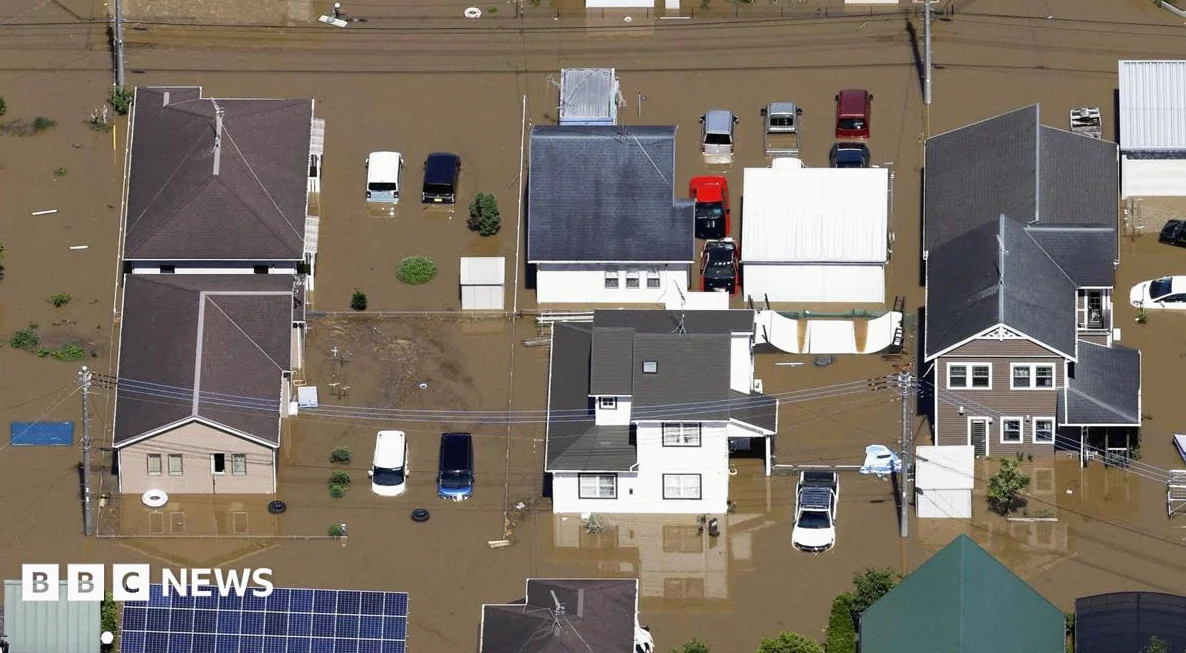
Heavy rain and flooding in Japan have led to at least eight deaths, with local authorities issuing a level five emergency warning — the highest possible alert, on Thursday. By Friday morning, the alert was downgraded to level four, but officials continued to warn of ongoing risks of landslides and flash floods. The deluge, which began on Thursday afternoon, brought over 100mm of rain per hour to the Chiba prefecture, an area just outside Tokyo. This is three times the average rainfall for August and the highest precipitation recorded in the country, according to the Japan Meteorological Agency.
Unusual Weather Conditions
Japan’s Meteorological Agency attributed the extreme weather to a combination of warm, humid air flowing into the country’s east and cold air above, creating highly unstable atmospheric conditions. Governor Toshihito Kumagai of Chiba described the situation as ‘extremely unusual’ even by Japan’s historical weather standards. He added that he had ‘never experienced a case like this’ in his previous disaster response work. The agency forecasts the heavy rain will continue through late Friday.
Impact on Infrastructure and Daily Life
At least eight people have died, with reports from NHK, Kyodo news agency, and Asahi newspaper confirming the casualties. Among the victims was a woman who died inside her car after it became submerged in floodwaters. Two others collapsed on the streets and later died. Rail services across the country remained suspended on Friday morning, and several major highways were also closed. The heavy rainfall has led to widespread disruptions in transportation and daily life, with rescue and relief efforts ongoing.
Official Response and Public Statements
Authorities have emphasized the priority of saving lives and continuing rescue efforts. Governor Kumagai stated that officials would remain focused on emergency response. The Japan Meteorological Agency continues to monitor the situation, which has been described as an ‘first-ever level of heavy rain.’ The extreme weather is part of a broader pattern of storms affecting Japan and neighboring countries this week, with meteorologists warning of an unusually active typhoon season ahead.





Comments
No comments yet
Be the first to share your thoughts