

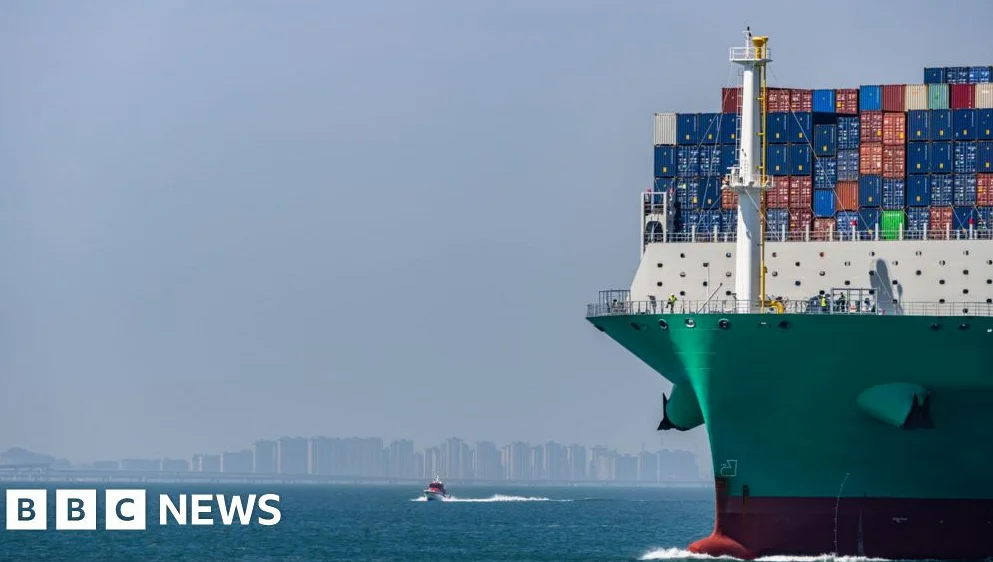
The Trump administration has announced new tariffs targeting countries over forced labour concerns, with 10% and 12.5% duties proposed on imports from 60 trading partners, according to BBC and MTV Lebanon. The tariffs, which have not yet been enforced, require the administration to go through a formal process before implementation.
Investigation Findings and Proposed Tariff Rates
The investigation, launched in March by Greer, examined whether 60 trading partners had failed to act on prohibiting forced labour. The report found that 54 countries had “failed to impose a legal prohibition on the importation of goods produced wholly or in part with forced labour and to effectively enforce such a prohibition.” Six other countries—Canada, the EU, Ecuador, Indonesia, Mexico, and Pakistan—were found to have “failed to effectively enforce a forced labour import prohibition.”
The US trade department proposed 10% tariffs on imports from Canada, the EU, Britain, Indonesia, Mexico, Pakistan, Argentina, Bangladesh, Cambodia, El Salvador, Guatemala, Indonesia, Malaysia, and Taiwan. The remaining 45 countries, which include China and India, would face 12.5% duties.
Reactions from Affected Countries and Groups
The UK government responded by stating it is “tackling forced labour in the UK and in global supply chains to ensure UK businesses are not complicit in forced labour and human rights violations.” A UK government spokesperson added that the UK continues to engage with the US administration and has made clear the actions it is taking.
Amnesty International’s business and human rights director, Peter Frankental, said that “trade measures can play a role in addressing forced labour risks, but they are not a substitute for effective enforcement, corporate accountability and mandatory human rights due diligence.” The UK’s Independent Anti-Slavery Commissioner also stated that “the UK law does not go far enough to tackle forced labour in supply chains.”
China responded by stating it opposes any form of unilateral tariff and denies allegations of forced labour. Chinese foreign ministry spokesperson Mao Ning said, “There is no so-called forced labour in China, and we oppose using this as an excuse for political manipulation.”
The European Commission also said the EU remained committed to the trade deal agreed with the Trump administration last year and considers the tariffs imposed on these grounds to be “unjustified.”
Context and Global Trade Implications
The proposed tariffs are part of a broader effort by the Trump administration to address forced labour concerns in global supply chains. The move is seen by some as an attempt to cut off China’s export routes by imposing high tariffs on countries that have become alternative manufacturing hubs. According to CNN, many countries in South and Southeast Asia have built their economies with global and Chinese investors looking to diversify away from China, making them vulnerable to these new tariffs.
Dan Ives, global head of research at Wedbush Securities, said, “It’s a gut punch to these countries and they need to try to negotiate it lower.” He added, “The worry is the US is trying to cut off China’s export routes and it speaks to the high tariffs facing these nations.” The Trump administration has also announced an extra 40% tariff on so-called ‘transshipments,’ or goods that are shipped from a high-tariff country to a low-tariff country before being re-exported to the US.





Comments
No comments yet
Be the first to share your thoughts