

 The Guardian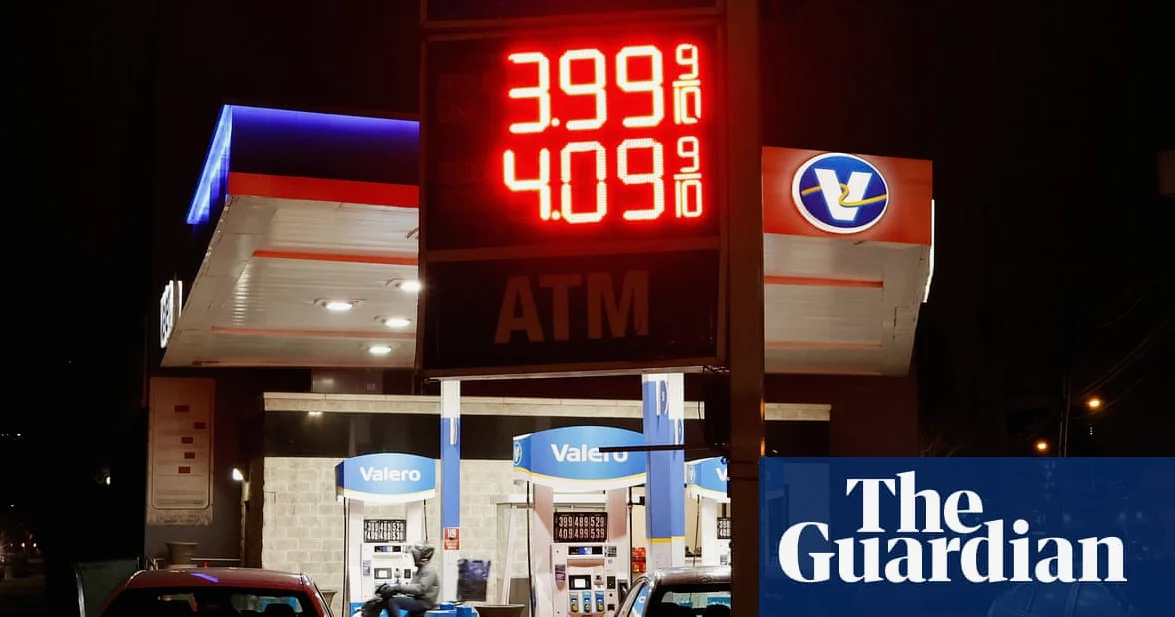
The nationwide average fuel price in the United States reached nearly $4.02 a gallon on Tuesday, marking the first time since August 2022 that the price has crossed the $4 threshold. The increase has placed added financial strain on drivers, who are now paying significantly more at the pump than they did just a month ago, when the average was $2.98.
Rising Fuel Prices and Market Reactions
The surge in fuel prices comes amid ongoing military operations in the Middle East, which have driven up demand for oil and consequently, its price. Reports emerged on Tuesday that Trump is considering ending the war soon, which led to a rally in US stock markets. The Dow Jones Industrial Average climbed nearly 1,100 points, closing up 2.5%, while the S&P 500 rose 2.9% and the Nasdaq surged 3.8%.
Trump told the New York Post that he may end the war soon, stating, “we’re not going to be there for too much longer.” The Wall Street Journal also reported that Trump has told aides he might be willing to end the war even if the Strait of Hormuz remains closed, a critical waterway for global oil shipments.
Regional Variations in Fuel Prices
Fuel prices on the West Coast are significantly higher than the national average. In California, the average price is $5.89 a gallon, while in Washington state, it is $5.35. These disparities have placed additional pressure on residents in these regions, who are already facing high costs of living.
The impact of high fuel prices has historically been a political liability for the White House. With Trump facing his biggest electoral test of his second term later this year, the rising costs could influence voter sentiment ahead of November’s midterm elections, where Republican control of Congress is in question.
Trump’s Stance on Fuel Prices and the War
Oil prices have surged since the US and Israel launched their military campaign against Iran. As concerns grow about the long-term impact of higher energy prices, Trump has repeatedly downplayed the effects, arguing that the US will benefit from the rise in oil prices. In a March post on his Truth Social platform, Trump stated, “The United States is the largest Oil Producer in the World, by far, so when oil prices go up, we make a lot of money.”
When asked about the sharp increase in fuel prices on Tuesday, Trump responded, “They’ll drop when we leave, when it’s over.” He added that he plans to withdraw US forces from the war “at some point,” though he acknowledged, “Not quite yet.” Trump also noted that other countries will need to step in to address the situation, saying, “Iran has been decimated, but they’re going to have to come in and do their own work.”
Oil prices had edged down slightly by the end of Tuesday, with Brent crude, the global benchmark, priced at $104.30 a barrel, down from $107.50 a barrel earlier in the day. Despite the slight decline, the overall trend remains upward, driven by ongoing geopolitical tensions and the continued impact of the conflict in the Middle East.
The rising fuel prices have sparked discussions about the economic consequences of prolonged military engagements and the potential for further inflation. As the war continues, the financial burden on American consumers is expected to grow, with the average fuel price passing $4 a gallon for the first time in four years.






Comments
No comments yet
Be the first to share your thoughts