

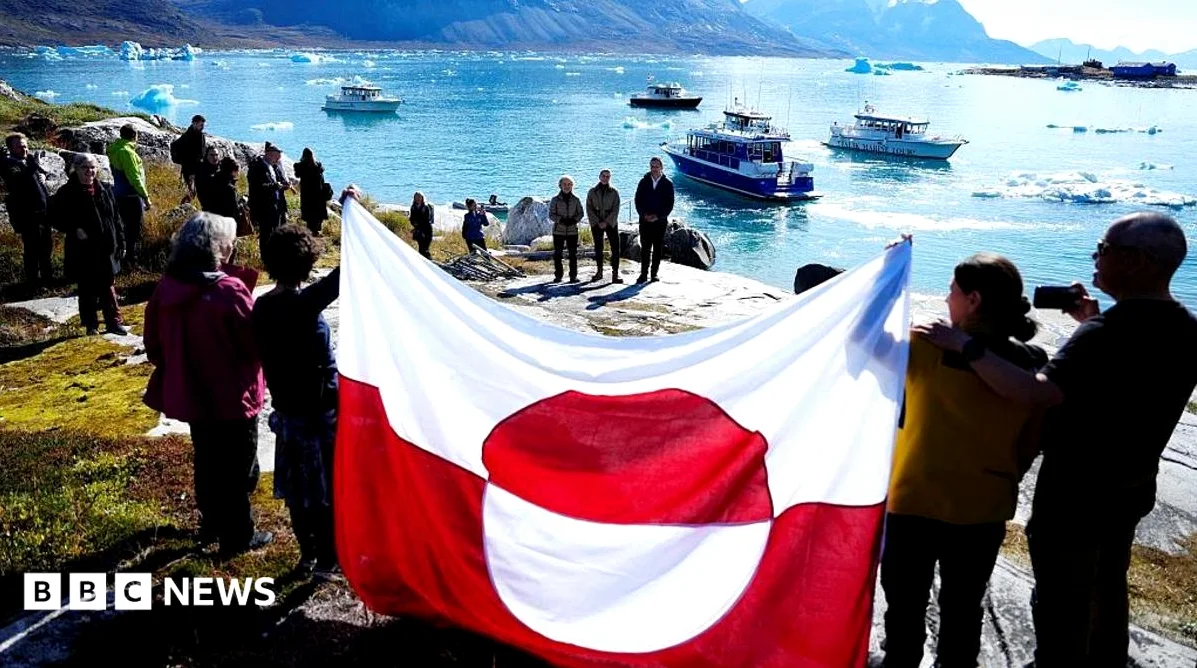
US Secretary of State Marco Rubio hailed the agreement as a ‘historic deal’ and a ‘huge win for the United States and the American people,’ according to the BBC. He stated that the deal ‘permanently and completely addresses our national security concerns in Greenland.’ The agreement recognizes Greenland’s interests and its place in international cooperation, according to a statement by the Danish government.
Trump’s Annexation Threats and Response
President Trump had tried for months to purchase or annex the mineral-rich Danish territory, according to the BBC, and he even threatened military action, which led to an outcry from Danes and other NATO countries. Trump has claimed that Greenland is essential for his plan to build a Golden Dome defense system to protect the US against missile attacks from Russia and China, according to the BBC. He has also emphasized that European allies could cooperate in this endeavor.
Denmark’s Prime Minister Mette Frederiksen described Trump’s proposal to make Greenland part of the United States as ‘absurd’ in 2019, according to Stiftung Wissenschaft und Politik. Greenland’s Ministry of Foreign Affairs responded succinctly in a tweet: ‘We’re open for business, not for sale.’
Strategic and Economic Implications
The island has vast—and largely untapped,reserves of rare earth minerals, many of which are key for technologies including mobile phones and electric vehicles, according to the BBC. These resources are a key factor in the strategic interest of both the US and Denmark.
The US already has more than 100 military personnel permanently stationed at its Pituffik base in the northwestern tip of the territory, according to the BBC. The 1951 agreement between the US and Denmark allows the US to send as many troops as it wants to Greenland, it is unclear how the new deal differs from this agreement, according to the BBC.
Assessment and Implications
According to Stiftung Wissenschaft und Politik, the acquisition of Greenland has repeatedly been a topic of discussion within US government circles since the 19th century because of the island’s strategic location and its resources. The Danish intelligence services have identified the United States as a potential threat to the security of the Kingdom since Washington is no longer ruling out the use of military force even against allies, according to Stiftung Wissenschaft und Politik.
According to DGAP, there is no compelling strategic case for an American takeover of Greenland; Whatever the US seeks there,overflight rights, basing rights, intelligence access, or mineral exploration—Denmark and Greenland have long been willing to provide. This cooperation is grounded in the 1951 Danish-American Defense Agreement and the 1949 NATO Treaty; Denmark and the United States are allies, and the very essence of an alliance is to deter threats collectively, according to DGAP.
The US decision to reduce its military footprint in Greenland from several tens of thousands of service members during the Cold War to only a few hundred today has been noted. If Washington were to reverse course and increase troop levels in response to heightened threat perceptions, NATO allies would broadly support such a move, according to DGAP. However, if this issue is not about shared security within NATO but instead about American ownership and territorial expansion, the calculus changes fundamentally,for Greenlanders, for Danes, for NATO allies, and ultimately for the United States itself, according to DGAP.






Comments
No comments yet
Be the first to share your thoughts