

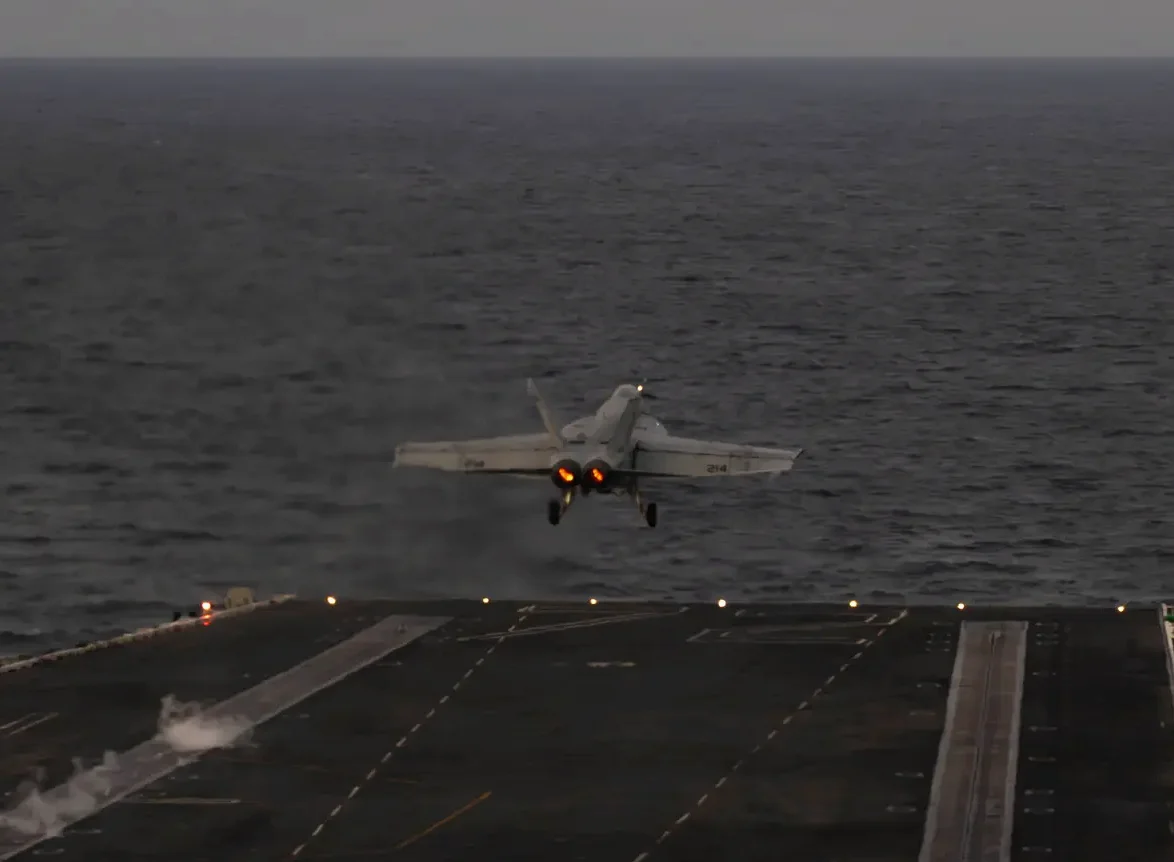
Satellite data and flight-tracking reports indicate that the United States has deployed over 150 military aircraft to bases in Europe and the Middle East in recent days, signaling a significant military buildup near Iran. This development comes amid stalled nuclear negotiations and heightened tensions between Washington and Tehran. According to the Washington Post, the deployment includes a variety of aircraft, including cargo planes, refueling aircraft, and combat jets, marking one of the largest U.S. military force movements in the region in more than two decades.
Deployment Includes Advanced Fighter Jets
The Times of Israel reported that the U.S. military has begun moving 12 F-22 stealth fighter jets toward the Middle East. These aircraft were observed taking off from the Royal Air Force Lakenheath in England and joining KC-46 refueling planes en route to the region. In addition to the F-22s, multiple fighter jets, including F-35s, F-15s, and F-16s, were spotted heading toward the region in recent days, according to the Military Air Tracking Alliance.
The U.S. aircraft carrier USS Gerald R. Ford has been positioned near Crete, joining the USS Abraham Lincoln in the Mediterranean. This combined presence of two aircraft carriers and a large number of advanced fighter jets represents a substantial military demonstration in a region already fraught with geopolitical tensions.
Diplomatic Tensions and Nuclear Talks
The military buildup coincides with ongoing diplomatic efforts between the U.S. and Iran over Iran’s nuclear program. President Donald Trump has repeatedly pressured Tehran to make concessions, while Iran has expressed willingness to negotiate but has warned of potential consequences if the U.S. escalates tensions.
Iran’s Deputy Foreign Minister Majid Takht-Ravanchi stated that Tehran is prepared to take any necessary steps to reach a deal with the U.S. and expressed hope that Washington would demonstrate the same willingness to negotiate. He warned that a U.S. strike on Iran would be a ‘real gamble,’ according to a statement released by the Iranian government.
The current situation echoes past military buildups and diplomatic standoffs in the region. In 2019, the U.S. conducted a series of airstrikes in Iraq after the killing of Iranian General Qasem Soleimani, which led to a significant escalation of tensions. The deployment of such a large number of military assets near Iran is reminiscent of those early 2020s events, though no direct military action has been confirmed at this time.
Implications for Regional Stability
The movement of military assets raises concerns about regional stability and the potential for conflict in the Middle East. Analysts note that the presence of advanced fighter jets and aircraft carriers could be interpreted as a show of force, which may be intended to deter Iranian aggression or signal U.S. readiness to respond to any provocations.
According to the Washington Post, the buildup has been carefully timed, with reports suggesting that the U.S. is monitoring developments in Iran’s nuclear program and preparing for various contingencies. However, no formal orders for a military strike have been issued, and the U.S. administration has not publicly confirmed the scale of the deployment.
The situation remains fluid, with both sides engaged in diplomatic discussions. The next critical period for the U.S. and Iran will likely be the upcoming meetings between senior officials, where key issues such as Iran’s nuclear program, sanctions, and regional security will be addressed. The outcome of these talks could determine whether the current military buildup leads to further escalation or a de-escalation of tensions.
With over 150 military aircraft deployed and advanced fighter jets en route, the U.S. military presence near Iran is the largest in the region in over two decades. The potential for a direct conflict remains a concern, but for now, the focus remains on diplomatic efforts to prevent a full-scale confrontation.






Comments
No comments yet
Be the first to share your thoughts