

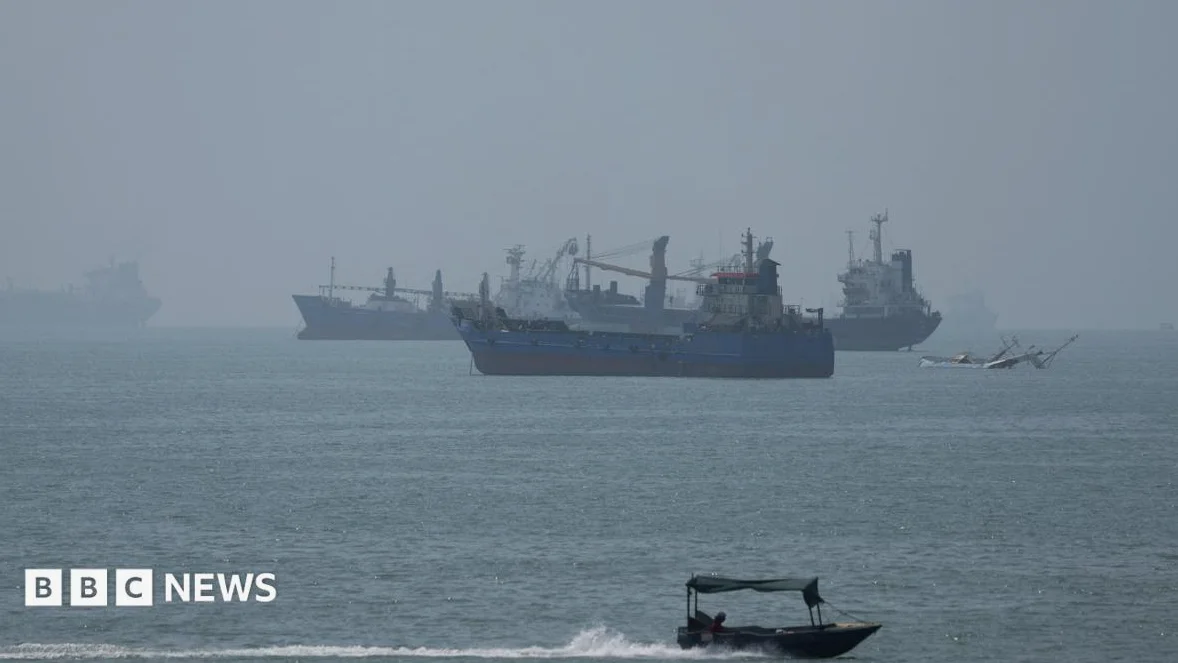
On November 12, the U.S. military launched a strike on Iranian rocket launchers on Larak Island, where Iranian forces had been preparing to deploy sea mines into the Strait of Hormuz, according to Capt. Tim Hawkins of U.S. Central Command (CENTCOM). The U.S. described the action as a “limited, precise” response to an “imminent threat” to global shipping and civilian mariners.
Residents near the island reported hearing explosions, and Iranian state media reported casualties among both Iranian forces and civilians. The Islamic Major Guard Corps (IRGC) condemned the strike as a “strategic and deadly mistake” by the Trump administration and vowed retaliation, according to a statement on state broadcaster IRIB.
Retaliatory Strikes by Iran
In response, the IRGC launched missile and drone attacks against two U.S. air bases in Jordan; Jordan’s armed forces reported that eight incoming missiles were intercepted and destroyed before they could reach civilian areas, according to state-run Petra news agency. This marked the fourth round of airstrikes between the two nations since July 7.
Iran had resumed attacks on commercial vessels on November 7, which the U.S. cited as justification for its latest military action. The Trump administration has stated that it has cleared sea mines from the Strait of Hormuz and warned that any ship placing new mines in the area would be “immediately and systematically destroyed.”
Geopolitical Implications
Germany, a key diplomatic player in the region in recent years, found itself sidelined during the escalation. The German government was informed of the attack only shortly before it occurred—not by the U.S., but by Israel. Chancellor Friedrich Merz voiced support for the U.S. action, stating that international law would have “relatively little effect” and that military force was necessary to protect fundamental interests.
Merz’s comments, however, diverged from both European and U.S. intelligence assessments, as he claimed Iran was “possibly only weeks away from assembling nuclear weapons systems.” This contradicted previous statements by Merz and assessments from Western intelligence agencies.
Trump’s Nuclear Warning
Amid the escalation, U.S. President Donald Trump hinted at a “nuclear alternative” if a deal between the U.S. and Iran fails. On Truth Social, Trump said, “If not, we have the ultimate alternative, which hopefully will never have to be used again.” Analysts interpreted this as a veiled nuclear threat.
Iran’s leadership has not yet decided whether to proceed with a proposed deal, according to reports from Fars news agency. Foreign Ministry spokesman Esmaeil Baghaei said the signing could occur in the coming days. However, the IRGC has expressed opposition to finalizing the agreement on Sunday, as Trump has insisted.
The renewed hostilities raise concerns about a return to open conflict in the region, where Iran has previously targeted U.S. military bases and infrastructure in Gulf countries since the war began on February 28. The last confirmed U.S. strike against Iran was on July 29, when it attacked Major Guard targets, including coastal surveillance and defense sites.
With both sides accusing each other of violating the Strait’s neutrality, the situation remains tense. The U.S. and Iran have traded conflicting claims about the status of the shipping lanes and the legitimacy of their respective military actions.


Comments
No comments yet
Be the first to share your thoughts