

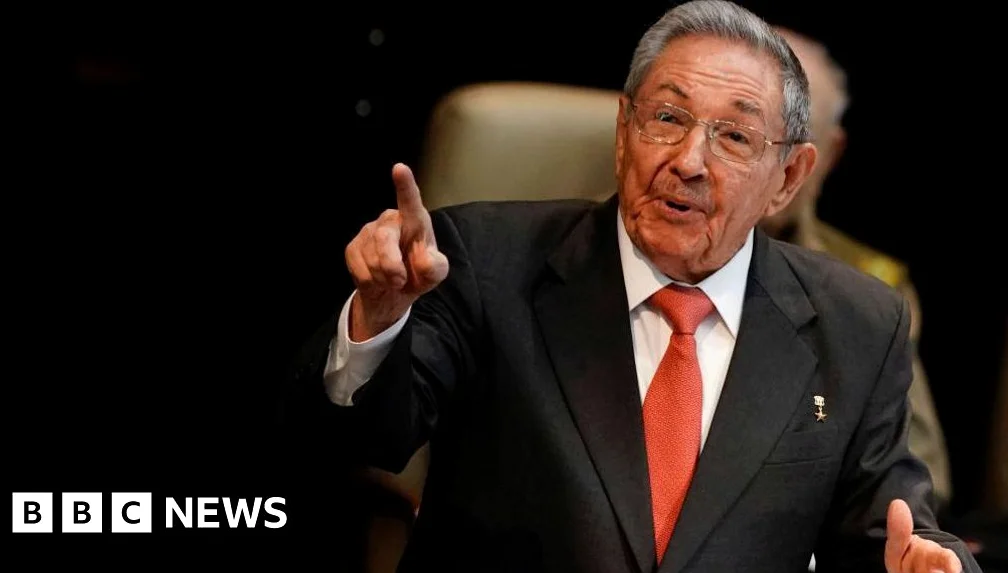
The U.S. administration plans to announce criminal charges against former Cuban President Raúl Castro on May 20, related to a 1996 incident involving the shootdown of exile-operated planes, according to a Justice Department official. Federal prosecutors in Miami expect to unseal an indictment against the 94-year-old Castro, based on a case involving two planes operated by a humanitarian group called Brothers to the Rescue.
Background of the 1996 Incident
The 1996 incident remains a politically charged event in modern U.S.-Cuba relations — Cuban jets shot down two civilian planes operated by the exile group Brothers to the Rescue, according to sources. The event occurred on February 25. And Cuban officials at the time claimed the planes were flying in Cuban airspace and violating the country’s sovereignty, the U.S. has since maintained that the planes were flying over international waters and were not armed.
Republican lawmakers in the U.S. have long pressed for criminal accountability in the case, targeting Raúl Castro, the younger brother of Fidel Castro, for his alleged role. The potential for indictments of Cuban officials gained new momentum after President Donald Trump ordered a snatch-and-grab operation on Venezuela’s former president Nicolás Maduro, with Trump hinting that Cuba could be next.
Recent Diplomatic and Economic Pressure
The U.S. has also intensified pressure on Cuba through an oil blockade that has worsened the island’s energy crisis; the Trump administration hopes these measures will force the Cuban government to implement political and societal reforms. CIA Director John Ratcliffe led a delegation to Havana on May 14 to deliver a message from Trump to Cuban officials and Raúl “Raulito” Guillermo Rodriguez Castro, the elder Castro’s grandson.
News of the potential indictment emerged as part of a broader strategy to isolate the Cuban government, though the indictment would require approval from a grand jury after evidence is presented. The Miami prosecutors’ office will host an event on May 20 to honor the victims of the 1996 incident, according to an invitation seen by reporters. The office has not responded to a request for comment.
Political and Legal Implications
The move to indict Raúl Castro reflects a shift in U.S. foreign policy under the Trump administration, which has taken a more aggressive stance toward Cuba. The 94-year-old Castro has been a central figure in Cuban politics for decades, serving as president until 2018 before transitioning power to his brother’s successor; the indictment, if issued, would be a rare instance of the U.S. seeking criminal charges against a foreign leader over events from decades ago.
Some analysts suggest that the timing of the potential indictment,just weeks before the U.S. presidential election,could be an attempt to signal a hardline approach to U.S.-Cuba relations. The issue has drawn attention from both political parties, with some U.S. lawmakers criticizing the Trump administration for escalating tensions without a clear strategy for resolving them.





Comments
No comments yet
Be the first to share your thoughts