

 The Guardian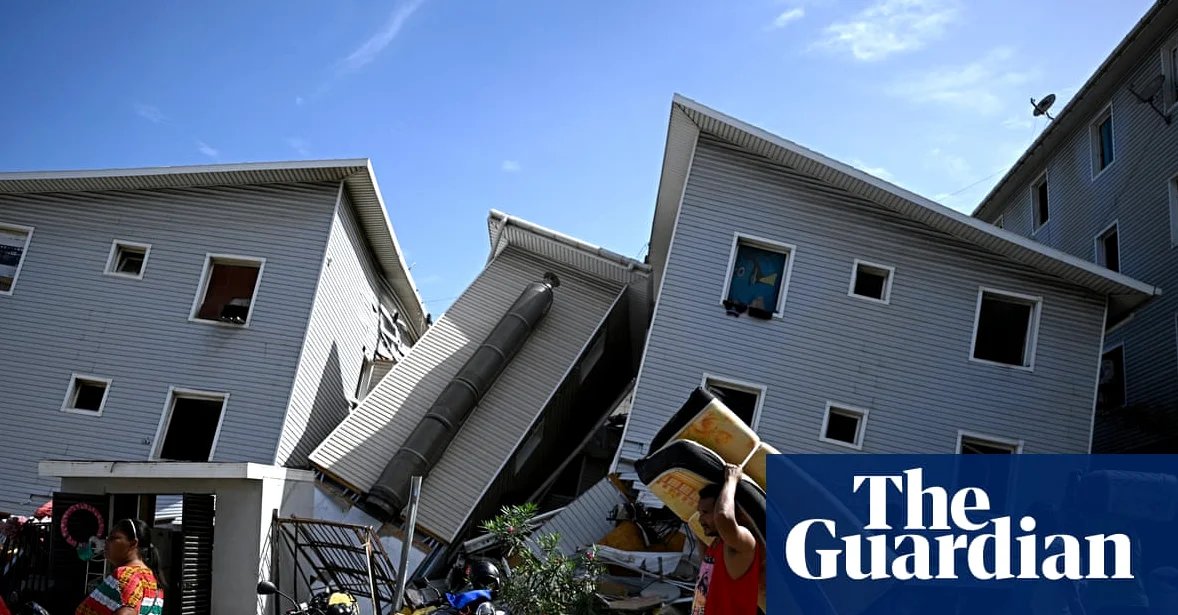
Earthquakes Strike in Rapid Succession
A double whammy of powerful earthquakes rattled Venezuela’s northern coast on Wednesday, forcing residents of the capital, Caracas, to flee shuddering buildings onto the streets. The 7.2- and 7.5-magnitude quakes struck within a minute of each other shortly after 6pm local time.
Personal Stories of Terror and Loss
Sebastian Rodríguez, an 18-year-old whose family runs a shop in Centro Plaza, described the experience as “horrible,” recounting how he had to carry his mother out of the building as she was “paralysed by fear.” The shopping center, built during the 1970s oil boom, appeared to have escaped major damage, but surrounding areas were not as fortunate.
At least three buildings in Los Palos Grandes and neighbouring Altamira collapsed during the quakes. Emergency workers, volunteers, and relatives rushed to the scene in the hopes of finding survivors amidst the wreckage of residential buildings reduced to a mangle of masonry and steel.
Jessica Galvis, a 33-year-old critical care physician, expressed her anxiety as she waited for news outside one fallen six-floor building, where she believed a friend was buried. José Morillo, 61, raced across town on his motorbike, praying that his family members trapped inside would be found alive. One of his relatives was eventually pulled from the ruins, seemingly still alive.
Disaster in Working-Class Communities
Working-class areas such as Catia, already struggling with Venezuela’s economic crisis, were also severely affected. José Luis, a PE teacher, described how his home had crumbled, with water coming in through the roof. He and many others planned to sleep outside due to fears of another quake.
“The government needs to send people, firefighters,” he said. “If there’s another quake like that one, this building will collapse. This is what we all fear.” Isra Colmenares, 58, described the experience as “truly hideous” and noted that it was the first time in her life she had felt such a powerful quake.
The situation appeared to be even worse in areas north of Caracas. The international airport in La Guaira sustained severe damage, which is likely to hamper the humanitarian response. Social media videos showed panicked travelers sprinting for cover as the terminal’s roof began to cave in, coating them in dust.
Many tower blocks and buildings, including at least one beachfront hotel, collapsed. The coastal region had already been reeling from Donald Trump’s decision to launch a lightning-fast invasion to abduct Venezuela’s president, Nicolás Maduro, on 3 January this year. US air-to-surface missiles had damaged several buildings in Catia La Mar, a seaside town west of La Guaira.
On Wednesday, those communities again found themselves in the eye of the storm. With phone lines down, attempts to contact residents were unsuccessful. Their fate remained unclear. The official death toll stood at 164 on Thursday morning and was expected to rise. Trump warned of “a devastating number of deaths,” adding: “We will be there for our new and great friends.”
Social media filled with photographs of the missing, many from the stretch of shoreline between the airport and Catia La Mar. Among them were an eight-year-old boy named Brayne and a five-year-old girl, Miranda. In one dwelling, at least five members of the same family had disappeared: Luisa, Ángel, Carmen, Yepxalit, and Andrea.
Amid the despair, there were moments of hope. At about 1.30am, rescue workers were filmed freeing three siblings who had been buried under a pancaked building in La Guaira. “God, you are great!” one local man could be heard proclaiming as the children were pulled from a jumble of concrete, shaken but alive.






Comments
No comments yet
Be the first to share your thoughts