

 BBC
BBC 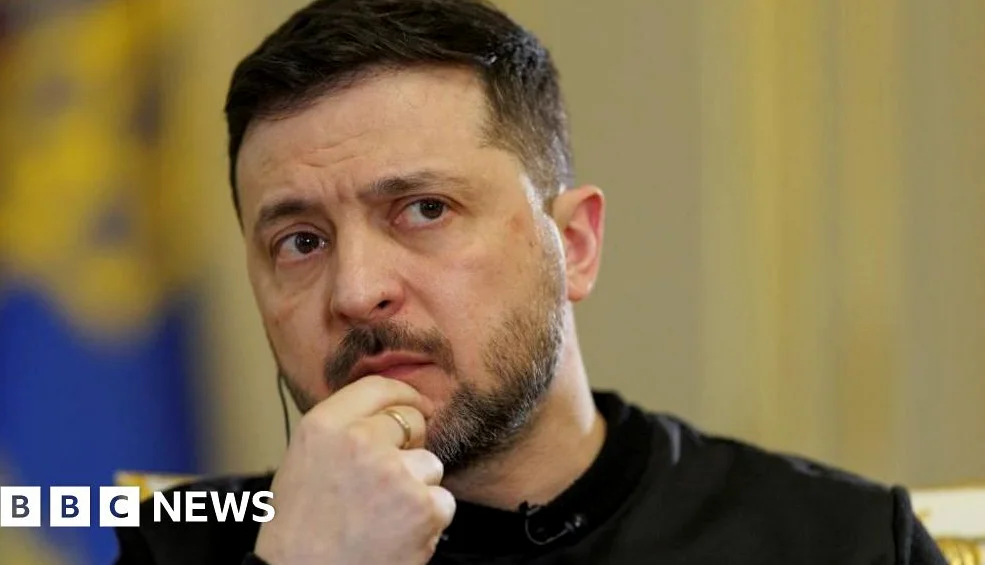
Volodymyr Zelensky has said that Ukraine’s allies have asked him to scale back attacks on Russia’s energy infrastructure, according to the BBC. The Ukrainian president told journalists via a WhatsApp voice message that the attacks are a response to Russia’s actions against Ukraine’s energy sector.
Strategic Dilemma Over Energy Targets
Zelensky explained that he has received messages from some partners asking how Ukraine’s responses to Russia’s oil and energy sector can be reduced. He said that if Russia stops targeting Ukraine’s energy infrastructure, then Ukraine would stop attacking Russia’s energy facilities.
The comments come after a series of long-range Ukrainian strikes on Russia’s energy sector, including the key oil export terminal at the port of Ust-Luga, near St. Petersburg. Zelensky said that the attacks on the Ust-Luga terminal knocked out 60% of the port’s capacity earlier this week.
The U.S. recently eased some sanctions on Russian oil due to rising global energy prices caused by the war in Iran and the closure of the Strait of Hormuz. However, China and India remain the largest buyers of Russian crude oil, accounting for 85% of its exports in February, according to the Centre for Research on Energy and Clean Air (CREA).
Energy Dependence and Strategic Concessions
These figures highlight the complex web of dependencies that may be influencing the calls for Ukraine to scale back its attacks on Russia’s energy infrastructure. The EU is the largest buyer of Russian gas, accounting for 34% of its imports, and also the largest buyer of liquefied natural gas (LNG), at 49%.
Zelensky’s comments follow a string of Russian attacks on Ukraine’s oil refineries, which have forced the country to rely heavily on fuel imports from Poland, Greece, Lithuania, and Turkey. Almost half of Ukraine’s gas imports previously came from Hungary, but the pipeline was suspended after Budapest accused Kyiv of stalling repairs.
Zelensky is currently on a tour of the Middle East, visiting Saudi Arabia, the United Arab Emirates, Qatar, and Jordan — During the trip, he has offered Ukraine’s drone technology and expertise in hopes of securing assistance in protecting the country from Russian missile attacks.
Strategic Implications and Global Fuel Prices
The surging global oil prices. Partly driven by the war in Iran and the closure of the Strait of Hormuz, have injected significant cash into Russia’s war economy; However, these high prices also threaten Ukraine’s ability to sustain its military operations, as the country relies on imported fuel.
Responding to a BBC question. Zelensky said that Ukraine currently has enough fuel to continue its military operations but has sought to secure more during his Gulf tour. He also noted that Ukraine’s experience in unblocking the Black Sea grain exports could be useful in addressing potential blockages in the Strait of Hormuz.
Meanwhile, Russian attacks on Ukraine’s energy infrastructure have left more than a million people without electricity and heating during the winter, according to the BBC; this has forced the Ukrainian government to rely on emergency measures to provide power and warmth to affected communities.
Zelensky’s remarks highlight the delicate balance Ukraine must maintain between defending its territory and managing international relations, particularly with countries that are still heavily dependent on Russian energy resources. The situation is further complicated by the fact that the key targets of Ukraine’s attacks on Russia’s energy infrastructure remain a closely guarded secret, adding to the uncertainty around the effectiveness and reach of these operations.
As the conflict continues. The pressure on Ukraine to consider scaling back its attacks on Russian energy infrastructure is likely to grow, especially as the global energy market remains volatile. Zelensky’s visit to the Middle East may provide an opportunity to secure additional support and resources for Ukraine’s military and energy needs.
What’s next for Ukraine’s energy strategy remains unclear, but the stakes are high. The decisions made by Zelensky and his allies will have far-reaching implications for both the ongoing war and the broader energy landscape in Europe and beyond.





Comments
No comments yet
Be the first to share your thoughts