

 BBC
BBC 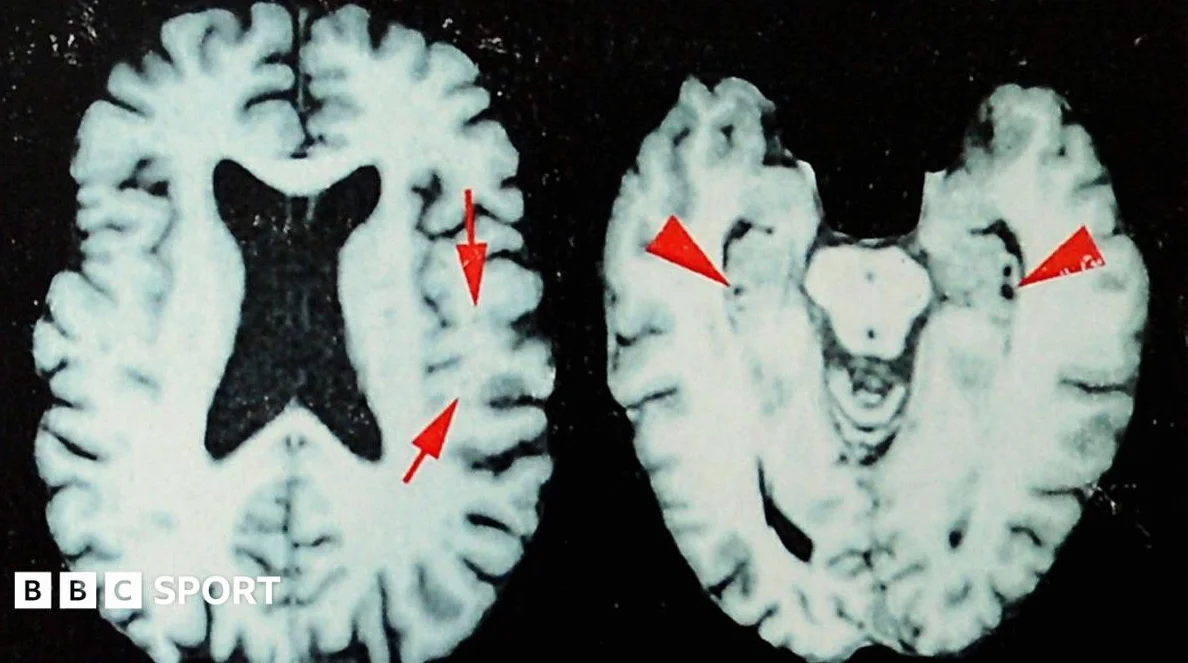
A new study published in the British Medical Journal reveals that up to 97.7% of National Football League (NFL) players who died between 2016 and 2021 may have had brain disease linked to repeated head impacts. The research, led by Daniel Daneshvar of Harvard Medical School, examined data from 878 former players who died during that period, with 235 of them donating their brains to scientific study.
High Rates of CTE Found in Deceased Players
Of the 235 brain donors, 215 were found to have chronic traumatic encephalopathy (CTE), a degenerative brain disease that can only be diagnosed post-mortem; the study also noted that dementia was common among the brain donors. The lead author explained that this finding shows a significantly higher rate of CTE in NFL players compared to previous studies.
“These findings indicate that NFL players have a higher prevalence of CTE at death than has been previously shown in multiple community-based studies,” said Daneshvar, and the study calculated a “conservative minimum” CTE prevalence of 24.5% among those who died in the six-year period, rising to a “maximum” of 97.7%.
Call for Prevention Measures at All Levels
The researchers have called for the NFL to implement measures to reduce repetitive head impacts across all levels of the sport. According to Daneshvar, many of the head impacts experienced by former NFL players occurred at the collegiate and high school levels, as well as in youth football. These cumulative hits contribute to the risk of developing brain disease.
“The bulk of the head impacts that these former NFL players experienced didn’t occur at the NFL level,” said Danshvar, while “They occurred at the collegiate level and at the high school level and in many cases the youth level. And all of those cumulative hits to the head added up to result in an increased risk.”
NFL Response and Previous Settlements
In response to the findings, an NFL spokesperson stated, “The NFL continuously strives to make the game of football safer, including by implementing strategies to reduce concussions and head impacts.” The NFL has previously taken steps to address the issue, including a 2011 Collective Bargaining Agreement that limited the number of contact practices.
Following a long-running class action lawsuit, the NFL agreed to a $1 billion settlement with more than 5,000 former players in 2016; the league also encourages former players to use available resources to identify and seek treatment for health concerns. The spokesperson added, “The NFL remains committed to ensuring that the NFL community has access to a reliable,and expanding—set of resources to enhance their physical and mental well-being.”
The issue of CTE and brain disease in deceased NFL players has been a growing concern in recent years — this study adds to the growing body of evidence linking repeated head impacts to long-term neurological damage. The researchers emphasize the need for continued efforts to reduce head trauma in football at every level of play.






1 Comment