

 BBC
BBC 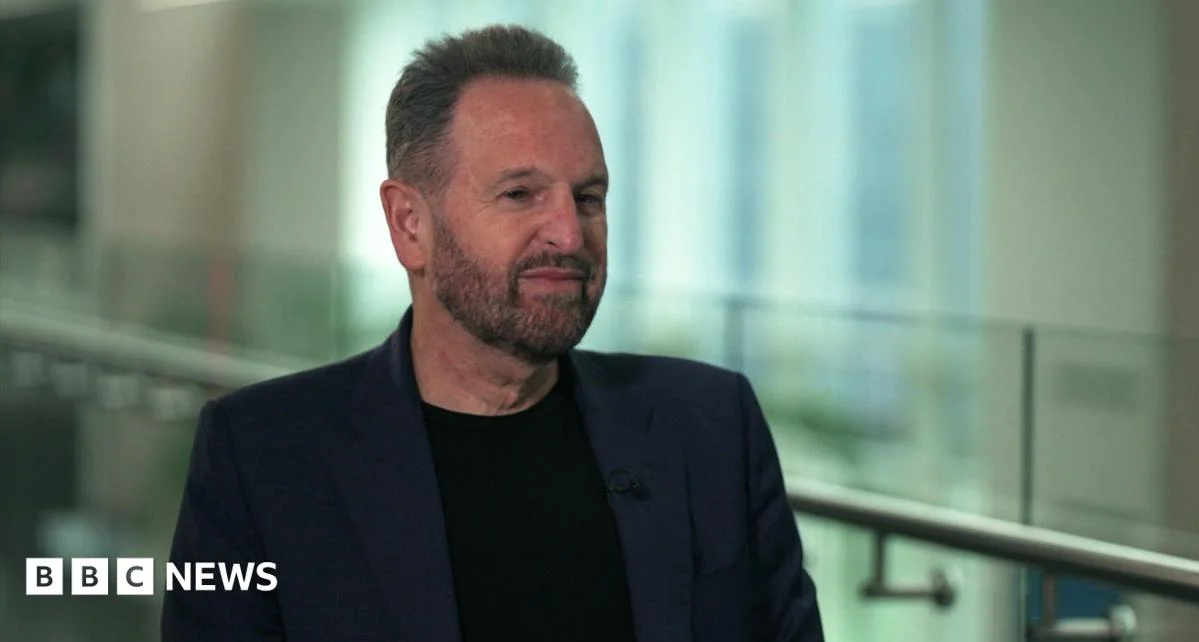
Rene Haas, chief executive of Cambridge-based chip designer Arm Holdings, stated that artificial intelligence will find a cure for cancer that humans cannot in our lifetimes, according to BBC. Haas made these remarks during the BBC’s Big Boss Interview podcast.
AI’s Potential in Cancer Research
Haas acknowledged that modeling how a DNA marker is impacted by cancer is currently too complex for both humans and existing AI technology. However, he expressed confidence that future advancements in computing will enable solutions to these challenges. ‘AI is going to find a cure for cancer that today you and I, other humans [could] not in our lifetimes,’ he said.
Haas also highlighted the complexity of modeling a cell, a human, or a DNA marker affected by cancer. ‘It’s too complex a problem, not only for humans today, but the computers that run AI,’ he added. He believes that as more data is fed into computers and the technology becomes more sophisticated, solutions will be found.
Challenges and Opportunities in AI Development
While Haas is optimistic about AI’s potential, he noted that its rapid growth is being held back by a shortage of chips needed for data centres. He emphasized the importance of developing more advanced computer systems to support AI research. ‘Going forward, as we feed more and more of the models into these computers, and the computers get more sophisticated to run the models, they’re going to solve it,’ he said.
Haas also discussed the role of AI in developing humanoid robots for various industries, including manufacturing, cleaning, security, and construction. He predicted that within a decade, these robots will be widely used in service sectors. ‘With artificial intelligence, these robots can see, learn, and essentially be reprogrammed for new tasks,’ he explained.
Addressing concerns about job losses due to AI, Haas argued that the estimates of jobs being completely replaced by machines are overstated. He emphasized that new opportunities will arise alongside any changes in the job market. ‘The estimates of jobs going away and being completely replaced by machines is a bit overstated,’ he said.
Arm’s Role in AI and Chip Manufacturing
Arm’s power-efficient technology is now used in half of AI data centres worldwide, according to Haas. This has led to a significant evolution in its business, with the company now selling its own microchips. Facebook-owner Meta asked Arm to develop the Arm AGI chip, and demand has been ‘off the charts,’ with more than $2bn in demand since its launch in March.
Despite the high demand for chips, Haas expressed skepticism about the possibility of manufacturing them in the UK. ‘I don’t think it’s necessary for the UK to [build] fabs. Fabs are very expensive. They take a lot of specialized workers. They take a lot of natural resources, and there’s a pretty broad network for those,’ he said. Currently, chip manufacturing is centralized around Taiwanese giant TSMC.
Haas also mentioned the importance of data quality in AI development. Prof Chris Bakal from the Institute of Cancer Research emphasized that the real question in AI is not whether it will be used, but what data it is fed. ‘It is not scraped from the internet. It does not need a giant data centre to run. The future of medical AI will not belong to whoever builds the biggest computer. It will belong to whoever has the right measurements,’ he said.






Comments
No comments yet
Be the first to share your thoughts