

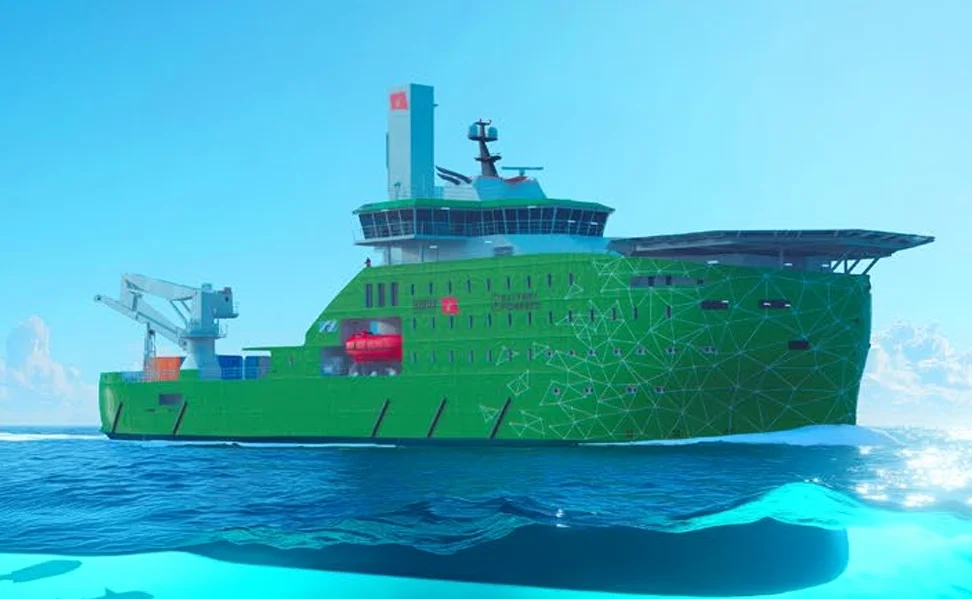
UK-based Bibby Marine has released an analysis showing that hybrid-electric offshore service vessels, or eCSOVs, can reduce operating costs by up to 40% from day one compared to traditional diesel-powered vessels, with savings rising to 70% when offshore charging is available. The report highlights the potential for significant financial and environmental benefits as the offshore wind industry faces increasing pressure to reduce emissions.
Cost Savings and Environmental Impact
The analysis, conducted by Bibby Marine, indicates that hybrid eCSOVs use dual-fuel generators to charge batteries for main propulsion when charging is unavailable. This dual approach improves engine loads, reducing fuel use, energy costs, and carbon penalties. According to the report, this results in annual savings of $1 million for hybrid models. When operating in full-electric mode with offshore charging, emissions drop to zero, and annual savings increase to $1.8 million.
The findings come at a critical time as the European Union’s carbon rules, set to take effect in 2027, will impact offshore wind service vessels through the EU Emissions Trading System (ETS) and the FuelEU Maritime regulation. These regulations require vessels to reduce emissions and manage fuel use, which could significantly increase costs for operators who fail to implement emission cuts.
Bibby Marine’s analysis also highlights the role of advancements in battery technology in reducing the build costs of eCSOVs. While the technology for electrification already exists, the rollout of offshore charging infrastructure requires coordination among ports, developers, turbine makers, and original equipment manufacturers (OEMs). Additionally, licensing support is necessary to ensure the integration of charging systems into existing infrastructure such as turbines, monopiles, or floating platforms.
Industry Response and Future Goals
“eCSOVs offer a clear route to lower operating costs compared with conventional CSOVs by reducing energy consumption, limiting exposure to rising carbon costs, and future-proofing operations,” said Gavin Forward, newbuild project director at Bibby Marine. The report emphasizes that these vessels are not only more cost-effective but also align with the industry’s broader decarbonization goals.
Nigel Quinn, CEO of Bibby Marine, added, “A fleet of zero-emission offshore service vessels should be the essential goal for the offshore wind industry to reinforce its own decarbonisation mission. Full electrification of the vessel class offers an opportunity for significant savings and has the potential to create budgeting stability for operators at a time when cost controls are crucial to the sustainability of the sector.”
Bibby Marine has already taken steps to bring this vision to life. The company laid the keel for its hybrid eCSOV at Spain’s Armon Vigo yard in 2025, in partnership with Kongsberg, Corvus Energy, and Stillstrom. The vessel is expected to be commissioned in the North Sea by mid-2027, marking a key milestone in the transition to zero-emission offshore operations.
What’s Next for Offshore Wind Vessels
The report highlights the importance of continued collaboration between industry stakeholders to ensure the successful deployment of offshore charging infrastructure. With the EU’s regulations set to take effect in 2027, the timeline for implementation is tight, requiring immediate action from all involved parties.
According to the analysis, the North Sea alone is expected to have 45GW of offshore wind capacity by the time the new regulations come into force. This will place significant pressure on vessel operators to reduce emissions and manage fuel costs effectively. The transition to eCSOVs is seen as a viable solution to meet these challenges while also offering long-term financial benefits.
Bibby Marine’s hybrid eCSOV project is part of a broader industry shift toward sustainable and cost-effective offshore operations. As battery technology continues to improve and charging infrastructure expands, the potential for further cost savings and emission reductions is expected to grow. The company’s efforts to develop and deploy these vessels are likely to influence the future direction of the offshore wind industry as it moves toward a more sustainable model.






Comments
No comments yet
Be the first to share your thoughts